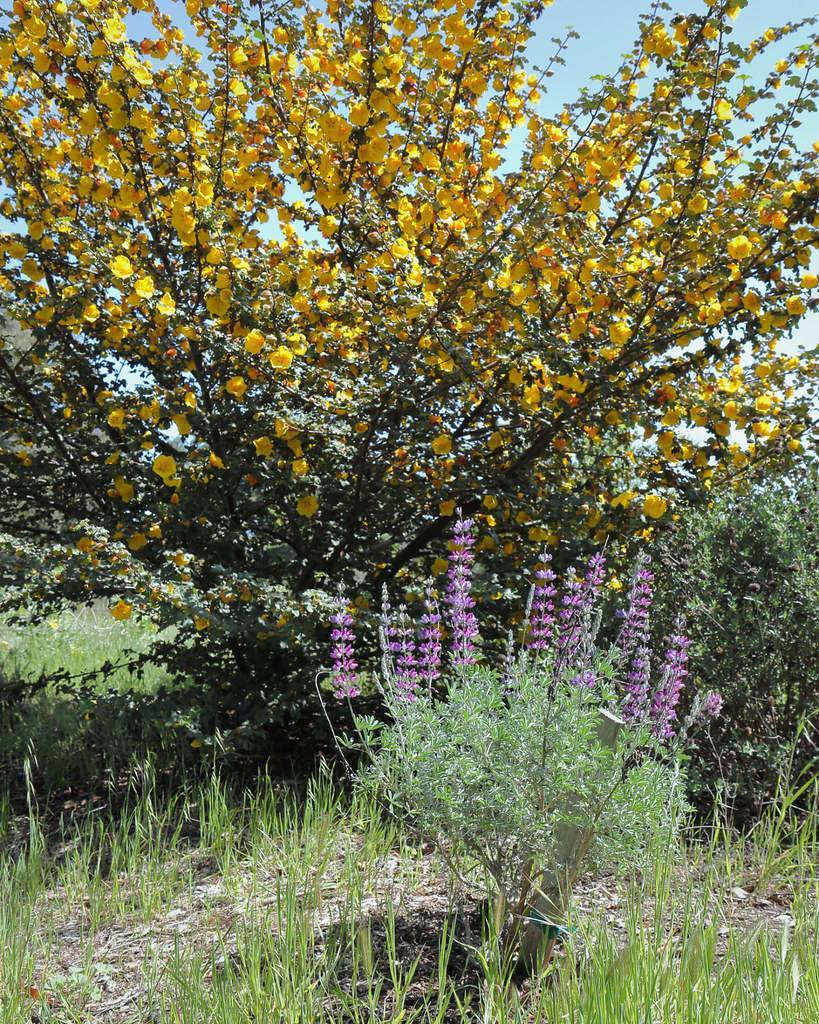
California Flannelbush
Fremontodendron californicum
Overview
California Flannelbush is a striking evergreen shrub named for the soft, fuzzy, gray-green hairs that coat its leaves and young stems, giving them a flannel-like texture. Each spring, it produces a profusion of large, bright yellow, hibiscus-like flowers that cover the entire plant, creating a vivid display that attracts native pollinators including bees and hummingbirds. Adapted to the dry, Mediterranean climate of its native range, it is a staple in water-wise and native California landscaping, though it requires careful site selection to avoid exposure to excess moisture.
Care Guide
Watering
Water newly planted specimens deeply once every 1-2 weeks during their first growing season to establish a strong root system, then reduce irrigation significantly; mature plants require little to no supplemental water, even in summer, as excess moisture can lead to root rot. Avoid watering near the base of the trunk once established, as this can encourage fungal growth; if irrigation is necessary, apply water well away from the root crown.
Light
California Flannelbush requires full, direct sunlight for at least 6-8 hours per day to thrive and produce abundant blooms; it will not tolerate shade, which leads to sparse growth, reduced flowering, and increased susceptibility to disease. Plant it in an open, unobstructed site with southern or western exposure to maximize light access, even in hot, arid climates where it tolerates intense sun exposure without scorching.
Soil
This species requires extremely well-drained, low-fertility soil, ideally sandy or gravelly loam with a neutral to slightly alkaline pH; heavy clay or water-retentive soils will quickly cause fatal root rot. It does not tolerate rich or amended soils, so avoid adding compost, manure, or other organic matter to the planting hole; in areas with heavy soil, plant it on a slope or in a raised mound to improve drainage.
Fertilizer
California Flannelbush is adapted to low-nutrient native soils and does not require regular fertilization, as added nutrients can cause excessive, leggy growth and reduce its drought tolerance. If growth appears extremely stunted, apply a very light dose of low-nitrogen, slow-release fertilizer once in early spring, but avoid high-nitrogen formulations entirely as they can damage the plant’s root system.
Temperature
It thrives in warm to hot climates, with an ideal temperature range of 60-95°F (15-35°C), and is highly tolerant of extreme summer heat, even exceeding 110°F (43°C) when established. It is cold hardy to USDA zones 7-10, tolerating short dips down to 10°F (-12°C), but young plants may require protection from hard frosts during their first 2-3 years of growth.
Pruning
Prune lightly in late spring immediately after flowering to shape the plant and remove any dead, damaged, or crossing branches; avoid heavy pruning, as cutting into old, woody growth can cause dieback and increase disease risk. Always wear protective gloves, long sleeves, and eye protection when pruning, as the fuzzy hairs on the foliage can cause severe skin and eye irritation if they come into contact with bare skin.
Propagation
Propagate California Flannelbush most reliably from seed, which requires scarification (nicking or sanding the hard seed coat) and stratification (cold treatment for 1-2 months) to germinate successfully; sow seeds in well-drained, sandy medium in late fall or early spring. It can also be propagated from semi-hardwood cuttings taken in late summer, though cuttings have a low success rate and require rooting hormone and consistent, well-drained conditions to root.
Humidity
This species prefers low to moderate humidity levels between 20-60%, typical of its native dry chaparral habitat; it does not tolerate high humidity, which can lead to fungal leaf spots and root rot. Avoid planting it in humid, coastal areas with prolonged summer fog, as these conditions will severely stress the plant and increase its susceptibility to disease.
Repotting
California Flannelbush is rarely grown in containers long-term, as its deep taproot requires ample space to grow and it is highly sensitive to root disturbance; if growing in a temporary container before planting out, use a deep, well-drained pot with sandy, unamended soil. Transplant container-grown specimens to their permanent location as soon as possible, ideally in late fall or early winter, taking great care not to damage the root ball during the process to avoid transplant shock.
Uses & Symbolism
California Flannelbush is a popular choice for water-wise, native, and wildlife gardens, where its bright spring blooms provide a long-lasting food source for native bees, hummingbirds, and pollinators, while its dense evergreen foliage offers shelter for small birds and wildlife. Historically, Indigenous peoples of California used the flexible inner bark to make cordage, nets, and mats, and applied poultices of the leaves to treat minor skin irritations, though modern use for medicinal purposes is not recommended due to the plant’s irritating hairs. It is also used for erosion control on dry, steep slopes in its native range, as its deep root system stabilizes soil effectively with minimal maintenance required.
Diseases & Pests
The most common issue affecting California Flannelbush is root rot, caused by overwatering, poorly drained soil, or excessive summer moisture, which leads to yellowing leaves, wilting, and sudden plant death; avoid supplemental water in summer and plant in well-drained soil to prevent this. It may also be affected by fungal leaf spot in high humidity or prolonged wet conditions, which presents as brown or black spots on foliage; improve air circulation around the plant and avoid overhead watering to reduce risk, and remove affected leaves as needed. Aphids and scale insects may occasionally infest new growth, though they rarely cause significant damage to healthy, established plants; treat minor infestations with a strong spray of water or horticultural oil, taking care to avoid overapplication of any product that may stress the plant.
Related plants
Other plants you might like if you grow California Flannelbush.