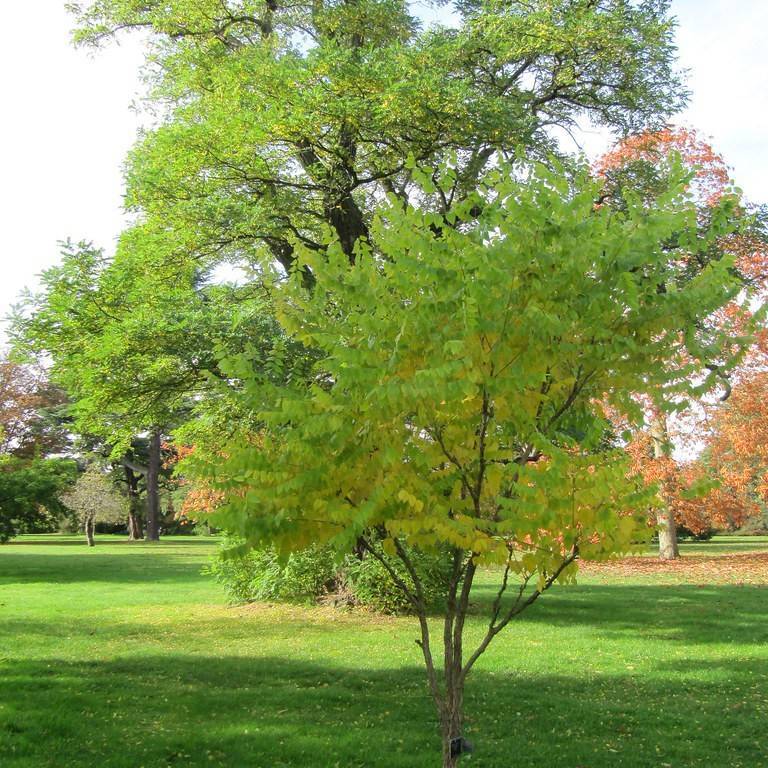
Kentucky Coffee Tree
Gymnocladus dioicus
Overview
The Kentucky Coffee Tree is a stately, cold-hardy deciduous tree known for its striking, open branching structure and thick, gray-brown furrowed bark. It is dioecious, meaning male and female flowers grow on separate trees; female trees produce large, flat, dark brown seed pods that persist through winter. As a member of the legume family, it fixes nitrogen in soil, making it tolerant of poor, compacted growing conditions, and it is considered a threatened species in parts of its native range due to habitat loss.
Care Guide
Watering
Water young trees deeply once a week during their first two growing seasons to establish a robust root system, reducing frequency once established. Mature trees are highly drought-tolerant, requiring only occasional supplemental watering during extended periods of extreme heat or dryness, as overwatering can lead to root rot.
Light
Plant in full sun, meaning at least six hours of direct, unfiltered sunlight per day, for optimal growth and canopy development. It can tolerate partial shade, though growth may be slower, and the tree may develop a sparser, less symmetrical form in low-light conditions.
Soil
Adaptable to a wide range of soil types, including sandy, loamy, clay, and alkaline soils, as long as the site has good drainage. It thrives in slightly acidic to neutral soil with a pH of 6.0 to 7.5, but its nitrogen-fixing root nodules allow it to grow well in nutrient-poor, compacted soils that many other trees cannot tolerate.
Fertilizer
Young trees benefit from a balanced, slow-release 10-10-10 fertilizer applied once annually in early spring to support new growth. Mature Kentucky Coffee Trees rarely require fertilization, as they obtain sufficient nutrients from surrounding soil and their own nitrogen-fixing capabilities, unless they show clear signs of nutrient deficiency such as yellowing foliage.
Temperature
Highly cold-hardy, suitable for USDA hardiness zones 3 through 8, tolerating winter temperatures as low as -40°F (-40°C). It adapts well to a wide range of summer temperatures, thriving in both cool northern climates and warm southern regions, though extreme, prolonged heat above 100°F (38°C) may cause temporary leaf scorch without adequate water.
Pruning
Prune during the dormant winter season to remove dead, damaged, or crossing branches, and to shape the canopy for structural integrity, as young trees can develop weak, narrow branch angles if left unpruned. Avoid heavy pruning once the tree is mature, as it recovers slowly from large cuts, and always sterilize pruning tools between uses to prevent the spread of fungal pathogens.
Propagation
Most commonly propagated from seed, which requires scarification (nicking the hard seed coat) and stratification (cold, moist storage for 2-3 months) to break dormancy and germinate reliably. It can also be propagated from root cuttings taken in late winter before new growth emerges, though cuttings have a lower success rate than properly prepared seeds.
Humidity
Tolerates a wide range of humidity levels, thriving in both the dry continental climates of the Great Plains and the more humid conditions of the eastern United States. No supplemental humidity is required for either indoor saplings or outdoor mature trees, as it is highly adaptable to ambient moisture conditions.
Repotting
Saplings grown in containers should be repotted every 1-2 years in early spring before new growth begins, moving to a pot 2-3 inches larger in diameter with fresh, well-draining potting mix. Once planted outdoors, the tree does not tolerate transplanting well due to its deep taproot, so choose a permanent planting site carefully to avoid needing to move established specimens.
Uses & Symbolism
Historically, roasted seeds were used as a caffeine-free coffee substitute by early European settlers and Indigenous peoples, though raw seeds are toxic and must be thoroughly roasted before consumption. It is widely planted as a shade tree and ornamental landscape tree in urban areas, as it is highly tolerant of pollution, road salt, and compacted soil, making it ideal for parking lots, streetscapes, and public parks. Its strong, dense, rot-resistant wood is occasionally used for cabinetry, fence posts, and construction lumber, though its relative scarcity limits widespread commercial use.
Diseases & Pests
The Kentucky Coffee Tree is relatively pest and disease resistant, with few serious issues, though it may occasionally be affected by leaf spot, powdery mildew, or canker diseases in overly wet, poorly ventilated conditions. Common pests include aphids, scale insects, and borers, which typically only cause minor damage to stressed trees and can be managed with horticultural oil or insecticidal soap if infestations become severe. Root rot may occur in sites with consistently saturated, poorly draining soil, so proper site selection to avoid standing water is the best prevention measure.
Related plants
Other plants you might like if you grow Kentucky Coffee Tree.