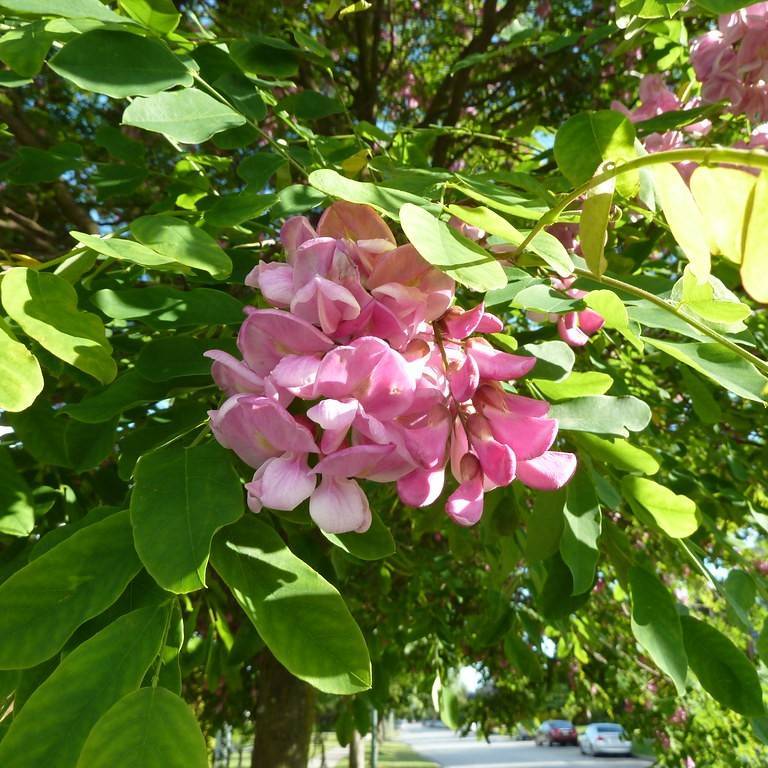
Black Locust
Robinia pseudoacacia
Overview
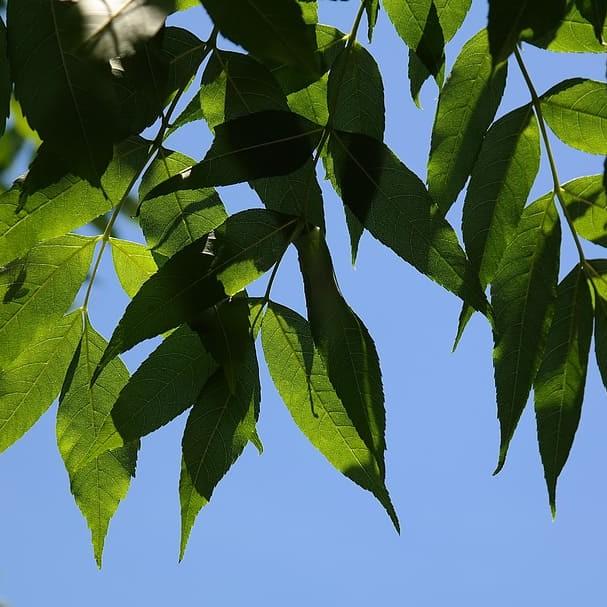
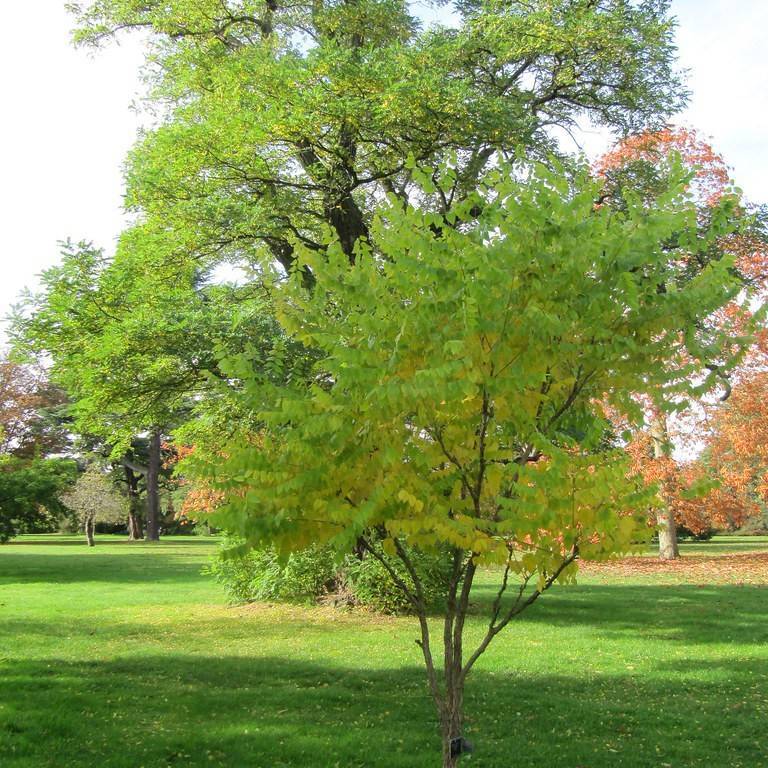
Black locust is a hardy, deciduous tree native to the southeastern U.S. that has naturalized across much of North America, Europe, and Asia due to its adaptability and fast growth. It produces drooping clusters of intensely fragrant, creamy white pea-like flowers in late spring that attract pollinators including bees, butterflies, and hummingbirds. Its compound leaves have a bright green, feathery appearance, and mature trees develop deeply furrowed, dark brown bark paired with sharp paired thorns along young branches. While valued for its many uses, it is considered invasive in some regions due to its aggressive root sprouting and ability to outcompete native vegetation.
Care Guide
Watering
Black locust is highly drought-tolerant once established, requiring only occasional deep watering during extended periods of extreme heat or dryness. Newly planted trees need regular, consistent moisture for the first 1-2 growing seasons to develop a strong root system, but overwatering or waterlogged conditions will cause root rot and should be strictly avoided. Mature trees rarely require supplemental irrigation, thriving on natural rainfall even in relatively arid climates.
Light
This species requires full sun, meaning at least 6 hours of direct, unfiltered sunlight per day to grow vigorously and produce abundant blooms. It will not tolerate shaded conditions, becoming spindly, stunted, and highly susceptible to pest infestations if grown in low light. For optimal growth and flowering, plant it in an open location with no overhead shade from larger trees or structures.
Soil
Black locust is extremely adaptable to a wide range of soil types, including poor, dry, sandy, rocky, or compacted soils that most other trees cannot tolerate. As a nitrogen-fixing legume, it improves soil fertility by converting atmospheric nitrogen into a form usable by other plants, making it ideal for reclamation of degraded or nutrient-depleted sites. It prefers well-drained soil with a neutral to slightly acidic pH, though it will tolerate slightly alkaline conditions and even occasional brief flooding.
Fertilizer
Black locust rarely requires fertilization, as its nitrogen-fixing root nodules allow it to supply its own nutrient needs even in very poor soil. Young trees that show signs of stunted growth or pale foliage may benefit from a light application of a balanced, slow-release fertilizer in early spring, but excessive nitrogen will reduce flowering and encourage weak, fast growth that is prone to breakage. Mature trees should not be fertilized at all, as this can stimulate excessive root sprouting that may spread the tree beyond its intended planting area.
Temperature
Black locust is extremely cold-hardy, thriving in USDA hardiness zones 3 through 9, tolerating winter temperatures as low as -40°F (-40°C). It also tolerates high heat and humidity, growing well even in the southern U.S. where summer temperatures regularly exceed 90°F (32°C). Late spring frosts can occasionally damage new, tender growth, but the tree will typically recover quickly and produce new foliage within a few weeks.
Pruning
Prune black locust during the dormant winter season to remove dead, damaged, or crossing branches, and to shape the tree for strong structural growth. Always wear heavy gloves and protective clothing when pruning, as the sharp thorns on young branches can cause painful puncture wounds. Avoid heavy pruning of mature trees, as this stimulates aggressive root sprouting and sucker growth that can be difficult to control, and never prune during the growing season, as fresh cuts attract damaging borers.
Propagation
Black locust is most easily propagated from root cuttings taken in late winter or early spring, before new growth begins, by planting 2-4 inch (5-10 cm) sections of healthy root horizontally in well-drained potting mix. It can also be grown from seed, but seeds require scarification (mechanical abrasion or soaking in hot water for 24 hours) to break their hard outer coat and improve germination rates. Sucker growth from existing root systems can also be dug up and transplanted in early spring, though this method contributes to its invasive spread in sensitive areas.
Humidity
Black locust tolerates a very wide range of humidity levels, from the dry, arid conditions of the western U.S. to the high humidity of the southeastern states where it is native. It has no specific humidity requirements, and normal ambient humidity levels are sufficient for healthy growth. Excessively high humidity combined with poor air circulation can increase the risk of fungal leaf spots, but this is rarely a serious issue for healthy, well-sited trees.
Repotting
Black locust is rarely grown in containers long-term, as its large, aggressive root system and fast growth quickly outgrow even the largest pots. Seedlings intended for outdoor planting can be grown in containers for 1-2 growing seasons, and should be repotted annually in early spring into a slightly larger container with fresh, well-drained potting mix before they become root-bound. Once the tree reaches 3-4 feet (90-120 cm) tall, it should be transplanted to its permanent outdoor location, as container-grown black locust will quickly become stressed and stunted if left in a pot for too long.
Uses & Symbolism
Black locust wood is extremely dense, hard, and naturally rot-resistant, making it highly valued for fence posts, outdoor furniture, decking, firewood, and construction projects that require durable, long-lasting material. The fragrant, nectar-rich flowers are a major source of high-quality monofloral honey, and fully opened, cooked flowers are edible, used in pancakes, fritters, jellies, and teas in many cultures. It is also widely used for reforestation, erosion control, and mine reclamation projects due to its ability to grow in poor soil, fix nitrogen, and stabilize steep slopes.
Diseases & Pests
Black locust is relatively resistant to most diseases, though it can be affected by fungal issues including leaf spot, powdery mildew, and heart rot in older, stressed trees growing in poorly drained conditions. The most serious pest threat is the locust borer, a beetle whose larvae tunnel into the trunk and branches, weakening the tree and causing structural damage that can lead to breakage, especially in trees stressed by drought or injury. Other minor pests include locust leaf miners, aphids, and scale insects, which typically cause cosmetic leaf damage but rarely threaten the long-term health of mature, healthy trees.
Related plants
Other plants you might like if you grow Black Locust.