Garden Aubrieta
Aubrieta deltoidea
Overview
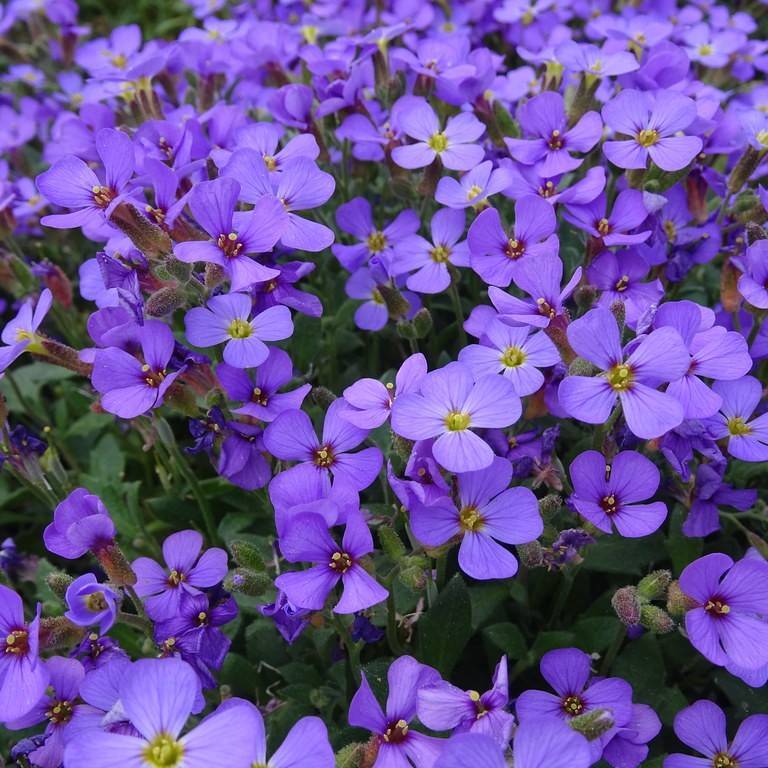
Garden aubrieta, also called false rockcress, is a hardy alpine perennial that forms dense, evergreen mats of small, fuzzy, deltoid-shaped gray-green foliage. In early to mid-spring, it produces a profusion of tiny four-petaled flowers that nearly cover the entire plant, creating a vivid carpet of color. It is a staple in rock gardens, crevice plantings, and slope stabilization, where its trailing habit spills attractively over edges and walls.
Care Guide
Watering
Water newly planted garden aubrieta regularly to keep the soil evenly moist until roots are established, usually within the first growing season. Once established, it is highly drought-tolerant, requiring only occasional watering during prolonged dry spells, as overwatering or soggy soil will quickly cause root rot. Avoid overhead watering where possible to reduce the risk of foliar fungal issues.
Light
Garden aubrieta thrives in full sun, needing at least 6 hours of direct sunlight daily to produce the most abundant and vibrant blooms. It can tolerate very light, dappled shade, especially in regions with extremely hot summer afternoons, but too much shade will lead to leggy growth and reduced flowering. In cool northern climates, full, unobstructed sun is ideal for robust growth.
Soil
This plant requires sharply drained, alkaline to neutral soil with a low to moderate nutrient content; heavy, clay, or water-retentive soils are unsuitable and will cause root death. It thrives in sandy, gravelly, or rocky soils that mimic its native alpine habitat, even in low-fertility conditions where many other plants struggle. Amending planting sites with grit or crushed limestone can improve drainage and adjust pH to meet its needs.
Fertilizer
Garden aubrieta is a light feeder that rarely requires regular fertilization, as overly rich soil will promote lanky, weak foliage growth at the expense of flowers. If grown in extremely poor soil, a single application of a balanced, slow-release granular fertilizer in early spring, applied sparingly, will provide sufficient nutrients for the growing season. Avoid high-nitrogen fertilizers, which will encourage foliage over blooms.
Temperature
It is cold-hardy in USDA zones 4 through 8, tolerating winter temperatures as low as -30°F (-34°C) when planted in well-drained soil. It prefers cool spring and fall growing conditions, and may go partially dormant or experience foliage browning during extended periods of summer heat above 85°F (29°C), especially if moisture is scarce. Winter wetness is far more harmful to this plant than cold temperatures, so good drainage is critical for cold-climate survival.
Pruning
Immediately after flowering finishes in late spring, shear back the entire plant by one-half to two-thirds of its height to encourage dense, compact new foliage growth and prevent the center of the mat from becoming woody and bare. This annual trimming may also promote a small, sparse second flush of blooms in late summer in mild climates. Remove any dead or browned foliage in early spring to tidy up the plant before new growth emerges.
Propagation
Garden aubrieta is most easily propagated by softwood cuttings taken from non-flowering shoots in late spring or early summer, rooted in moist, gritty potting mix under bright indirect light. It can also be grown from seed sown directly outdoors in fall or early spring, though seed-grown plants may not retain the exact flower color of the parent cultivar. Mature, overgrown clumps can be divided in early fall, though division is rarely necessary as the plant spreads slowly and maintains its form well with regular trimming.
Humidity
This alpine plant prefers low to moderate humidity levels, and struggles in consistently high-humidity climates where foliage stays wet for extended periods. Good air circulation around the plant is critical to prevent fungal leaf spots and crown rot, especially in regions with humid summers. Avoid planting it in enclosed, stagnant sites where moist air cannot circulate freely around the foliage.
Repotting
Garden aubrieta is almost exclusively grown in outdoor landscape settings, so repotting is rarely required; if grown in containers, use a well-drained, gritty potting mix formulated for alpine plants. Container-grown specimens should be repotted every 2 to 3 years in early spring, moving to a slightly larger pot only if the root system has completely filled the existing container. Ensure all containers have ample drainage holes to prevent water from pooling at the root zone.
Uses & Symbolism
Garden aubrieta is most widely used as a colorful ground cover for rock gardens, stone wall crevices, pathway edges, and sloped sites, where its trailing habit and spring blooms create a striking visual display. It is also well-suited to container planters and hanging baskets, where it spills over the edges to add seasonal color. It is a valuable early-season nectar source for native bees and other pollinators emerging in spring.
Diseases & Pests
When grown in poorly drained soil or overly wet conditions, garden aubrieta is highly susceptible to root rot and crown rot, which can quickly kill entire patches of the plant. Fungal leaf spots and downy mildew may occur in humid, poorly ventilated sites, especially if foliage remains wet for long periods. Common pests include aphids and flea beetles, which feed on new foliage, though infestations are rarely severe and can be managed with insecticidal soap or neem oil.
Related plants
Other plants you might like if you grow Garden Aubrieta.