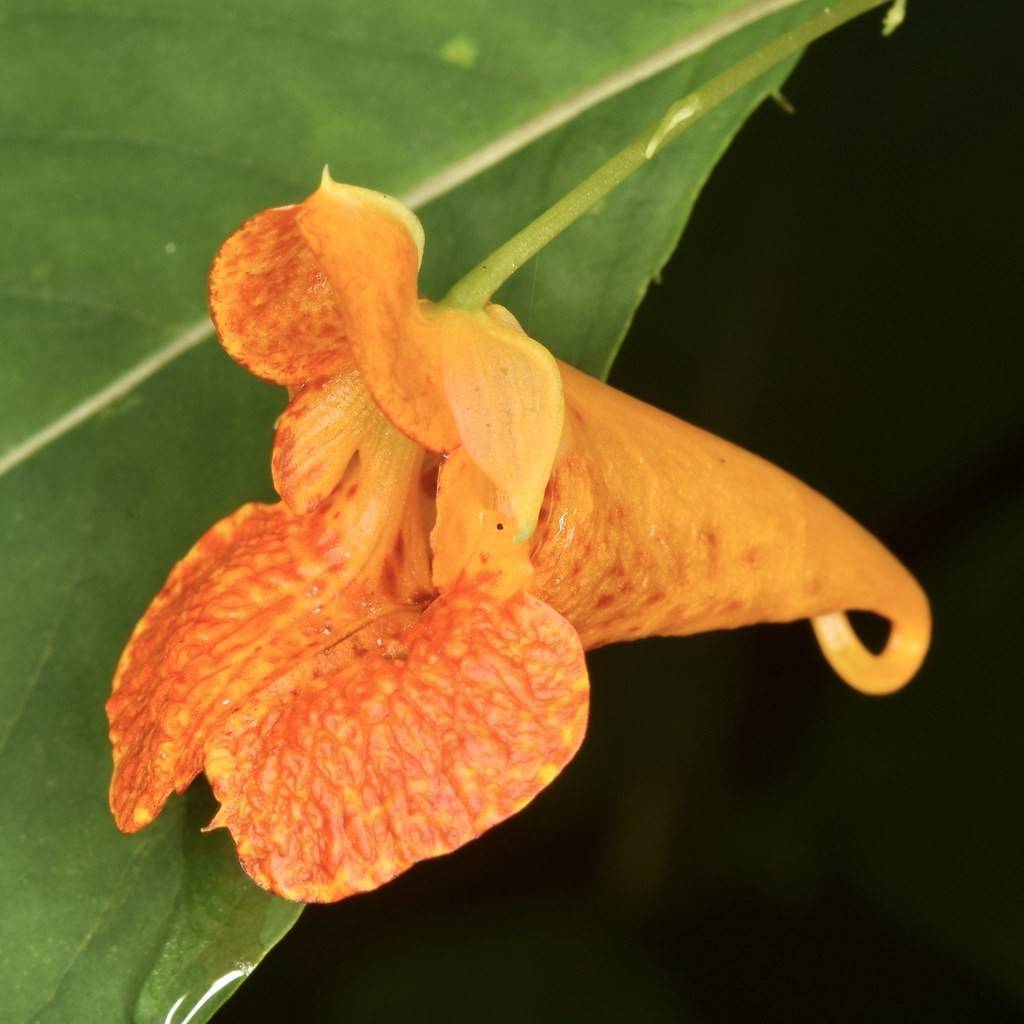
Jewelweed
Impatiens capensis
Overview
Jewelweed, also called spotted touch-me-not, thrives in damp, shaded areas such as streambanks, woodland edges, and wet meadows across its native range. Its common name comes from the way water beads on its waxy leaf surface, glistening like tiny jewels in sunlight. When ripe, its seed pods burst open on contact, dispersing seeds several feet away to colonize new areas.
Care Guide
Watering
Jewelweed requires consistently moist, not waterlogged, soil to thrive, as it is adapted to wet, riparian habitats. Water deeply and regularly during dry periods to prevent the soil from drying out completely, as drought stress will cause wilting and leaf drop. Avoid overhead watering in the late evening to reduce the risk of fungal leaf diseases.
Light
This plant grows best in partial to full shade, mimicking its native woodland understory habitat. It can tolerate a few hours of direct morning sun, but intense midday or afternoon sun will scorch its delicate leaves and cause stunted growth. In deeply shaded areas, it may produce fewer flowers but will still maintain healthy foliage.
Soil
Jewelweed prefers rich, loamy, well-draining soil with high organic matter content and a slightly acidic to neutral pH between 6.0 and 7.0. It can tolerate poorly drained, clay-heavy soils better than many other annuals, as it is adapted to seasonally wet sites. Amending planting areas with compost or leaf mold will boost organic content and support robust growth.
Fertilizer
As a fast-growing annual, jewelweed benefits from a single application of balanced, slow-release 10-10-10 fertilizer at planting time in spring. If growing in nutrient-poor soil, a diluted liquid all-purpose fertilizer can be applied once mid-growing season to support flower production. Over-fertilization will lead to excessive foliage growth at the expense of blooms, so avoid frequent feeding.
Temperature
Jewelweed thrives in cool to moderate summer temperatures between 60 and 80°F (15 and 27°C), typical of its native North American range. It cannot tolerate frost, and will die back completely once temperatures drop below 32°F (0°C) in autumn. Extreme heat above 90°F (32°C) will cause wilting and leaf drop if the plant is not kept consistently moist.
Pruning
Pruning is generally not required for jewelweed, but you can pinch back the growing tips of young plants in early summer to encourage bushier, more compact growth. Remove any yellowed or damaged foliage throughout the growing season to improve air circulation and reduce fungal disease risk. If you want to prevent self-seeding, remove spent seed pods before they ripen and burst.
Propagation
Jewelweed is most easily propagated from seed, which can be sown directly outdoors in fall or early spring, as the seeds require a period of cold stratification to germinate. Scatter seeds on the surface of moist soil, as they need light to germinate, and keep the area consistently damp until seedlings emerge in spring. Established plants will self-seed prolifically in suitable growing conditions, returning year after year without intervention.
Humidity
Jewelweed prefers moderate to high humidity levels between 50% and 80%, consistent with its native damp woodland and riparian habitats. It tolerates average household humidity if grown as a potted plant, but will benefit from occasional misting during very dry periods. Low humidity can cause leaf edges to brown and flower buds to drop prematurely.
Repotting
As an annual, jewelweed is rarely repotted, as it completes its entire life cycle in a single growing season. If growing in a container, choose a pot with ample drainage holes and fill it with rich, loamy potting mix at planting time. You will not need to repot the plant during its growth period, as it will die back naturally at the end of the season.
Uses & Symbolism
Jewelweed is most well-known for its medicinal use: the clear, mucilaginous sap from its stems and leaves is a traditional remedy for soothing poison ivy, oak, sumac rashes, insect stings, and minor skin irritations. It is often planted in native wildlife gardens to attract hummingbirds, bees, and butterflies, which feed on its nectar-rich orange flowers. Some foragers also use its young, cooked shoots and seeds as a minor edible, though raw consumption is not recommended.
Diseases & Pests
Jewelweed is relatively resistant to most pests and diseases, but can be susceptible to powdery mildew and downy mildew in warm, humid conditions with poor air circulation. Aphids and spider mites may occasionally feed on the undersides of leaves, especially on plants grown in dry, stressed conditions. Root rot can occur if the plant is grown in consistently waterlogged soil with no drainage.
Related plants
Other plants you might like if you grow Jewelweed.