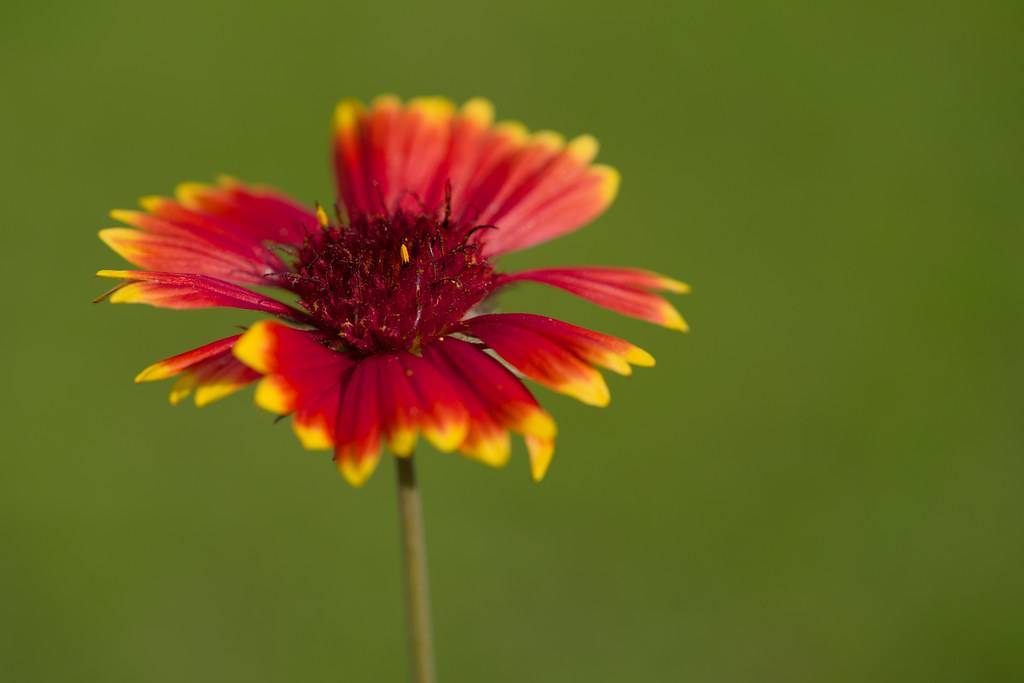
Indian Blanket
Gaillardia pulchella
Overview
Indian Blanket, also called firewheel, is a cheerful annual wildflower known for its distinct ringed blooms that resemble woven Native American blankets. It thrives in open, sunny landscapes, often colonizing roadsides, prairies, and meadows across its native range. This adaptable plant blooms prolifically from late spring to fall, making it a popular choice for low-maintenance gardens and habitat restoration projects.
Care Guide
Watering
Indian Blanket is highly drought tolerant once established, requiring only occasional deep watering during extended dry periods. Overwatering, especially in poorly drained soil, will lead to root rot and reduced flowering. Allow the top 2 to 3 inches of soil to dry out completely between waterings.
Light
This plant requires full sun, meaning a minimum of 6 to 8 hours of direct, unfiltered sunlight per day. Insufficient light will cause leggy growth, reduced bloom production, and increased susceptibility to fungal diseases. It can tolerate partial shade for short periods but will perform best in full, unobstructed sun.
Soil
Indian Blanket adapts to a wide range of soil types, including sandy, loamy, and even poor, rocky soils with low nutrient content. It requires well-drained soil; heavy clay or waterlogged soils will quickly kill the plant. It tolerates a neutral to slightly alkaline pH range between 6.0 and 7.8.
Fertilizer
Fertilization is rarely necessary for Indian Blanket, as it thrives in low-nutrient soils. Overfertilizing will promote excessive foliage growth at the expense of blooms and lead to weak, floppy stems. If grown in extremely poor soil, a single application of balanced, slow-release fertilizer in early spring is sufficient.
Temperature
Indian Blanket thrives in warm temperatures between 60°F and 90°F (15°C to 32°C), and is highly tolerant of summer heat and high humidity. It can survive light frost, but hard freezes will kill the plant, as it is a warm-season annual. Seeds germinate best when soil temperatures are consistently above 70°F (21°C).
Pruning
Deadhead spent blooms regularly throughout the growing season to encourage continuous flowering and prevent unwanted self-seeding if desired. If plants become leggy in mid-summer, cut them back by one-third to stimulate new, bushier growth and a fresh flush of blooms. No major pruning is required outside of regular deadheading and occasional shaping.
Propagation
Indian Blanket is most easily propagated by seed, which can be sown directly outdoors in early spring after the last frost, or started indoors 4 to 6 weeks before the last frost date. Seeds require light to germinate, so do not cover them with soil; simply press them lightly into the surface of moist seed starting mix. The plant also self-seeds readily in favorable growing conditions, often returning year after year in the same garden area.
Humidity
Indian Blanket tolerates a wide range of humidity levels, from arid desert conditions to high summer humidity in its native southeastern range. Good air circulation around the plants is important in high-humidity areas to prevent fungal leaf spot and powdery mildew. Avoid overhead watering to reduce moisture on foliage in humid climates.
Repotting
Indian Blanket is rarely grown in containers long-term, but if potted, it will only need repotting if it outgrows its current container before the end of its growing season. Use a well-drained potting mix and a container with ample drainage holes to prevent waterlogging. As an annual, it will die at the end of the growing season, so regular repotting for long-term growth is unnecessary.
Uses & Symbolism
Indian Blanket is a popular choice for wildflower meadows, pollinator gardens, and roadside plantings, as it attracts bees, butterflies, and hummingbirds with its nectar-rich blooms. It is often included in drought-tolerant and xeriscaping designs for its low water needs and ability to thrive in poor soil. Its long-lasting, colorful blooms also make it an excellent cut flower for fresh bouquets.
Diseases & Pests
Indian Blanket is relatively pest and disease resistant, but overwatering and poor air circulation can lead to fungal issues such as powdery mildew, leaf spot, and root rot. Common pests include aphids and spider mites, which can be controlled with insecticidal soap or a strong spray of water to dislodge them from foliage. Deer and rabbit browsing is rare, as the plant has slightly bitter foliage that most grazers avoid.
Related plants
Other plants you might like if you grow Indian Blanket.