Common Fiddleneck
Amsinckia menziesii
Overview
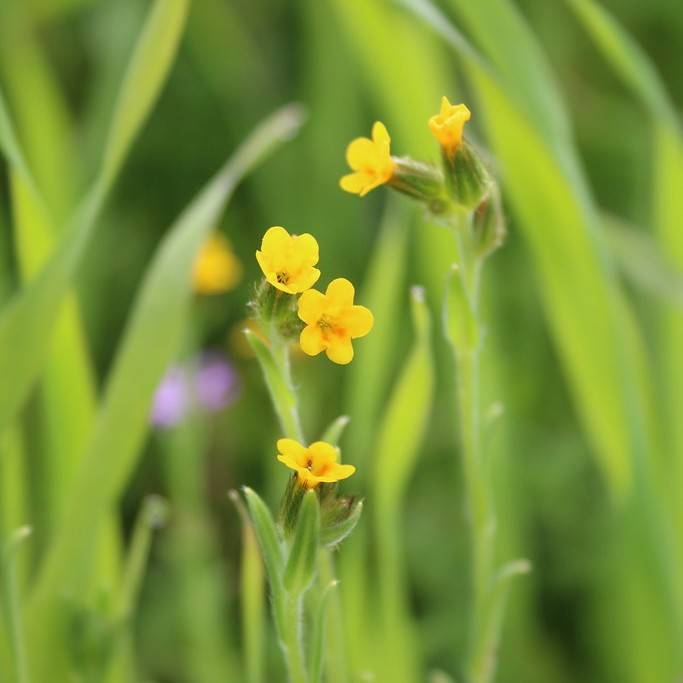
Common fiddleneck is a fast-growing annual wildflower named for its distinctive curled inflorescence that unfurls as small, bright yellow, five-petaled blooms open sequentially from the base to the tip of the spike. It thrives in open, disturbed areas including grasslands, roadsides, and chaparral edges, often acting as a pioneer species in recently burned or cleared landscapes. Its coarse, hairy foliage and upright stems make it a recognizable sight in its native range, where it blooms prolifically from late winter through early summer.
Care Guide
Watering
Common fiddleneck is highly drought-tolerant, requiring only occasional rainfall in its native habitat; supplemental watering is rarely needed, and overwatering can lead to root rot and fungal issues. Established plants can survive extended dry periods, as their deep taproots access moisture stored in lower soil layers. Avoid wetting the foliage when watering to reduce the risk of foliar diseases.
Light
This species requires full, direct sun for optimal growth and flowering, performing poorly in shaded conditions where it will become leggy and produce few blooms. A minimum of 6 hours of unobstructed sunlight daily is required to support its fast growth rate and vibrant floral display. It tolerates intense, reflective sunlight common in arid and semi-arid landscapes without scorching.
Soil
Common fiddleneck adapts to a wide range of well-drained soil types, including sandy, loamy, and gravelly substrates, even those with low nutrient content. It prefers neutral to slightly alkaline soil pH, and will not survive in heavy, poorly drained clay soils that hold standing water after rain. It is well-suited to poor, disturbed soils where many other plant species struggle to establish.
Fertilizer
Fertilization is generally unnecessary for this wildflower, as it thrives in low-nutrient soils; excess nitrogen will encourage lush foliage growth at the expense of flower production. If grown in extremely depleted soil, a light application of balanced, slow-release fertilizer at planting time can support initial establishment, but no further feeding is required for the duration of its growing season. Avoid high-nitrogen formulations entirely to prevent leggy growth.
Temperature
Common fiddleneck is adapted to temperate and semi-arid climates, tolerating daytime temperatures between 60–90°F (15–32°C) during its active growing season. It can withstand light, short-duration frosts in early spring, but hard freezes will kill the tender foliage and developing flower spikes. It does not tolerate high humidity or extreme heat above 100°F (38°C) for extended periods, which will cause wilting and premature senescence.
Pruning
Pruning is rarely required for common fiddleneck, as it completes its life cycle in a single growing season. Spent flower stalks can be removed after blooming if you wish to prevent self-seeding, as this species can spread aggressively in favorable growing conditions. If grown in a garden setting, pull up entire plants after flowering ends to control unwanted spread, taking care to avoid contact with the bristly foliage if you have sensitive skin.
Propagation
Common fiddleneck propagates exclusively from seed, which is released from small, prickly nutlets that develop after the flowers are pollinated. Seeds can be sown directly outdoors in late fall or early spring, scattered on the soil surface and lightly pressed in, as they require light to germinate. It self-seeds readily in suitable habitats, with seeds remaining dormant in the soil for several years until conditions are ideal for germination, often after wildfire or soil disturbance.
Humidity
This species prefers low to moderate humidity levels between 20–50%, typical of its native arid and semi-arid western North American habitats. High humidity above 60% for extended periods increases the risk of powdery mildew and other fungal diseases on its hairy foliage. It tolerates very dry air without adverse effects, making it well-suited to desert and Mediterranean climate gardens.
Repotting
Repotting is unnecessary for common fiddleneck, as it is an annual species that completes its entire life cycle in one growing season and does not respond well to root disturbance. If started in seed trays for transplanting, move seedlings to their final location when they have 2–3 true leaves, taking care not to damage the delicate taproot. Once established in the ground, it should not be moved, as transplant shock will usually kill the plant.
Uses & Symbolism
Common fiddleneck is a valuable nectar source for native pollinators, including bumblebees, solitary bees, and butterflies, supporting local ecosystem health in its native range. It is often included in wildflower seed mixes for habitat restoration projects, particularly for post-fire rehabilitation, as it quickly establishes on disturbed soils to prevent erosion and provide cover for other native species. Some indigenous groups historically used the plant's seeds as a minor food source after careful processing to remove toxic alkaloids.
Diseases & Pests
Common fiddleneck is relatively pest and disease resistant in its native habitat, though it may be susceptible to powdery mildew in high humidity or overcrowded growing conditions. Aphids and spider mites may occasionally feed on tender new growth, though infestations are rarely severe enough to kill the fast-growing annual plant. Overwatering or poorly drained soil can lead to root rot, which is usually fatal for the plant.
Related plants
Other plants you might like if you grow Common Fiddleneck.
%22%2F%3E%0A%20%20%20%20%20%20%3Ccircle%20cx%3D%22920%22%20cy%3D%22180%22%20r%3D%2290%22%20fill%3D%22%23cfe8d5%22%2F%3E%0A%20%20%20%20%20%20%3Cpath%20d%3D%22M600%20590c-90-180-215-255-310-280%200%20165%20118%20296%20270%20296h40z%22%20fill%3D%22%2379b88e%22%2F%3E%0A%20%20%20%20%20%20%3Cpath%20d%3D%22M600%20590c80-150%20198-212%20302-228-8%20142-123%20255-270%20255h-32z%22%20fill%3D%22%235c9f73%22%2F%3E%0A%20%20%20%20%20%20%3Cpath%20d%3D%22M600%20610V360%22%20stroke%3D%22%234f8c64%22%20stroke-width%3D%2218%22%20stroke-linecap%3D%22round%22%2F%3E%0A%20%20%20%20%20%20%3Ctext%20x%3D%22600%22%20y%3D%22700%22%20text-anchor%3D%22middle%22%20font-family%3D%22Arial%2C%20sans-serif%22%20font-size%3D%2244%22%20fill%3D%22%23365c45%22%3E%0A%20%20%20%20%20%20%20%20Plant%20image%20coming%20soon%0A%20%20%20%20%20%20%3C%2Ftext%3E%0A%20%20%20%20%3C%2Fsvg%3E%0A%20%20)