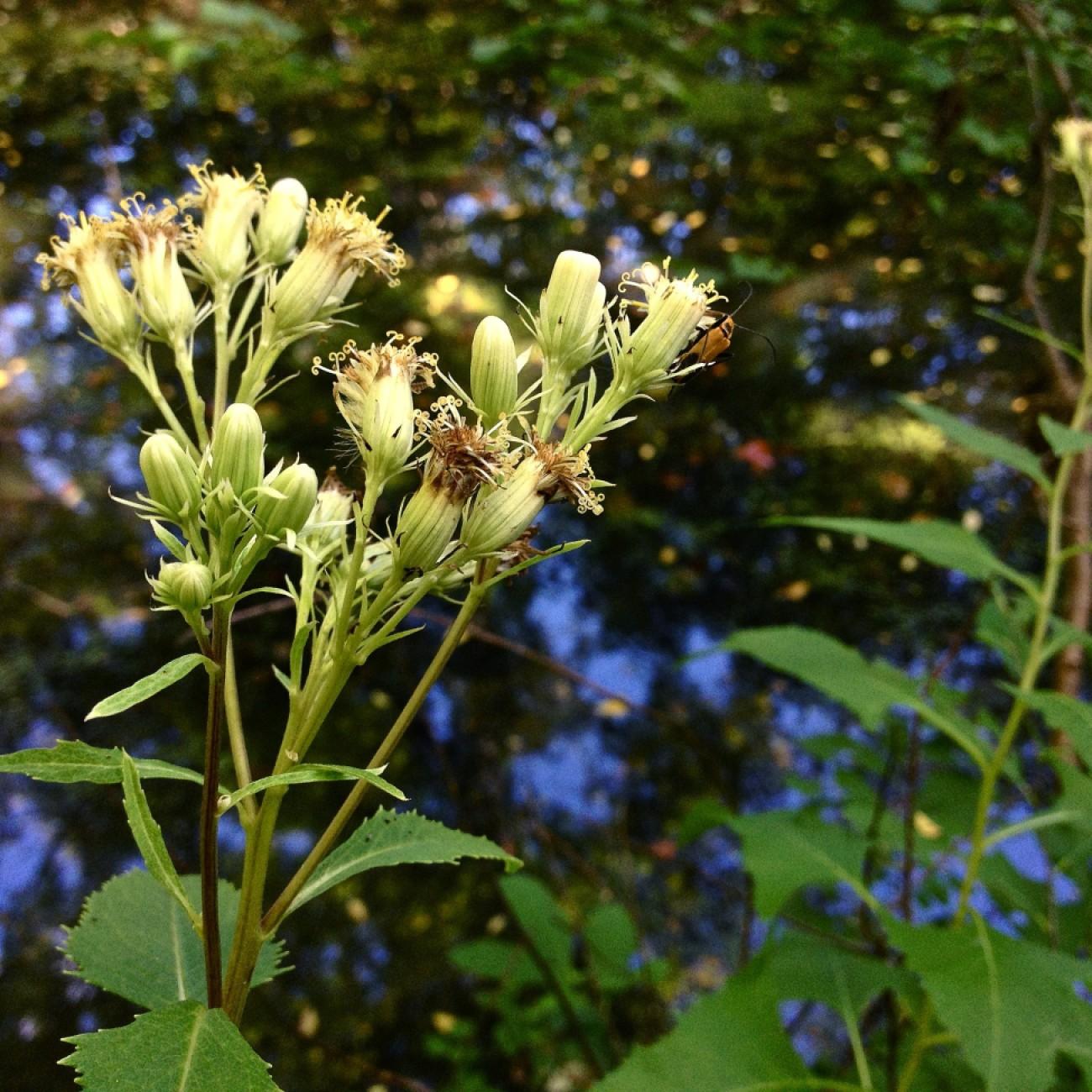
False Indian Plantain
Hasteola suaveolens
Overview
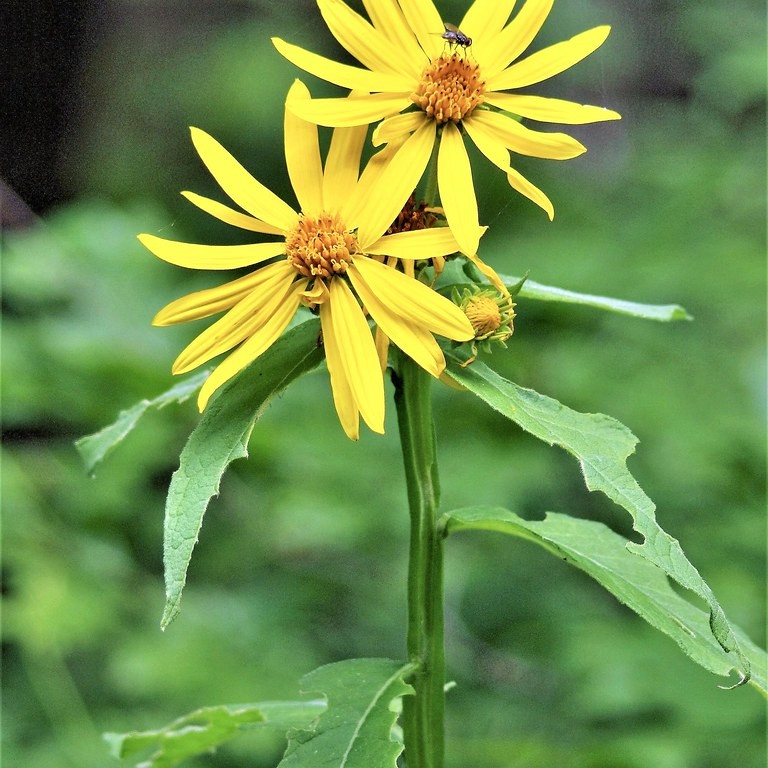
False Indian Plantain is a robust, clump-forming perennial distinguished by its broad, coarsely toothed, arrow-shaped basal leaves and smooth, unbranched stems topped with dense, flat-topped clusters of tiny, fragrant white composite flowers. It thrives in wet, sunny environments, including wet meadows, stream banks, and swamp edges, where it forms substantial stands over time. It is often confused with true Indian plantain (Arnoglossum species) but is differentiated by its smaller flower heads and distinctly hastate (spear-shaped) lower foliage.
Care Guide
Watering
False Indian Plantain requires consistently moist to wet soil, as it is adapted to riparian and wetland habitats. Water regularly to prevent the soil from drying out completely, especially during extended periods of drought or when grown in garden beds with faster drainage. It can tolerate temporary seasonal flooding, making it suitable for rain gardens and bioswale plantings.
Light
This species performs best in full sun, where it produces the most abundant floral displays and maintains a sturdy, upright growth habit. It can tolerate partial shade, particularly in warmer southern portions of its range, but plants grown in too much shade may become leggy and produce fewer flowers. Full sun exposure also helps reduce the risk of foliar fungal diseases by improving air circulation around foliage.
Soil
It prefers rich, loamy, neutral to slightly acidic soil with high organic matter content that retains moisture effectively. It can adapt to heavy clay soils as long as they remain consistently wet, but will struggle in dry, sandy, or fast-draining soils. Amending planting sites with compost or well-rotted leaf mold will improve moisture retention and nutrient levels for optimal growth.
Fertilizer
False Indian Plantain does not require frequent fertilization, as it is adapted to average to nutrient-rich wetland soils. A light application of balanced, slow-release granular fertilizer in early spring can support robust growth for plants grown in poorer garden soils. Over-fertilization can lead to excessive, floppy stem growth that may require staking, so avoid applying high-nitrogen formulations.
Temperature
It is hardy in USDA zones 3 through 8, tolerating winter temperatures as low as -40°F (-40°C) when dormant. It thrives in summer temperatures between 65°F and 85°F (18°C to 29°C), and can tolerate short periods of higher heat as long as soil moisture remains adequate. Frost will kill back above-ground foliage in late fall, and plants will reemerge from their root systems the following spring.
Pruning
Pruning is minimal for this low-maintenance wildflower. Cut back dead, frost-killed stems to ground level in late fall or early spring before new growth emerges to keep planting areas tidy and reduce overwintering habitat for pests. If plants become leggy in partial shade, you can pinch back stems in early summer to encourage bushier growth, though this may delay flowering slightly.
Propagation
False Indian Plantain is most easily propagated by dividing mature clumps in early spring just as new growth begins to emerge, taking care to retain a portion of the root system with each division. It can also be grown from seed, which requires a 60-day period of cold stratification to break dormancy before sowing in moist potting mix. Seeds can be direct sown outdoors in fall to allow natural cold stratification over winter, with germination occurring the following spring.
Humidity
This species adapts well to the average ambient humidity levels of its native eastern North American range, which typically falls between 40% and 70% during the growing season. It does not require additional humidity when grown in suitable outdoor sites, but very dry, arid conditions may cause leaf browning and stress if not paired with adequate soil moisture. It tolerates the high humidity of wetland and riparian sites without issue.
Repotting
False Indian Plantain is rarely grown in containers, as it requires ample root space and consistent wet soil that is difficult to maintain in potted environments. If grown in a large container for a rain garden feature, repot every 2 to 3 years in early spring to refresh the soil and divide overcrowded root systems. Use a large, deep pot with drainage holes, and fill it with a loamy, moisture-retentive potting mix amended with compost.
Uses & Symbolism
False Indian Plantain is a popular addition to native wildflower gardens, rain gardens, and riparian restoration projects, where its nectar-rich flowers attract a wide variety of pollinators including bees, butterflies, and beneficial wasps. Its tall, upright growth habit makes it an excellent background plant in perennial borders, where it provides vertical interest and contrasts well with shorter, mounding wildflower species. Historically, some Indigenous communities used parts of the plant for medicinal purposes, though it is not widely used in modern herbalism.
Diseases & Pests
False Indian Plantain is relatively resistant to most pests and diseases, though it may develop powdery mildew or leaf spot if grown in poorly ventilated, overly shaded conditions with consistently wet foliage. Slugs and snails may occasionally feed on young, tender new growth in spring, especially in very damp, shaded sites. Root rot can occur if plants are grown in poorly drained, waterlogged soil for extended periods, though it tolerates periodic flooding better than most perennial species.
Related plants
Other plants you might like if you grow False Indian Plantain.