Bearded Beggarticks
Bidens aristosa
Overview
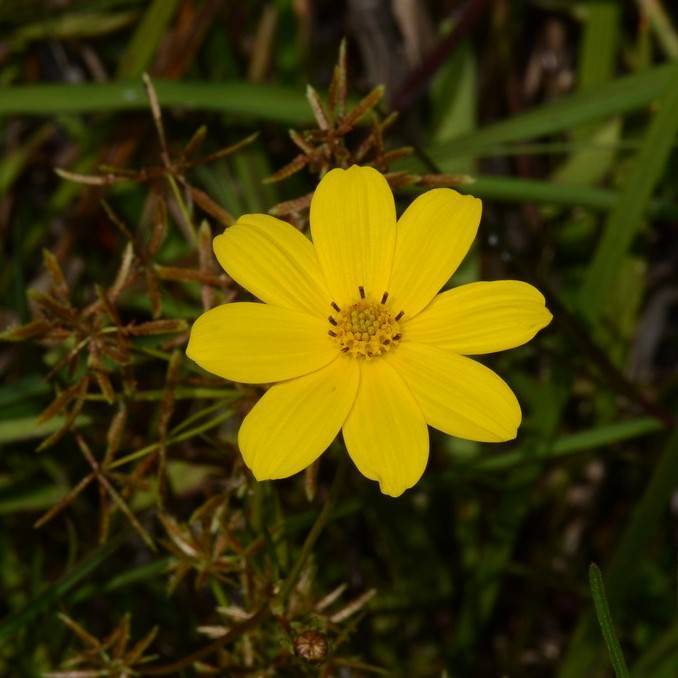
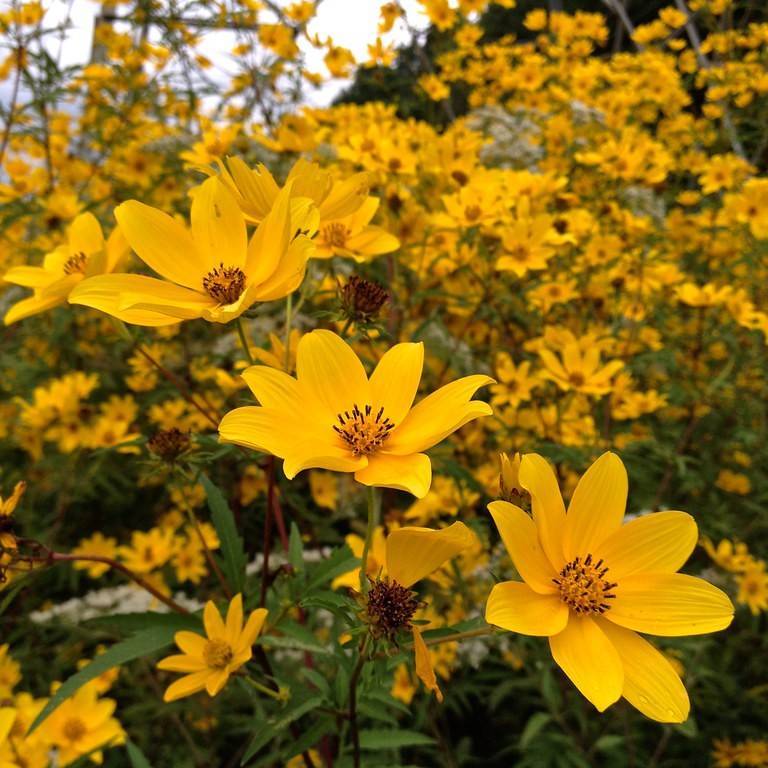
Bearded beggarticks, also called western tickseed sunflower, is a robust annual wildflower common to moist prairies, roadside ditches, marshes, and open woodland edges across its native range. It produces masses of cheerful golden yellow composite flowers from late summer through fall, serving as a critical late-season nectar source for bees, butterflies, and other pollinators. Its distinctive barbed seed achenes cling to animal fur and clothing to aid dispersal, giving rise to its common 'beggarticks' name.
Care Guide
Watering
Bearded beggarticks thrives in consistently moist to wet soil, tolerating periodic flooding and shallow standing water for short durations. Water regularly during establishment to keep root zones damp, reducing supplemental irrigation once mature if grown in areas with regular rainfall. Avoid letting the soil dry out completely for extended periods, as this will stunt growth and reduce flowering.
Light
This species grows best in full sun, receiving a minimum of 6 hours of direct unfiltered sunlight per day for optimal bloom production and sturdy, upright growth. It can tolerate partial shade, though flowering will be less abundant and stems may become leggy and require staking to remain upright.
Soil
Bearded beggarticks adapts to a wide range of soil types, including clay, loam, and sandy soils, as long as moisture retention is adequate. It prefers slightly acidic to neutral pH levels between 5.5 and 7.5, but tolerates mildly alkaline conditions as well. It does not require highly fertile soil, and will grow well in poor, disturbed soils where many other plants struggle.
Fertilizer
Fertilization is rarely necessary for bearded beggarticks, as it thrives in low-nutrient soils and excess nitrogen will promote lush foliage growth at the expense of flowers. If grown in extremely poor, depleted soil, apply a balanced slow-release 10-10-10 fertilizer at half the recommended rate once in early spring at the start of the growing season. Avoid repeated fertilization throughout the year to prevent unwanted spreading.
Temperature
As a warm-season annual, bearded beggarticks grows best in temperatures between 65–85°F (18–29°C), emerging in spring once soil temperatures consistently rise above 55°F (13°C). It tolerates light frosts in fall, and will continue blooming until sustained hard freezes below 28°F (-2°C) kill back above-ground growth. It is adapted to USDA hardiness zones 3 through 9 as an annual.
Pruning
Pruning is generally not required for bearded beggarticks, though pinching back young stems in early summer can encourage bushier growth and more abundant flower production. Deadhead spent blooms throughout the flowering season if you wish to prevent self-seeding and limit spread in managed garden settings. Cut back entire plants to ground level after the first hard frost in fall to tidy up planting areas.
Propagation
Bearded beggarticks is most easily propagated from seed, which can be sown directly outdoors in fall after the first frost, or stratified for 30 days and sown in spring once soil temperatures warm. Seeds require light to germinate, so sow them on the soil surface without covering, and keep the area consistently moist until seedlings emerge in 7–14 days. It self-seeds readily in suitable growing conditions, often forming large naturalized colonies over time.
Humidity
This species tolerates a wide range of humidity levels, thriving in the moderate to high humidity of its native wetland and prairie habitats. It is also tolerant of drier air as long as soil moisture remains adequate, making it adaptable to most temperate climate conditions. No additional humidity adjustments are needed when grown in outdoor settings.
Repotting
Bearded beggarticks is almost exclusively grown directly in outdoor garden beds or naturalized areas, so repotting is not a common practice. If grown in containers, use a large, deep pot with drainage holes and a moisture-retentive potting mix, and repot only if roots become visibly crowded and water drains too quickly, which typically is not necessary for a single growing season. Discard plants after they die back in fall, as they do not overwinter as perennials.
Uses & Symbolism
Bearded beggarticks is widely planted in pollinator gardens, rain gardens, and native meadow restorations to support late-season bees, butterflies, and beneficial insects, and its dense root system helps stabilize soil in erosion-prone wet areas. It is occasionally used as a cut flower, though its barbed seeds should be removed before arranging to avoid clinging to clothing and fabrics. Historically, some Indigenous North American communities used its leaves and roots to prepare topical remedies for minor skin irritations.
Diseases & Pests
Bearded beggarticks is relatively resistant to most pests and diseases, though it may develop powdery mildew on foliage if grown in overly shaded, poorly ventilated conditions with high humidity. Root rot can occur if plants are grown in heavy, waterlogged soil without adequate drainage for extended periods. Aphids and spider mites may occasionally infest new growth, though these can be controlled with a strong spray of water or insecticidal soap for severe infestations.
Related plants
Other plants you might like if you grow Bearded Beggarticks.