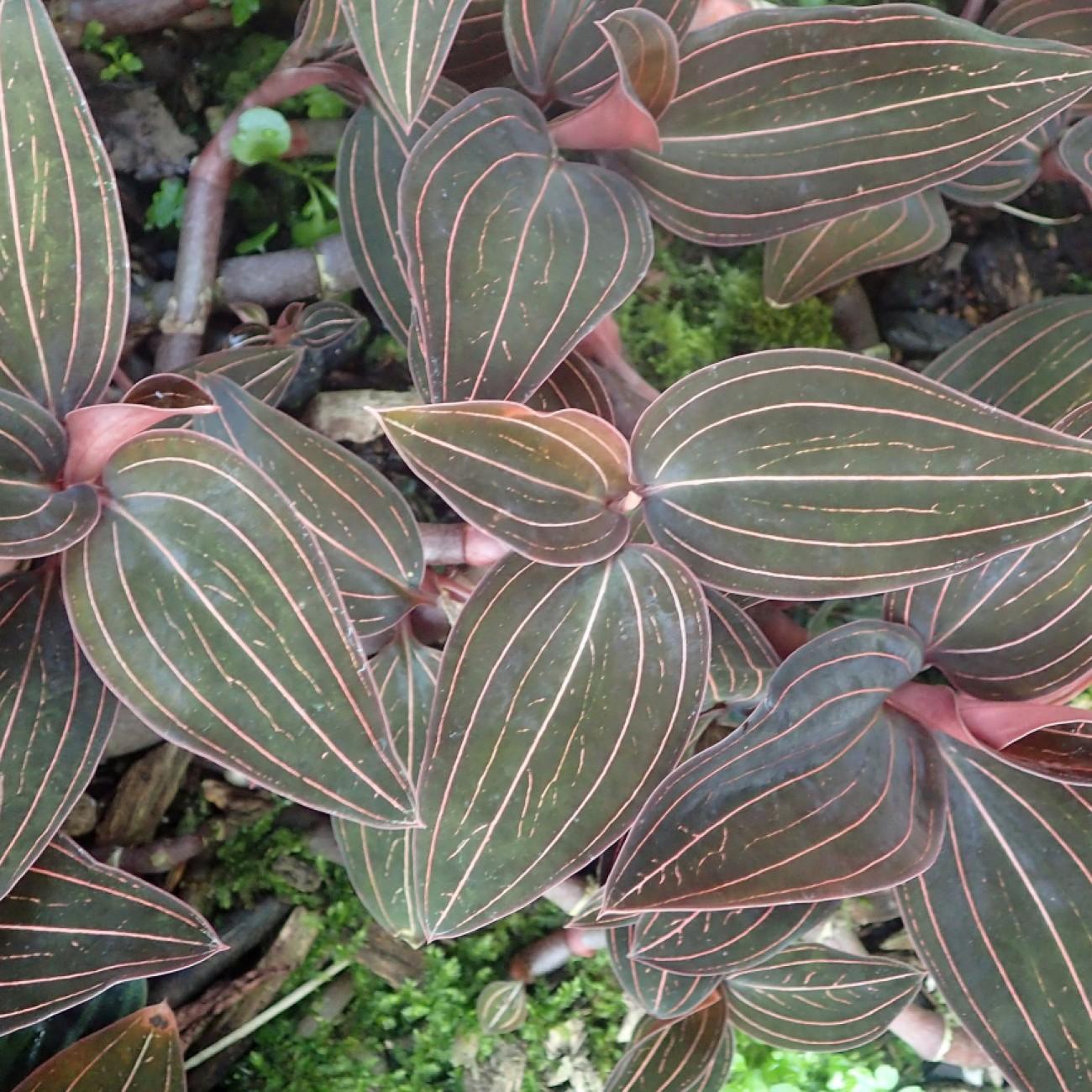
Jewel Orchid
Ludisia discolor
Overview
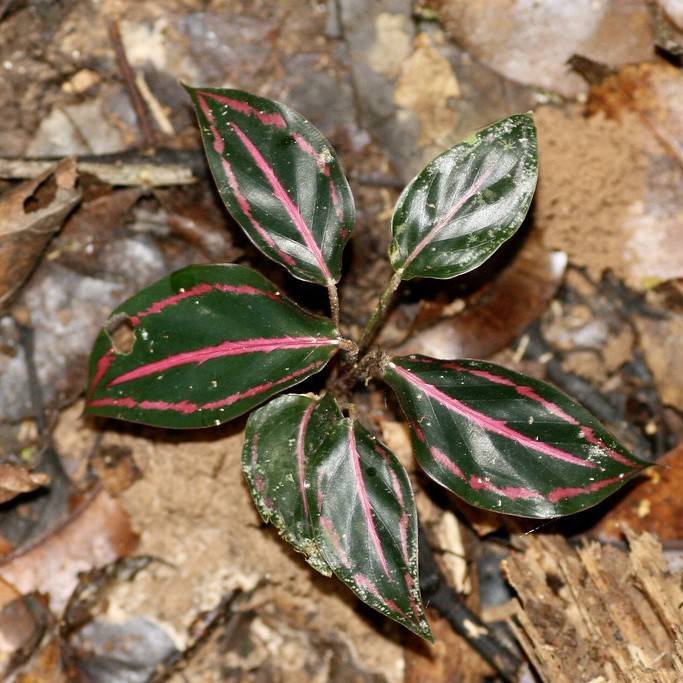
Jewel orchid is a terrestrial orchid species that stands out from most epiphytic orchid varieties, as it grows in soil on the forest floors of its native tropical range. Its most striking feature is its dark green to burgundy velvety leaves, marked with iridescent silver or gold veins that shimmer in low light, giving the plant its 'jewel' moniker. While it produces small, fragrant white flowers on upright spikes in the fall, it is cultivated almost exclusively for its decorative foliage. It is well-suited to indoor growing, as it thrives in the low to medium light conditions common in most homes.
Care Guide
Watering
Water jewel orchids when the top 1 inch of soil feels dry to the touch, typically every 7-10 days in warm growing seasons and every 10-14 days in cooler winter months. Avoid overwatering, as soggy soil can quickly cause root rot; always empty excess water from the plant's saucer after irrigation to prevent standing moisture around the roots. Use room-temperature, filtered or rainwater if possible, as hard tap water with high mineral content can damage the plant's sensitive roots and leaf tissue.
Light
Jewel orchids prefer bright, indirect light, such as that from a north-facing or east-facing window, as direct sunlight can scorch their delicate, velvety leaves and fade their distinctive vein patterns. They can tolerate lower light conditions than most flowering orchids, making them ideal for dimmer indoor spaces that receive only filtered ambient light. If grown in very low light, their growth may slow, and their leaf color may become less vibrant, so supplement with a grow light in dark rooms if needed.
Soil
As a terrestrial orchid, jewel orchids require a loose, well-draining, moisture-retentive potting mix that mimics the rich, leafy forest floor of their native habitat. A suitable mix combines equal parts peat moss, perlite, and orchid bark, or a commercial African violet mix amended with extra perlite to improve aeration. Avoid heavy, compacted garden soil, which holds too much moisture and does not allow sufficient air flow to the plant's shallow root system.
Fertilizer
Feed jewel orchids once a month during the spring and summer growing seasons with a balanced, water-soluble orchid fertilizer diluted to half the recommended strength to avoid burning the plant's delicate roots. Do not fertilize during the fall and winter months, when the plant enters a period of slower dormancy and does not require extra nutrients. Flush the soil with plain water every 3-4 months to remove any accumulated fertilizer salts that can damage root tissue and cause leaf tip browning.
Temperature
Jewel orchids thrive in average indoor temperatures between 65-75°F (18-24°C), and can tolerate brief dips down to 55°F (13°C) without damage, though prolonged exposure to temperatures below this threshold will cause stress and leaf drop. Avoid placing the plant near cold drafts from windows, doors, or air conditioning units, as sudden temperature fluctuations can shock the plant and lead to leaf damage. They do not tolerate extreme heat above 85°F (29°C) for extended periods, so provide extra ventilation and moisture during hot summer spells if necessary.
Pruning
Prune jewel orchids sparingly, only to remove yellowed, damaged, or dead leaves at the base of their stems to maintain the plant's tidy appearance and prevent the spread of fungal or bacterial disease. After flowering, trim spent flower stalks back to the base of the plant to redirect energy toward foliage growth rather than seed production. If the plant becomes leggy or overgrown, you can trim back overlong stems to encourage bushier, more compact growth, using the cuttings for propagation.
Propagation
Jewel orchids are most easily propagated via stem cuttings, taken from healthy, mature stems with at least 2-3 leaf nodes during the spring or summer growing season. Remove the lower leaves from the cutting, dip the cut end in rooting hormone (optional), and plant it in a small pot with moist, well-draining potting mix, keeping it in warm, humid, bright indirect light until roots develop in 4-6 weeks. Mature plants can also be divided during repotting by gently separating the root clump into smaller sections, each with at least 3-4 healthy stems and a portion of the root system, and potting each section individually.
Humidity
Jewel orchids prefer moderate to high humidity levels between 50-70%, which is higher than the average indoor humidity in most homes, especially during dry winter months. To increase humidity around the plant, place it on a pebble tray filled with water (ensuring the pot is not sitting directly in the water), group it with other humidity-loving plants, or use a small room humidifier nearby. Avoid misting the leaves directly, as water trapped in the fine hairs of the velvety foliage can lead to fungal leaf spots or rot.
Repotting
Repot jewel orchids every 2-3 years in the spring, or when the plant becomes root-bound and roots begin to grow out of the drainage holes of the pot. Choose a pot that is only 1-2 inches larger in diameter than the current pot, as overly large pots hold excess moisture that can lead to root rot. Gently loosen the old soil from the root system, trim any damaged or rotting roots, and repot in fresh, well-draining potting mix, watering lightly after repotting to help the roots settle into their new container.
Uses & Symbolism
Jewel orchids are primarily grown as decorative houseplants, prized for their striking, iridescent foliage that adds visual interest to low-light indoor spaces such as office desks, shaded shelves, and terrariums. In their native range, some cultures use extracts from the plant's leaves and stems in traditional medicine to treat minor ailments such as coughs and inflammation, though these uses are not widely adopted in Western herbalism. They are also popular choices for indoor plant collections and orchid displays, as they require less light than most flowering orchid varieties and are relatively low-maintenance for experienced indoor gardeners.
Diseases & Pests
The most common disease affecting jewel orchids is root rot, caused by overwatering or poorly draining soil, which presents as yellowing, wilting leaves and mushy, dark brown roots. Fungal leaf spots can also occur if water is left sitting on the velvety leaf surface for extended periods, or if the plant is kept in overly humid, poorly ventilated conditions. Bacterial soft rot may develop in warm, wet conditions, causing rapid collapse of stems and leaves; affected portions should be removed immediately, and the plant should be treated with a suitable bactericide and moved to a better-ventilated area.
Related plants
Other plants you might like if you grow Jewel Orchid.