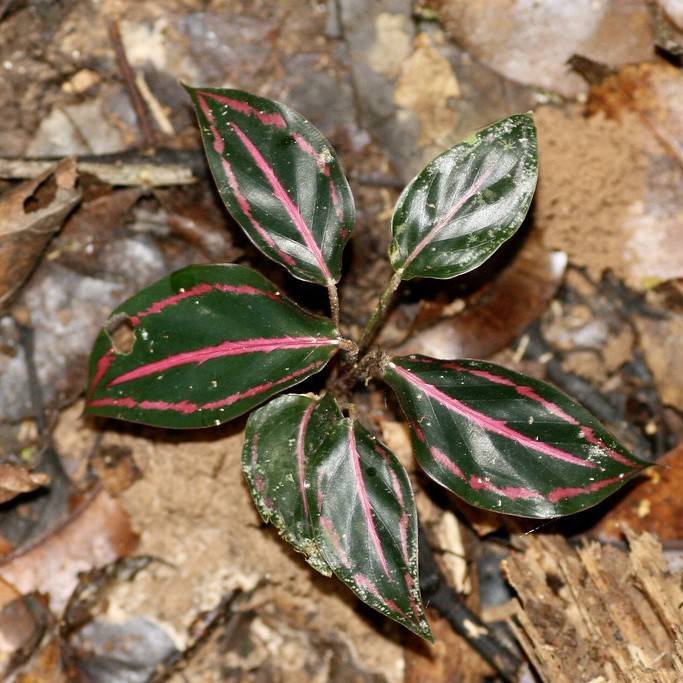
Goeppertia
Goeppertia spp.
Overview
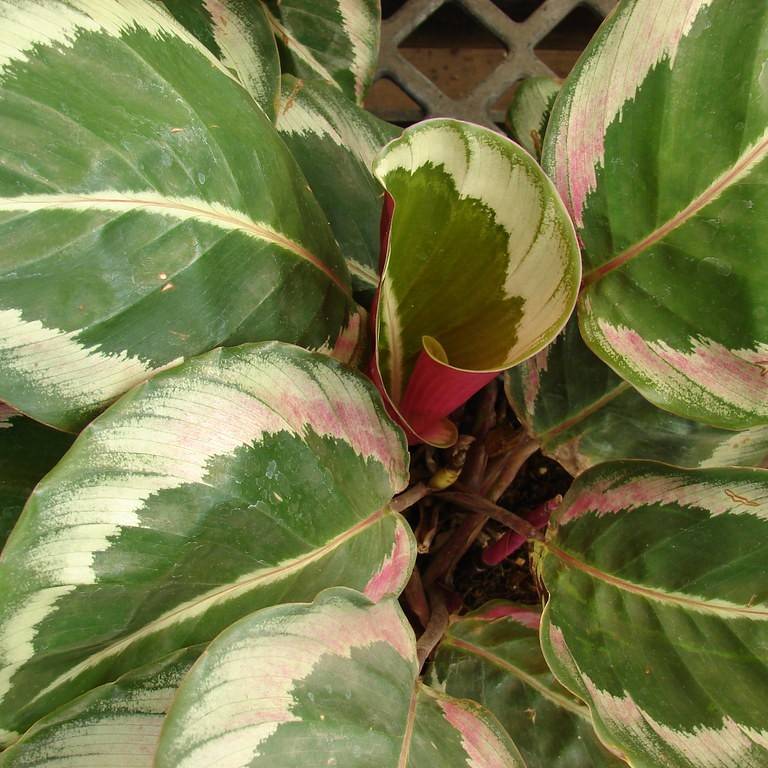
Goeppertia, formerly classified under the Calathea genus, encompasses over 200 species of evergreen perennials beloved for their striking, often multi-colored foliage marked with stripes, spots, or intricate veining. As members of the prayer plant family, they exhibit nyctinasty, a circadian response where leaves lift and fold at the base of their petioles as darkness falls, unfurling again at dawn. These understory plants are adapted to the dappled light and humid conditions of tropical rainforests, making them popular but somewhat finicky houseplants for collectors seeking bold, decorative foliage.
Care Guide
Watering
Water Goeppertia when the top 1 to 2 inches of soil feels dry, using filtered, rain, or distilled water to avoid leaf browning from fluoride and chlorine in tap water. Avoid overwatering, which leads to root rot, and never let the plant sit in standing water in its saucer; reduce watering frequency slightly in winter when growth slows.
Light
Goeppertia thrives in bright, indirect light, such as that filtered through a sheer curtain near an east or north-facing window, to protect its delicate leaves from scorch. Avoid direct midday or afternoon sun, which will fade vibrant leaf patterns and cause brown, crispy burn marks on foliage; it can tolerate lower light conditions but will grow slower and may lose some pattern definition.
Soil
Plant Goeppertia in a light, well-draining, moisture-retentive potting mix, ideally formulated for aroids or marantaceae, with added perlite, orchid bark, and coconut coir to improve aeration and drainage. The ideal soil pH is slightly acidic, between 5.5 and 6.5, to support healthy nutrient uptake and prevent leaf yellowing caused by alkaline conditions.
Fertilizer
Fertilize Goeppertia once a month during the active growing season (spring and summer) with a balanced, water-soluble houseplant fertilizer diluted to half the recommended strength to avoid burning sensitive roots. Do not fertilize in fall and winter when the plant is dormant, as excess nutrients will build up in the soil and cause leaf tip burn or stunted growth.
Temperature
Goeppertia prefers consistent warm temperatures between 65°F and 85°F (18°C and 29°C) to thrive, avoiding sudden fluctuations that can cause leaf drop or curling. Keep plants away from cold drafts from open windows, air conditioning vents, or heating units, as temperatures below 60°F (15°C) can cause permanent damage to foliage and root systems.
Pruning
Prune Goeppertia as needed by snipping off yellowed, browned, or damaged leaves at the base of their petioles with clean, sharp pruning shears to maintain the plant’s appearance and encourage new, healthy growth. Remove any spent flower stalks promptly if the plant blooms indoors, as flowering diverts energy from foliage production, and trim back any overgrown stems to keep the plant compact if desired.
Propagation
The most reliable method of propagating Goeppertia is by division during repotting in spring, carefully separating the root ball into smaller sections with at least 2 to 3 healthy leaves and a portion of intact roots per division, then potting each section in its own container with appropriate potting mix. Stem cuttings are not viable for most Goeppertia species, as they do not produce growth nodes along their stems; new plants can also be grown from seed, but this method is very slow and rarely used for home cultivation.
Humidity
Goeppertia requires high humidity levels between 60% and 70% to maintain healthy, lush foliage, as dry air will cause brown leaf tips, curling, or crispy leaf edges. Increase humidity around the plant by placing it on a pebble tray filled with water, grouping it with other tropical plants, or running a small humidifier nearby; avoid misting leaves directly for extended periods, as this can increase the risk of fungal leaf spot.
Repotting
Repot Goeppertia every 1 to 2 years in spring, or when roots begin to grow out of the drainage holes at the bottom of the pot, choosing a container that is only 1 to 2 inches larger in diameter than the current pot to prevent excess soil from retaining too much moisture. Gently loosen the root ball before placing it in the new container with fresh potting mix, and water thoroughly after repotting to help the plant settle into its new environment.
Uses & Symbolism
Goeppertia is primarily grown as an ornamental houseplant, valued for its dramatic, patterned foliage that adds vibrant visual interest to indoor spaces and works well as a tabletop, shelf, or floor plant depending on its mature size. In its native range, some species are used in traditional medicine to treat minor ailments, and their large, sturdy leaves are occasionally used for wrapping food.
Diseases & Pests
Goeppertia is susceptible to common houseplant pests including spider mites, aphids, mealybugs, and fungus gnats, which thrive in dry air or overly moist soil; inspect leaves regularly and treat infestations with neem oil or insecticidal soap at the first sign of activity. Overwatering and poor drainage often lead to root rot, while overly dry conditions or exposure to harsh chemicals in water can cause brown leaf tips; fungal leaf spot may also occur if foliage is kept consistently wet from over-misting or overhead watering.
Related plants
Other plants you might like if you grow Goeppertia.