Jet Bead
Rhodotypos scandens
Overview
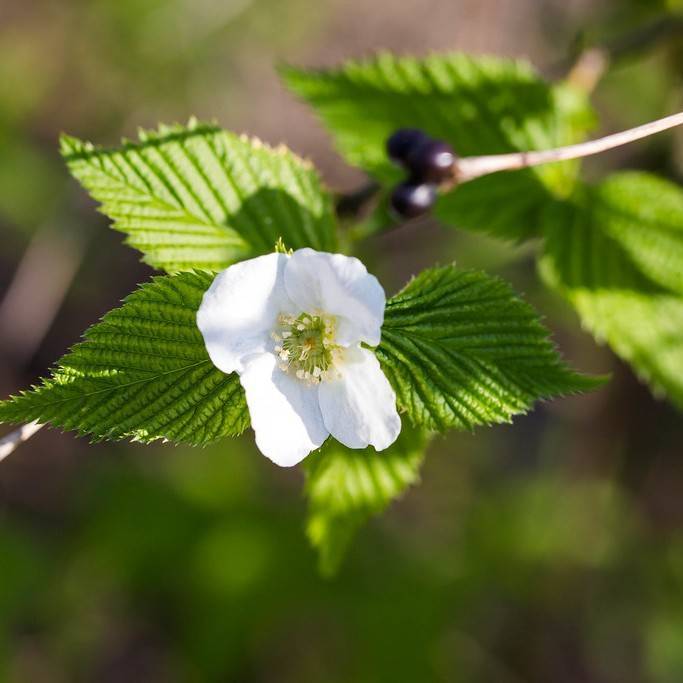
Rhodotypos scandens, commonly called Jet Bead, is a low, spreading deciduous shrub native to cool forest understories and stream banks of East Asia. It is named for its clusters of shiny, bead-like black fruits that develop after flowering and remain on the plant long after leaves drop, providing year-round visual interest. A hardy, adaptable species, it is often used in landscape borders, naturalized areas, and erosion control plantings in temperate regions.
Care Guide
Watering
Jet Bead prefers consistently moist, well-drained soil, requiring regular watering during dry spells to prevent leaf drop, especially in its first two years of establishment. Once mature, it has moderate drought tolerance, though supplemental watering during extended dry periods will support better flowering and fruit production. Avoid overwatering or waterlogged conditions, which can lead to root rot.
Light
This shrub thrives in partial shade, making it ideal for dappled understory locations or sites with morning sun and afternoon shade. It can tolerate full sun in cooler climates if provided with sufficient moisture, though leaf scorch may occur in hot, intense midday sun. Full shade will reduce flowering and fruit set, leading to a sparser, leggier growth habit.
Soil
Jet Bead adapts to a wide range of soil types, including loam, sandy, and clay soils, as long as they drain well. It prefers a slightly acidic to neutral pH range of 5.5 to 7.0, though it can tolerate mildly alkaline conditions. Amending heavy clay soils with organic matter such as compost will improve drainage and support healthier root development.
Fertilizer
Apply a balanced, slow-release 10-10-10 fertilizer in early spring before new growth emerges to support flowering and fruit production. Avoid overfertilizing, especially with high-nitrogen formulas, which can promote excessive foliage growth at the expense of flowers and berries. Established plants only need fertilization once every 1 to 2 years, as they are not heavy feeders.
Temperature
Jet Bead is cold hardy in USDA zones 4 to 8, tolerating winter temperatures as low as -30°F (-34°C) without significant damage. It prefers cool to moderate summer temperatures, and may show signs of stress such as leaf wilting in sustained heat above 90°F (32°C) without adequate moisture. Late spring frosts can damage emerging flower buds, so sheltered sites are ideal in areas with frequent late freezes.
Pruning
Prune Jet Bead in late winter or early spring before new growth starts, removing dead, damaged, or crossing branches to improve air circulation and maintain a neat shape. It can be cut back heavily to rejuvenate overgrown shrubs, as it sprouts readily from old wood. Remove any suckers that spread beyond the desired planting area to prevent unwanted naturalization.
Propagation
Jet Bead is most easily propagated from softwood cuttings taken in early summer, dipped in rooting hormone, and placed in a moist, well-drained growing medium under indirect light. Seeds can be collected from ripe black berries in fall, though they require 3 to 4 months of cold stratification to germinate, and seedlings may take 2 to 3 years to reach flowering size. Suckers that develop at the base of mature plants can also be dug up and transplanted in early spring for quick establishment.
Humidity
This shrub tolerates a wide range of humidity levels, thriving in the moderate humidity typical of its native temperate forest habitats. It adapts well to drier indoor or urban humidity levels if grown in containers, though occasional misting can reduce leaf tip browning in very low humidity environments. High humidity combined with poor air circulation may increase the risk of fungal leaf spots, so ensure proper spacing between plants.
Repotting
If grown in containers, repot Jet Bead every 2 to 3 years in early spring before new growth emerges, using a well-drained, loamy potting mix. Choose a container with drainage holes that is 2 to 3 inches larger in diameter than the current pot to accommodate root growth. After repotting, water thoroughly and place in partial shade for 1 to 2 weeks to reduce transplant stress.
Uses & Symbolism
Jet Bead is widely used in temperate landscaping as a low hedge, border shrub, or understory planting in woodland gardens, valued for its long-lasting black berries that provide winter interest. Cut branches with persistent berries are often used in dried floral arrangements for their unique dark, glossy texture. In traditional East Asian medicine, extracts from the leaves and roots have been used topically to treat minor wounds and inflammation, though internal consumption is not recommended due to toxicity.
Diseases & Pests
Jet Bead is relatively pest and disease resistant, though it may occasionally be affected by fungal leaf spots and powdery mildew in warm, humid conditions with poor air circulation. Aphids and scale insects may infest new growth, sucking sap and causing leaf curling, which can be controlled with insecticidal soap or horticultural oil. Root rot may occur in heavy, waterlogged soils, so proper drainage is critical to prevent this fatal condition.
Related plants
Other plants you might like if you grow Jet Bead.