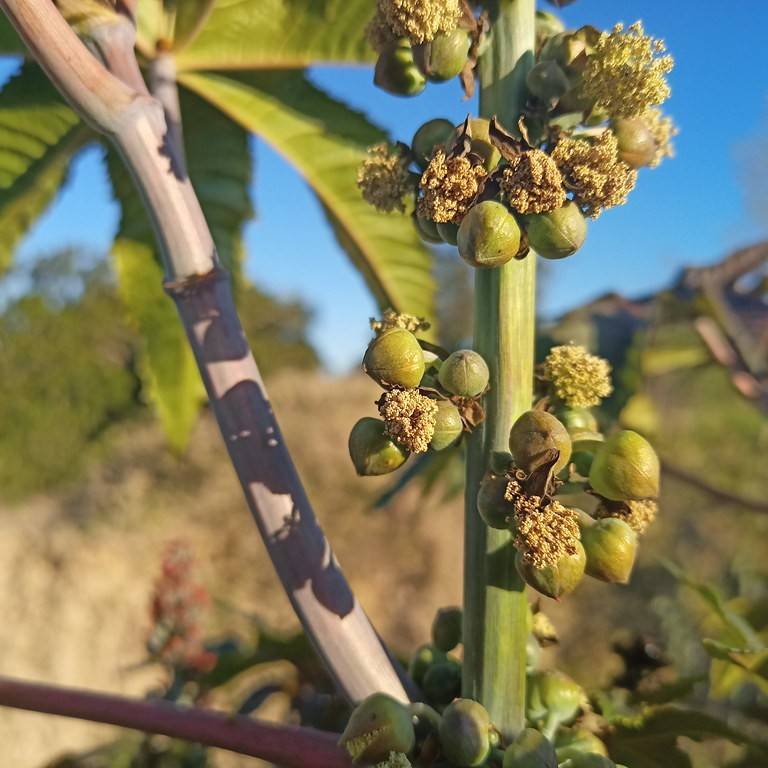
Castor Bean
Ricinus communis
Overview
Castor bean is a striking, large-leaved plant grown both as a warm-season annual in temperate regions and a woody perennial in its native tropical range. It is the sole species in the genus Ricinus, valued commercially for castor oil, a non-drying oil extracted from its seeds that is used in cosmetics, pharmaceuticals, and industrial lubricants. Its bold, palmate leaves and tall, architectural form make it a popular ornamental for adding tropical flair to landscape beds and container displays.
Care Guide
Watering
Water castor bean regularly during the first growing season to establish a deep root system, keeping soil consistently moist but not waterlogged. Once established, it is moderately drought-tolerant, though prolonged dry periods may cause leaf drop and stunted growth; reduce watering in winter for perennial plants.
Light
Castor bean thrives in full, direct sunlight, requiring a minimum of 6 to 8 hours of unobstructed light daily to produce its characteristic lush foliage and robust growth. It can tolerate partial shade, but plants grown in low light will become leggy, produce fewer flowers and seeds, and have less vibrant leaf color.
Soil
This adaptable plant grows well in most well-drained soil types, including loam, sandy soil, and poor-quality urban soils, with a preferred pH range between 5.5 and 6.5. It does not tolerate heavy, waterlogged clay soils, which can cause root rot; amend heavy soils with compost or coarse sand to improve drainage before planting.
Fertilizer
Feed castor bean with a balanced, all-purpose granular fertilizer at planting time to support vigorous early growth. For container-grown plants, apply a diluted liquid fertilizer every 4 to 6 weeks during the active growing season; avoid over-fertilizing with high-nitrogen formulas, as this can promote excessive foliage growth at the expense of seed production.
Temperature
Castor bean prefers warm temperatures between 68 and 86°F (20 and 30°C) and is extremely frost-sensitive, with foliage dying back immediately if exposed to temperatures below 32°F (0°C). In temperate regions, it is grown as an annual, as it will not survive cold winters; perennial growth is only possible in USDA hardiness zones 9 through 11.
Pruning
Prune castor bean in late winter or early spring for perennial plants to remove dead or damaged stems and encourage bushier, more compact growth. For annual ornamental plants, pinch back the central growing tip when the plant is 1 to 2 feet tall to promote branching and prevent it from becoming top-heavy; always wear gloves when pruning to avoid skin irritation from sap.
Propagation
Castor bean is most commonly propagated from seed, which should be soaked in warm water for 24 hours before sowing to soften the hard seed coat and improve germination rates. Sow seeds indoors 6 to 8 weeks before the last expected frost, or directly outdoors once soil temperatures have warmed to at least 65°F (18°C); seedlings transplant easily if handled carefully to avoid damaging the taproot.
Humidity
Castor bean adapts well to a wide range of humidity levels, thriving in the high humidity of its native tropical regions as well as the moderate humidity of temperate growing zones. It can tolerate low humidity conditions, though very dry air may cause brown leaf tips; misting is not required for healthy growth.
Repotting
Container-grown castor bean requires repotting every 1 to 2 years in spring, before the start of the active growing season, as its fast-growing root system can quickly outgrow small containers. Choose a pot that is 2 to 3 inches larger in diameter than the current one, with drainage holes to prevent waterlogging; use a well-drained potting mix amended with compost for added nutrients.
Uses & Symbolism
Commercially, castor bean seeds are processed to extract castor oil, which is used in a wide range of products including cosmetics, biodiesel, paint, and pharmaceutical laxatives. Ornamentally, it is planted in landscape beds and large containers to add bold, tropical texture and height to garden designs, with many cultivars featuring deep red or purple foliage for added visual interest. Historically, it has been used in traditional medicine for a variety of ailments, though its high toxicity makes unprocessed plant parts unsafe for any home medicinal use.
Diseases & Pests
Castor bean is relatively pest-resistant, but may be affected by spider mites, aphids, and whiteflies, particularly when grown in dry, indoor conditions or stressed by drought. Fungal diseases such as root rot, leaf spot, and powdery mildew can occur in overly wet, poorly drained soils or when foliage remains consistently moist from overhead watering. It may also be targeted by castor bean moth larvae, which feed on foliage and can cause significant defoliation if populations are left unmanaged.
Related plants
Other plants you might like if you grow Castor Bean.