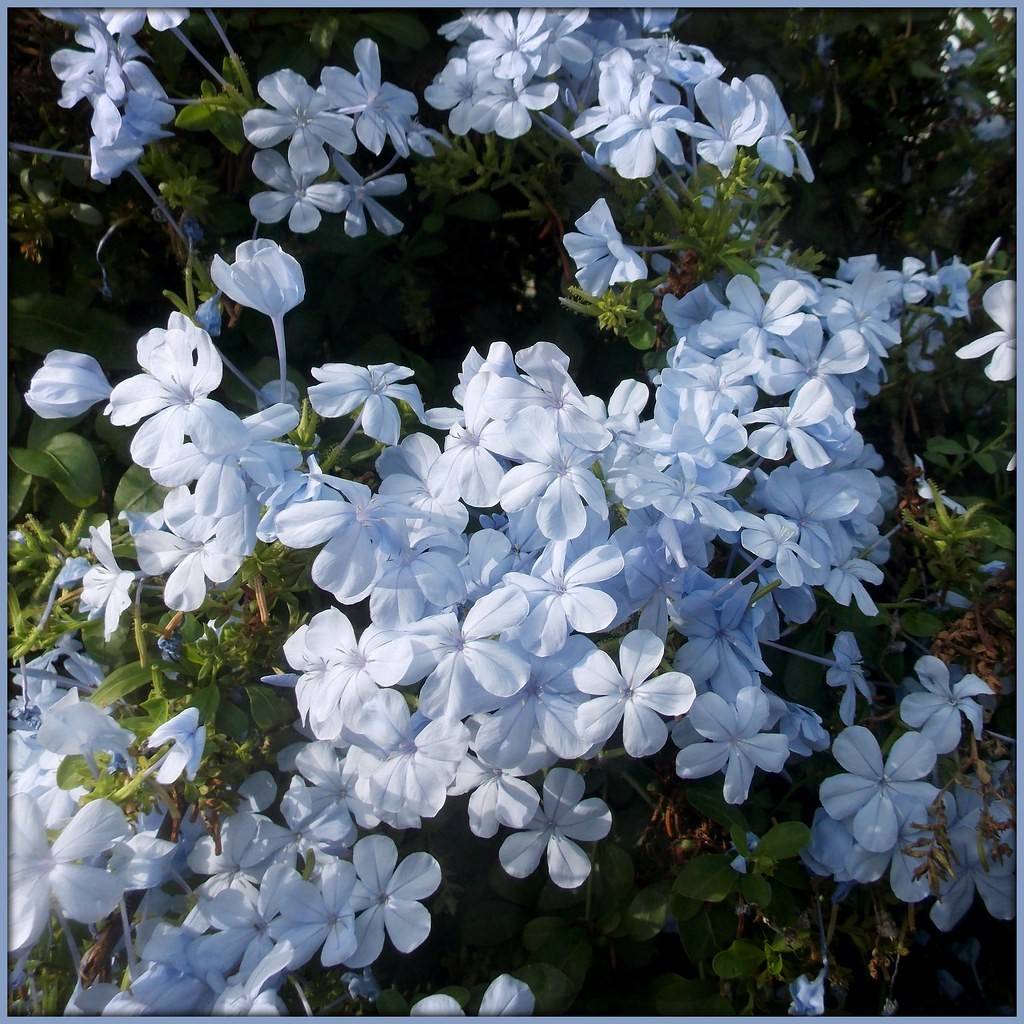
Cape Leadwort
Plumbago auriculata
Overview
Cape Leadwort, also called sky flower, is a sprawling evergreen shrub or climbing vine prized for its dense, rounded clusters of five-petaled flowers that range from soft sky blue to bright white. It naturally develops a mounding, arching growth habit, but can be trained to climb trellises, fences, or walls with support, making it versatile for landscape designs. In regions with cold winters, it is often grown as a houseplant or seasonal container specimen, as it cannot tolerate prolonged freezing temperatures.
Care Guide
Watering
Water Cape Leadwort regularly during the growing season, allowing the top 1 to 2 inches of soil to dry out between waterings to prevent root rot. Reduce watering frequency in fall and winter when growth slows, providing just enough moisture to keep the root ball from drying out completely. Overwatering is the most common cause of poor health, so avoid letting plants sit in standing water in saucers or planting beds.
Light
Cape Leadwort thrives in full sun, which promotes the most abundant flowering and compact, bushy growth; it tolerates partial shade, but will produce fewer blooms and develop a lanky, sparse habit. Indoor specimens should be placed in a south or west-facing window that receives a minimum of 6 hours of direct sunlight per day. In extremely hot, arid climates, provide light afternoon shade to prevent leaf scorch during peak summer heat.
Soil
Plant Cape Leadwort in well-draining, loamy or sandy soil with a slightly acidic to neutral pH between 6.0 and 7.0 for optimal growth. It tolerates poor, nutrient-deficient soils and mild salinity, making it well-suited for coastal landscape plantings. Heavy clay soils should be amended with compost or coarse sand to improve drainage before planting, as saturated soil will quickly cause root rot.
Fertilizer
Feed Cape Leadwort with a balanced, slow-release granular fertilizer in early spring, just before new growth emerges, to support healthy foliage and flower production. A second application of diluted liquid all-purpose fertilizer can be given in mid-summer if growth appears stunted or flowering is sparse. Avoid fertilizing in fall and winter, as this can encourage tender new growth that is vulnerable to cold damage.
Temperature
Cape Leadwort prefers warm temperatures between 65 and 85°F (18 and 29°C) during the active growing season, and can tolerate brief dips down to 20°F (-7°C) if established, though foliage may die back in these conditions. Indoor specimens should be kept away from cold drafts from windows or heating vents during the winter months. In regions with sustained freezing temperatures, grow it in containers that can be moved indoors before the first frost.
Pruning
Prune Cape Leadwort in late winter or early spring, before new growth begins, to remove dead, damaged, or overcrowded branches and maintain a desired shape or size. Light trimming of long, leggy stems throughout the growing season will encourage bushier growth and more abundant flowering, as blooms form on new growth. If grown as a vine, regularly tie new stems to their support structure and trim stray growth to keep the plant neat.
Propagation
Cape Leadwort is most easily propagated from semi-hardwood cuttings taken in late summer, selecting 4 to 6 inch stems with healthy foliage, removing lower leaves, and rooting them in moist, well-draining potting mix. It can also be grown from seed collected from mature seed pods, though seed-grown plants may take 2 to 3 years to reach flowering size. Division of established, large clumps can be done in early spring, carefully separating root sections and replanting them immediately.
Humidity
Cape Leadwort adapts well to average ambient humidity levels between 40 and 60%, which is typical of most indoor and outdoor growing environments. It tolerates low humidity and dry air better than many tropical plants, making it a low-fuss houseplant option. In extremely arid climates, occasional misting of foliage can help prevent leaf tip browning, though it is not required for healthy growth.
Repotting
Container-grown Cape Leadwort should be repotted every 2 to 3 years in early spring, moving it to a pot 1 to 2 inches larger than the current one to accommodate root growth. Use a well-draining potting mix formulated for flowering shrubs, and ensure the new pot has adequate drainage holes to prevent waterlogged soil. Mature plants that have reached their desired size can be root-pruned and repotted into the same container with fresh soil to restrict growth and keep it manageable.
Uses & Symbolism
Cape Leadwort is widely used in warm-climate landscapes as a flowering shrub, hedge, ground cover, or climbing vine for trellises and fences, where its long bloom period from spring to fall provides consistent color. It is also a popular container plant for patios, balconies, or indoor growing in cooler regions, and its nectar-rich flowers attract butterflies, bees, and hummingbirds to gardens. Historically, extracts from the plant were used in traditional medicine to treat a range of ailments, though its toxic properties make modern medicinal use unadvisable without professional guidance.
Diseases & Pests
Cape Leadwort is relatively pest-resistant, but may be affected by common sap-sucking insects such as aphids, whiteflies, and spider mites, especially when grown indoors or in crowded, poorly ventilated conditions. Root rot is the most common disease, caused by overwatering or poorly draining soil, and presents as yellowing, wilting foliage and stunted growth. Powdery mildew may develop on leaves in humid, shaded conditions with poor air circulation, which can be prevented by planting in full sun and spacing plants to allow adequate airflow between branches.
Related plants
Other plants you might like if you grow Cape Leadwort.