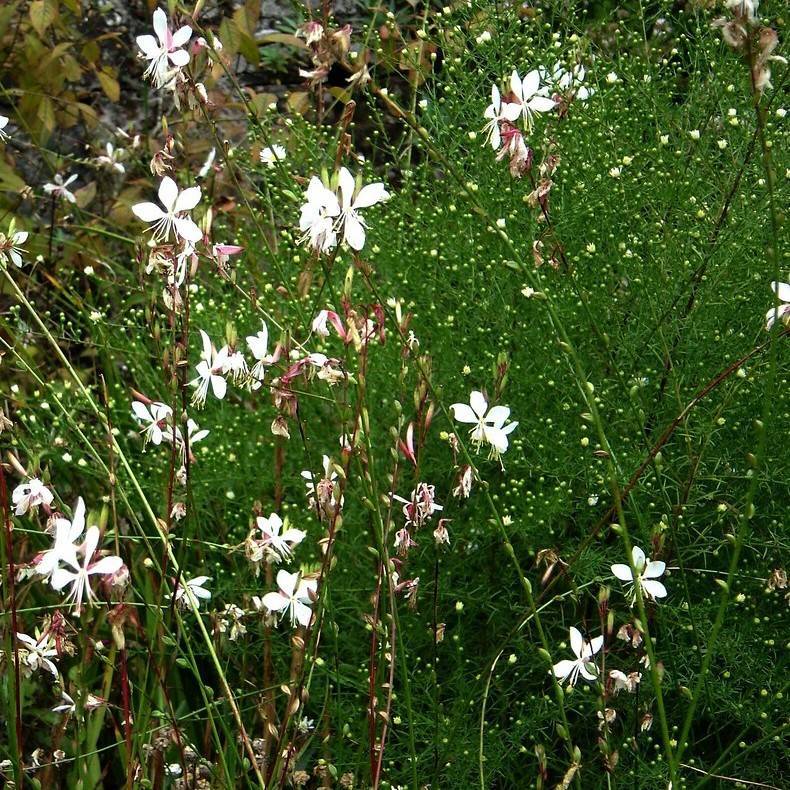
Gaura
Oenothera lindheimeri
Overview
Gaura, formerly classified as Gaura lindheimeri, is a drought-tolerant perennial prized for its wispy, open growth habit and delicate, long-blooming flowers that sway gently in even light breezes. It produces numerous slender stems lined with small, lance-shaped green leaves, topped with clusters of four-petaled blooms that open white and often fade to soft pink as they age. Hardy in USDA zones 5 to 9, it adapts well to a range of garden settings, from mixed borders to rock gardens and xeriscapes.
Care Guide
Watering
Gaura has excellent drought tolerance once established, requiring only occasional deep watering during extended dry periods; avoid overwatering, as soggy soil can lead to root rot. Newly planted specimens should be watered regularly for the first 2 to 3 months to help them develop a robust root system. Reduce watering in fall and winter to match lower growth rates and cooler temperatures.
Light
Gaura thrives in full sun, requiring a minimum of 6 hours of direct sunlight daily to produce the most abundant blooms and maintain a compact, sturdy growth habit. It can tolerate very light partial shade, but too much shade will cause stems to become leggy, flop over, and produce far fewer flowers. For indoor cultivation, place it in a south-facing window with unobstructed sunlight year-round.
Soil
This adaptable plant grows best in well-drained, sandy or loamy soil with a slightly acidic to neutral pH range of 6.0 to 7.5. It tolerates poor, rocky, and low-nutrient soils very well, making it suitable for challenging garden spots where many other plants struggle. Heavy clay soils that hold moisture should be amended with compost, sand, or perlite to improve drainage before planting.
Fertilizer
Gaura has low fertilizer needs, and excessive feeding will encourage overly lush, leggy growth that is prone to flopping. A single application of balanced, slow-release granular fertilizer in early spring, at half the recommended rate for general garden plants, is sufficient to support healthy growth and flowering throughout the season. Avoid applying high-nitrogen fertilizers, as these prioritize leaf growth over bloom production.
Temperature
Gaura is cold hardy in USDA zones 5 to 9, tolerating winter temperatures as low as -20°F (-29°C) when established. It thrives in warm summer temperatures between 65°F and 95°F (18°C to 35°C) and handles high heat and humidity very well without wilting or suffering heat stress. In regions with harsh winters, apply a 2 to 3 inch layer of mulch around the base of the plant in late fall to insulate the root system from extreme temperature fluctuations.
Pruning
Minimal pruning is required for gaura; cut back spent flower spikes by one-third in mid-summer after the first major bloom flush to encourage a second, heavier round of flowering in late summer and fall. In late winter or early spring, before new growth emerges, cut the entire plant back to 3 to 6 inches above the soil line to remove dead, woody stems and promote fresh, vigorous new growth. Remove any damaged, diseased, or crossing stems at any point during the growing season to maintain airflow and plant health.
Propagation
Gaura is most commonly propagated by seed, sown directly outdoors in the garden after the last frost date, or started indoors 6 to 8 weeks before the expected last frost for earlier blooms. It can also be propagated via softwood stem cuttings taken in early summer, rooted in moist, well-drained potting mix under indirect light with consistent humidity. Established clumps can be divided every 3 to 4 years in early spring, though gaura has a deep taproot that makes division somewhat challenging, so take care to preserve as much of the root system as possible when lifting plants.
Humidity
Gaura adapts well to a wide range of humidity levels, tolerating both dry, arid conditions and moderate summer humidity without issue. It does not perform well in consistently high, stagnant humidity, which can increase the risk of fungal leaf diseases, so ensure plants are spaced adequately to promote good air circulation around the foliage. For indoor plants, average household humidity levels between 30% and 50% are perfectly sufficient, and no extra misting or humidity supplementation is required.
Repotting
Potted gaura plants should be repotted every 2 to 3 years in early spring, before new growth begins, to refresh the soil and provide extra root space as the plant matures. Choose a pot with multiple drainage holes that is 1 to 2 inches larger in diameter than the current container, to avoid excess soil that can hold unnecessary moisture around the roots. Use a well-drained, sandy potting mix amended with perlite or coarse sand to ensure proper drainage, and water lightly after repotting to settle the soil around the root system.
Uses & Symbolism
Gaura is a popular ornamental plant for mixed perennial borders, rock gardens, pollinator gardens, and xeriscapes, where its airy growth habit adds soft texture and movement to garden designs. Its long-blooming flowers are highly attractive to bees, butterflies, and hummingbirds, making it a valuable addition to wildlife-friendly gardens. It also works well as a cut flower, with stems lasting 7 to 10 days in floral arrangements.
Diseases & Pests
Gaura is relatively pest and disease resistant, though it can be susceptible to root rot if grown in poorly drained, consistently soggy soil. Aphids and whiteflies may occasionally infest new growth, especially on plants grown in partial shade or with poor air circulation, and can be controlled with insecticidal soap or neem oil applications. Fungal leaf spots and powdery mildew may occur in regions with high, prolonged humidity, which can be prevented by spacing plants to ensure good airflow and avoiding overhead watering that wets the foliage.
Related plants
Other plants you might like if you grow Gaura.
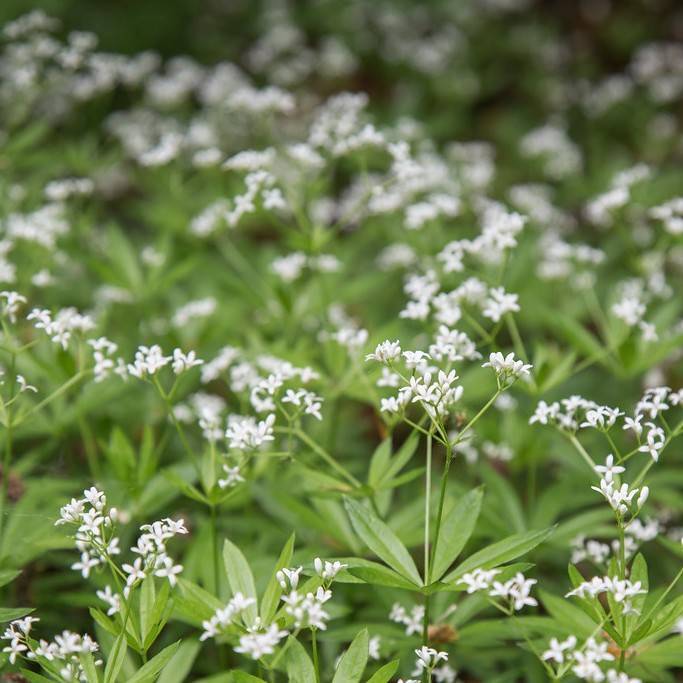
Baby's Breath
Gypsophila paniculata
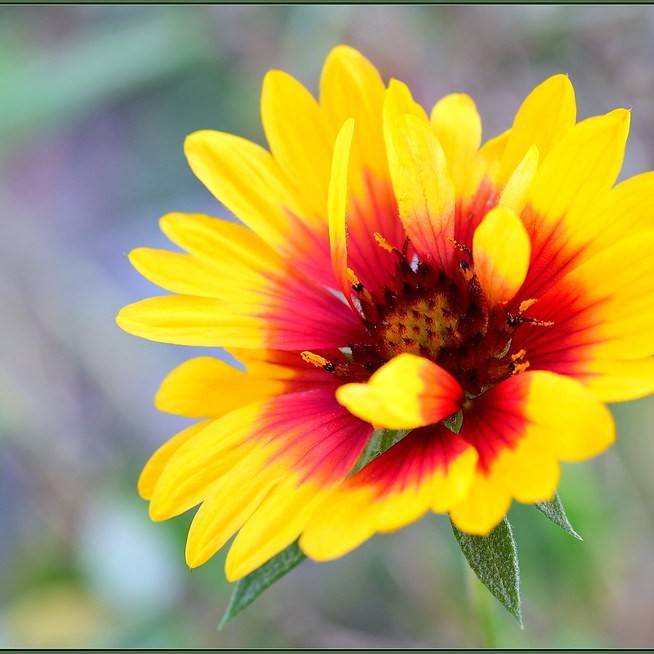
Blanket Flower
Gaillardia aristata
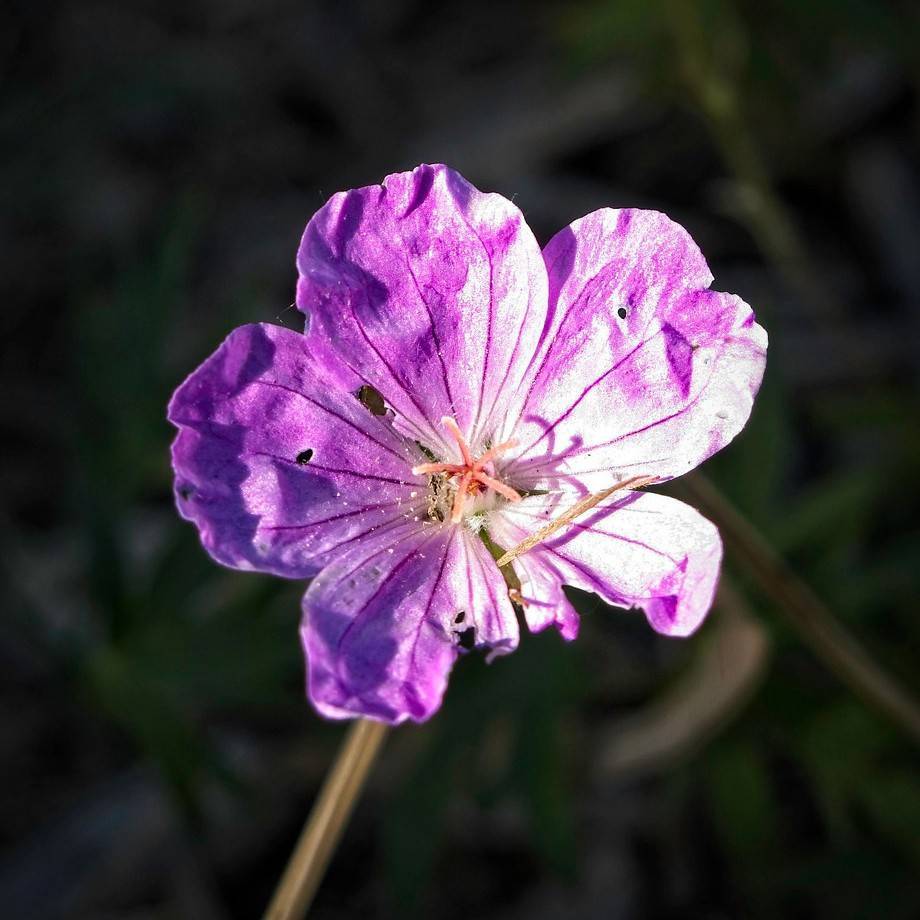
Bloody Cranesbill
Geranium sanguineum
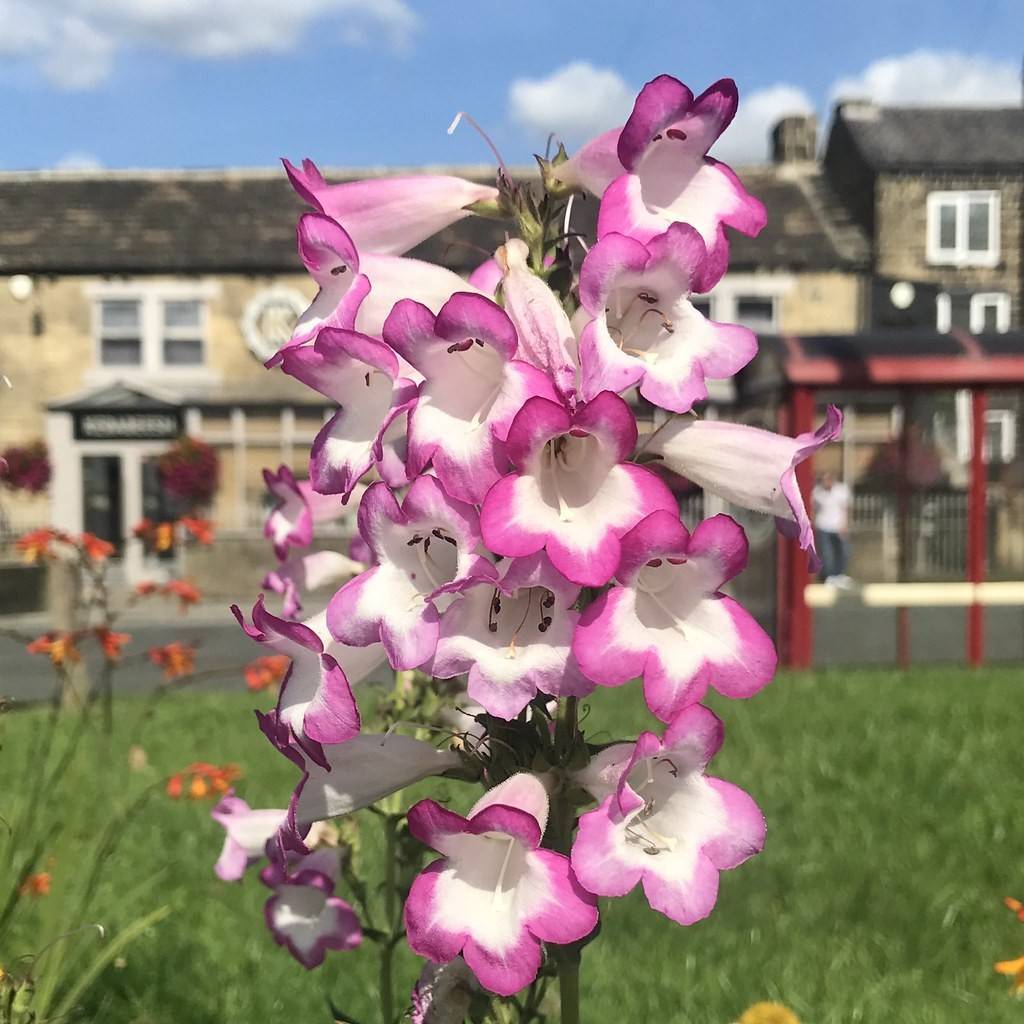
Bellflower Beardtongue
Penstemon campanulatus
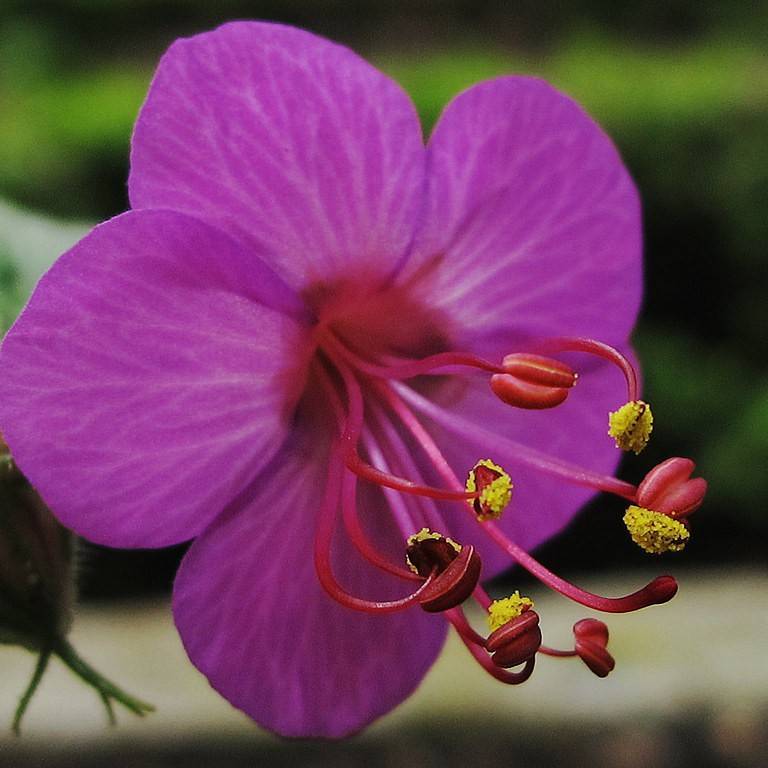
Bigroot Geranium
Geranium macrorrhizum
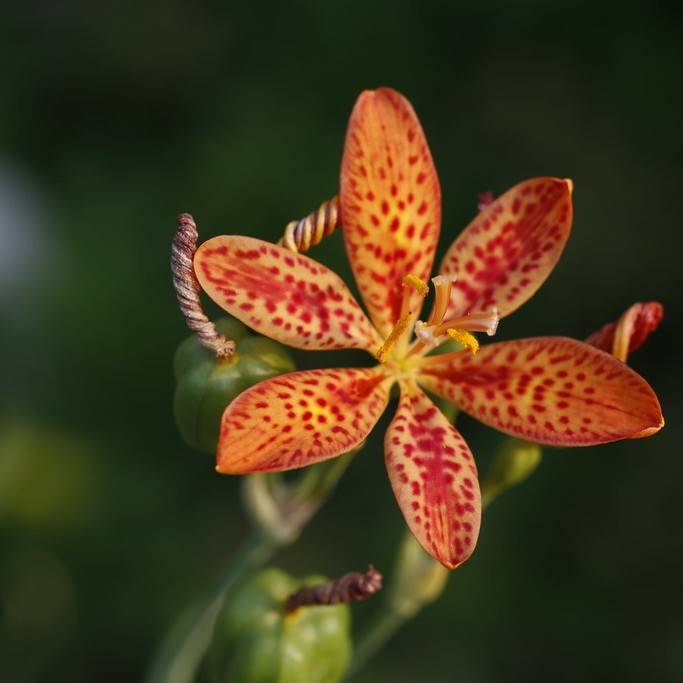
Blackberry Lily
Iris domestica (syn. Belamcanda chinensis)
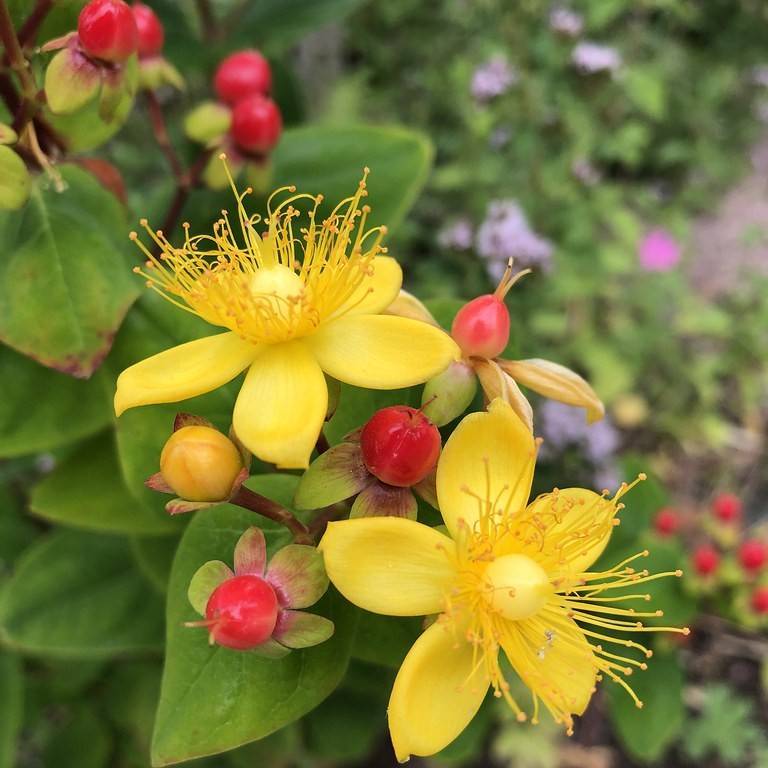
St. John's Wort
Hypericum perforatum
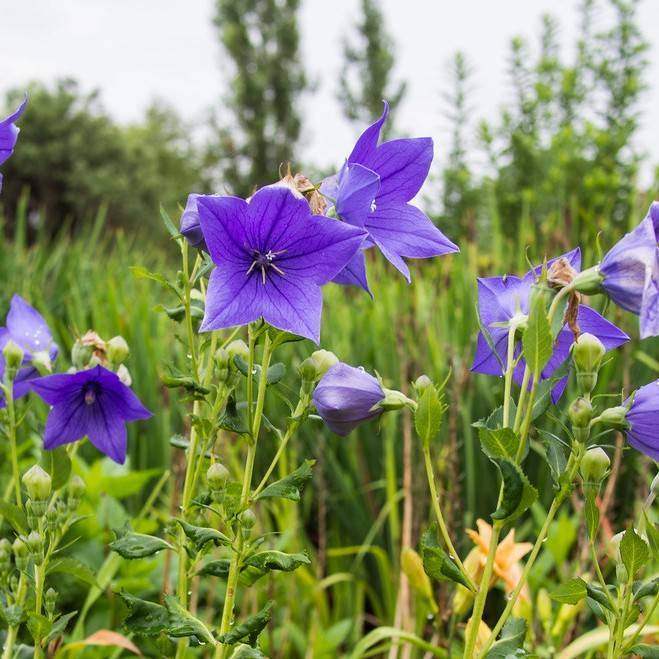
Balloon Flower
Platycodon grandiflorus