Blackberry Lily
Iris domestica (syn. Belamcanda chinensis)
Overview
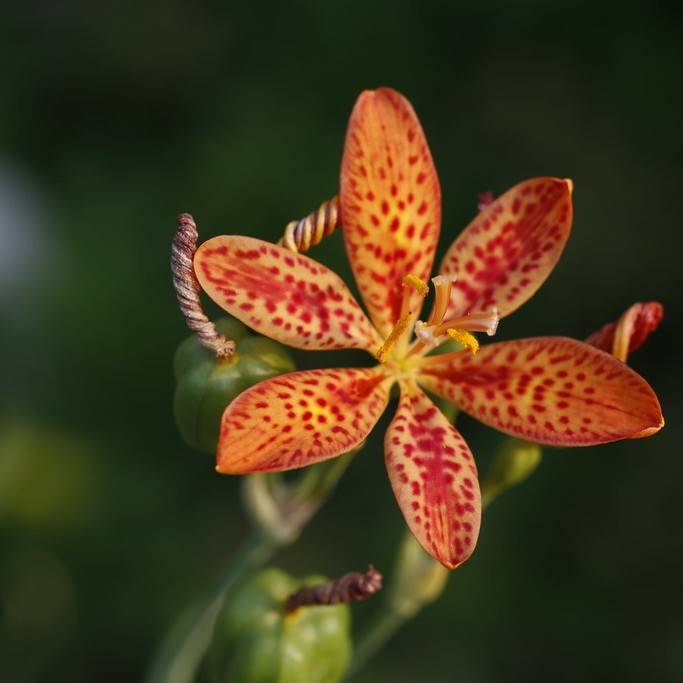
Blackberry lily, also called leopard lily for its spotted orange blooms, produces sword-shaped, iris-like foliage that forms upright clumps. Its star-shaped, 2-inch wide flowers bloom in mid to late summer, ranging in color from bright orange to yellow with deep red or purple speckles, and each bloom lasts only one day before being replaced by new buds. After flowering, the seed pods split open to reveal glossy, round black seeds arranged in tight clusters that persist through fall and winter, adding ornamental interest to gardens long after the blooms fade.
Care Guide
Watering
Water newly planted blackberry lilies regularly to keep the soil evenly moist but not waterlogged for the first growing season, helping them establish strong root systems. Once established, they are drought-tolerant, requiring only occasional watering during extended dry periods, as overwatering can lead to root rot. Avoid wetting the foliage when watering to reduce the risk of fungal diseases.
Light
Blackberry lilies thrive in full sun, meaning at least 6 hours of direct, unfiltered sunlight per day, which encourages the most abundant flowering and sturdy, upright growth. They can tolerate partial shade, especially in regions with intense, hot midday sun, but too much shade will cause the plants to become leggy, flop over, and produce far fewer blooms. For indoor potted specimens, place them in a south-facing window that receives consistent bright light throughout the day.
Soil
These adaptable plants grow best in well-drained, loamy soil with a neutral to slightly acidic pH between 6.0 and 7.0, though they can tolerate a wide range of soil types including sandy or clay soils as long as drainage is good. Heavy, waterlogged soils will cause the rhizomes to rot quickly, so amend dense clay soils with compost, perlite, or coarse sand to improve drainage before planting. They do not require highly fertile soil, and overly rich soil can lead to excessive foliage growth at the expense of flowers.
Fertilizer
Blackberry lilies are light feeders and do not require heavy fertilization to thrive. Apply a balanced, slow-release 10-10-10 fertilizer once in early spring just as new growth emerges, working it lightly into the top inch of soil around the base of the plants, taking care not to damage the shallow rhizomes. Avoid high-nitrogen fertilizers, as these will promote lush leaf growth while reducing flower production, and do not fertilize after mid-summer to prevent stimulating tender new growth that will be damaged by fall frost.
Temperature
Blackberry lilies are cold-hardy in USDA zones 5 through 10, tolerating winter temperatures as low as -20°F (-29°C) once established. They prefer warm summer temperatures between 65°F and 85°F (18°C to 29°C) for optimal growth and flowering, and can tolerate short periods of heat above 90°F (32°C) if provided with adequate moisture. In regions with harsh winters below zone 5, apply a 2-3 inch layer of mulch over the rhizomes in late fall to insulate them from extreme temperature fluctuations and frost heave.
Pruning
Prune back spent flower stalks after blooming if you do not want the plants to self-seed, as blackberry lilies can spread readily via seed in ideal growing conditions and become mildly invasive in some areas. If you wish to retain the ornamental black seed heads for fall and winter interest, leave the stalks intact until early spring, then cut all dead foliage and old stalks back to ground level just before new growth emerges. Remove any yellowed or damaged leaves throughout the growing season to improve air circulation around the plants and reduce disease risk.
Propagation
Blackberry lilies are most commonly propagated by seed, which can be sown directly outdoors in fall or started indoors 8-10 weeks before the last expected spring frost; seeds require a 30-day period of cold stratification to germinate successfully, and will usually bloom in their second year of growth. They can also be propagated by division of the rhizomes in early spring or late fall, carefully digging up established clumps, separating the rhizomes into sections with at least one healthy growth bud each, and replanting them 12-18 inches apart at the same depth they were growing previously. Division every 3-4 years also helps rejuvenate overcrowded clumps that have stopped flowering prolifically.
Humidity
Blackberry lilies are adaptable to a wide range of humidity levels, thriving in the average ambient humidity of their native East Asian habitats and most temperate garden environments, between 40% and 60% relative humidity. They do not require high humidity, and excessively humid, still conditions can increase the risk of fungal leaf spot diseases, so ensure plants are spaced adequately to allow for good air circulation. Indoor potted specimens do not need extra humidity, and can tolerate the drier air of most homes without issue as long as their soil moisture needs are met.
Repotting
Potted blackberry lilies should be repotted every 2-3 years in early spring, just as new growth begins to emerge, to refresh the soil and prevent the rhizomes from becoming root-bound. Choose a pot that is 2-3 inches larger in diameter than the current one, with multiple drainage holes to prevent waterlogging, and use a well-draining potting mix amended with perlite or coarse sand to improve drainage. When repotting, check the rhizomes for any signs of rot or damage, trimming away unhealthy sections with a sterile cutting tool before replanting at the same depth as the previous pot.
Uses & Symbolism
Blackberry lilies are popular in cottage gardens, pollinator gardens, and mixed perennial borders, where their bright summer blooms attract bees, butterflies, and hummingbirds, and their persistent seed heads add winter interest. Cut flowers and dried seed heads are often used in floral arrangements, with the seed clusters retaining their glossy black color for months when dried properly. In traditional East Asian medicine, diluted extracts of the rhizome have been used topically to treat skin conditions, though internal consumption is not recommended due to the plant's toxicity.
Diseases & Pests
Blackberry lilies are relatively pest and disease resistant, but can be susceptible to fungal leaf spot and rust in overly wet, humid conditions with poor air circulation; these issues can be prevented by spacing plants adequately, watering at the base rather than overhead, and removing affected foliage promptly. Aphids and spider mites may occasionally feed on the tender new growth, especially on potted indoor specimens, and can be controlled with a strong spray of water, insecticidal soap, or neem oil applications. Root rot is the most common serious issue, occurring when plants are grown in heavy, poorly drained soil or overwatered, so ensuring proper soil drainage is critical to preventing this fatal condition.
Related plants
Other plants you might like if you grow Blackberry Lily.