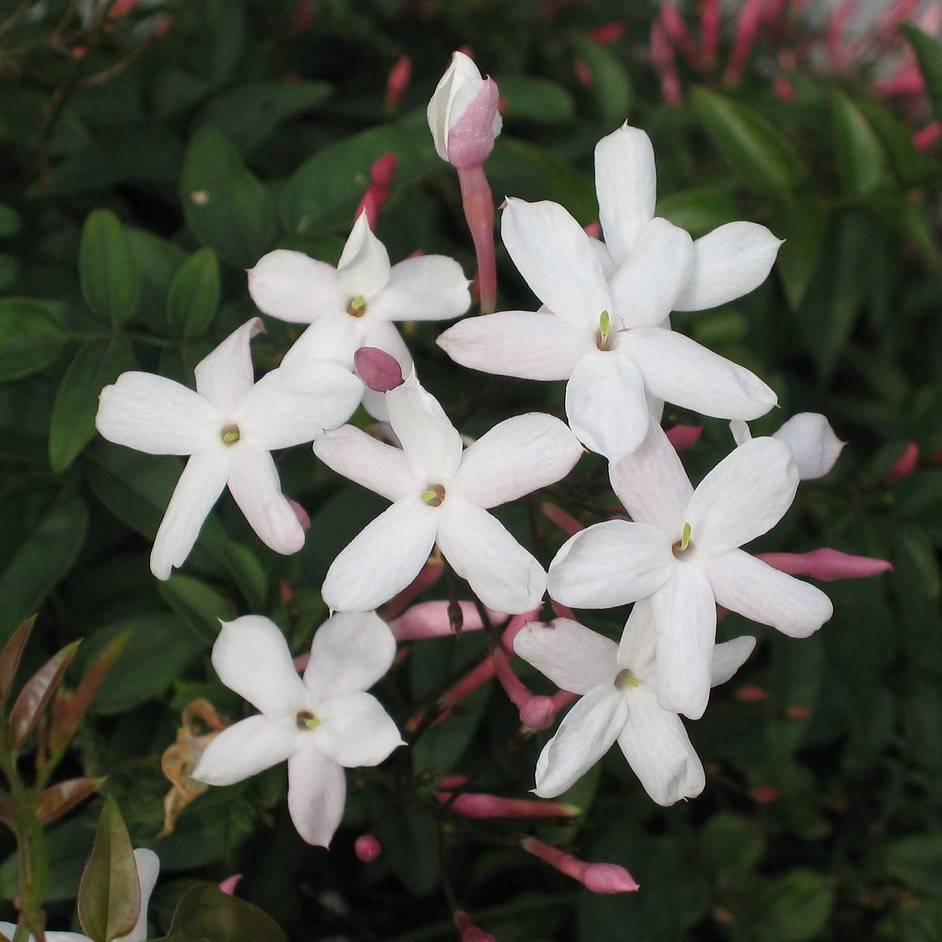
Jasmine
Jasminum officinale
Overview
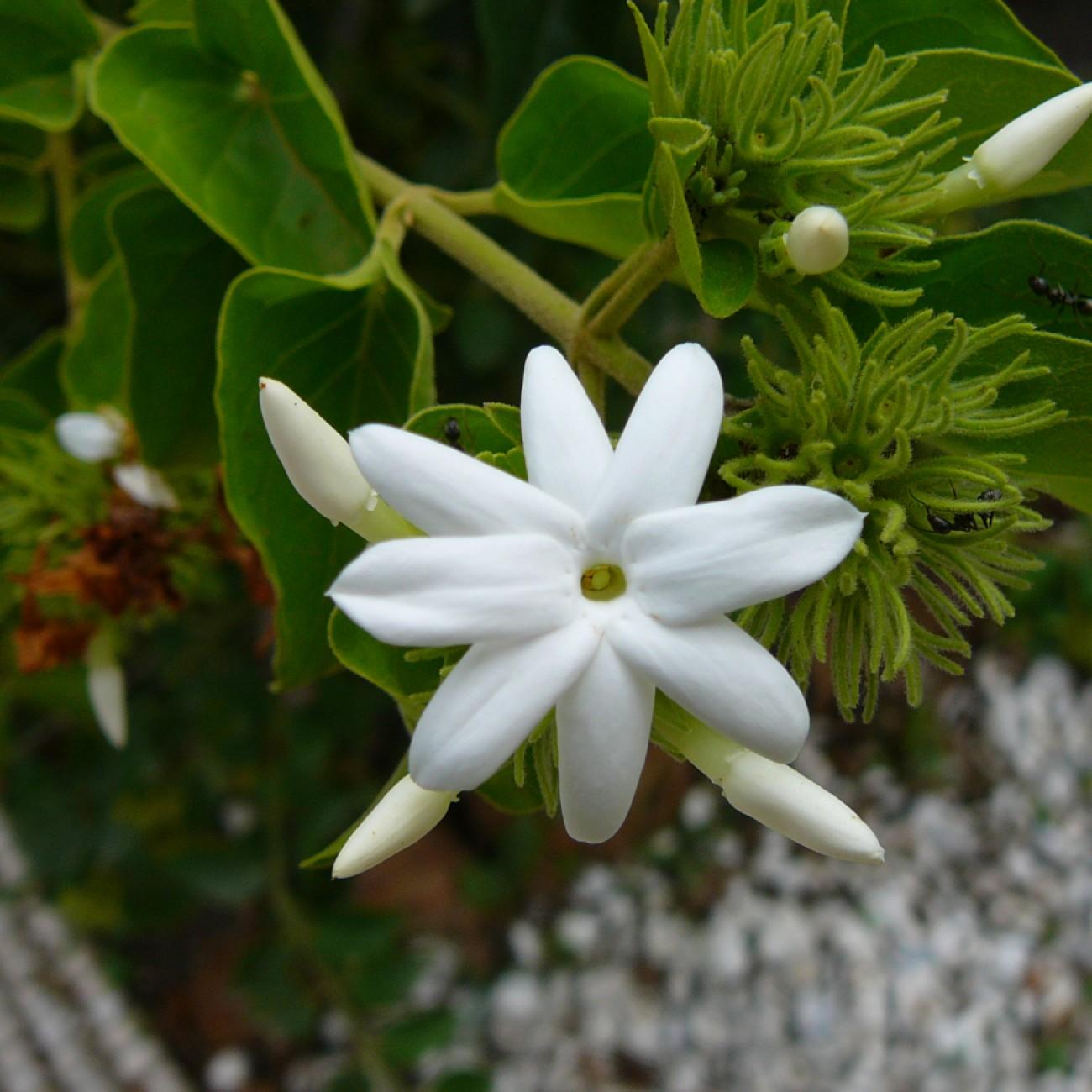
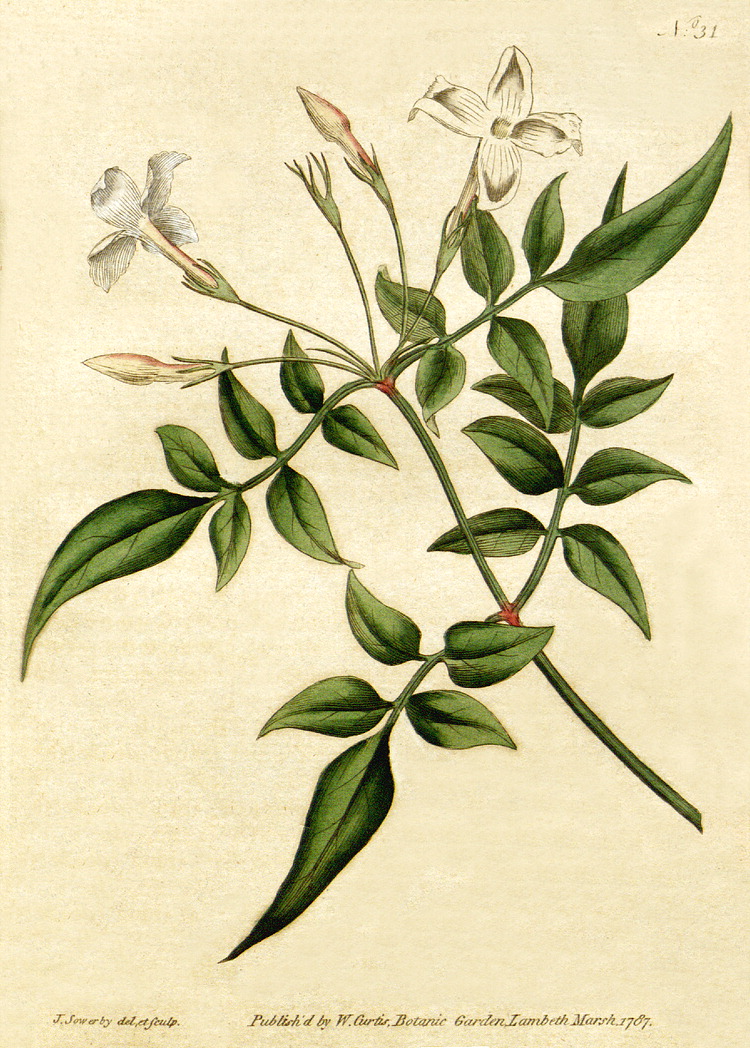
Jasmine is a widely cultivated ornamental plant valued for its intensely sweet, heady fragrance that is most potent during evening hours. Most species are deciduous or evergreen vines that climb via twining stems, though some grow as compact shrubs. It produces clusters of small, star-shaped flowers, most commonly white or pale yellow, that bloom throughout the warm growing season.
Care Guide
Watering
Water jasmine regularly during the growing season, keeping soil consistently moist but not waterlogged to prevent root rot. Reduce watering frequency in winter, allowing the top 1-2 inches of soil to dry out completely between waterings. Avoid overhead watering to minimize fungal disease risk on foliage and flowers.
Light
Jasmine thrives in full sun to partial shade, requiring at least 4-6 hours of direct sunlight daily to produce abundant blooms. In extremely hot climates, provide afternoon shade to protect foliage from scorching and prevent excessive moisture loss. Indoor-grown jasmine should be placed in a bright south or west-facing window with filtered light.
Soil
Plant jasmine in well-draining, loamy soil with a slightly acidic to neutral pH between 6.0 and 7.5 for optimal growth. Amending heavy clay soil with compost, perlite, or peat moss improves drainage and aeration to support healthy root development. Potted jasmine benefits from a high-quality potting mix formulated for flowering tropical plants.
Fertilizer
Feed jasmine every 2-4 weeks during the active growing season (spring through summer) with a balanced, water-soluble fertilizer formulated for flowering plants. Use a fertilizer with a higher phosphorus content to encourage robust bloom production and support overall plant health. Stop fertilizing entirely in fall and winter when the plant enters dormancy.
Temperature
Jasmine prefers warm temperatures between 60-75°F (15-24°C) during the growing season for optimal growth and flowering. Most species can tolerate brief dips to 30°F (-1°C), but prolonged exposure to temperatures below 40°F (4°C) will cause foliage damage and may kill the plant. Indoor jasmine should be kept away from cold drafts from windows, doors, or heating and cooling vents.
Pruning
Prune jasmine immediately after flowering ends to control size, remove dead or damaged growth, and encourage dense, bushy new growth. Cut back overlong vines by up to one-third of their length, and thin out crowded stems to improve air circulation through the plant canopy. Regular pruning also stimulates more flower buds for the following growing season.
Propagation
Jasmine is most easily propagated via semi-hardwood cuttings taken in late summer or early fall from healthy, non-flowering stems. Dip the cut end of the 4-6 inch stem cutting in rooting hormone, then plant in moist, well-draining potting mix and keep in a warm, humid location with indirect light until roots form in 4-6 weeks. It can also be grown from seed, though germination is slow and plants may take 3-4 years to reach flowering maturity.
Humidity
Jasmine prefers moderate to high humidity levels between 40-70% for healthy growth and bloom production. Indoor plants benefit from regular misting with room-temperature water, placement on a pebble tray filled with water, or use of a small humidifier during dry winter months. Low humidity can cause leaf browning, bud drop, and reduced flowering.
Repotting
Repot potted jasmine every 2-3 years in early spring before new growth begins, moving to a pot one size larger than the current container with adequate drainage holes. Gently loosen the root ball before placing in fresh potting mix, and water thoroughly after repotting to settle the soil around the roots. Avoid repotting during the flowering season, as this can cause stress and lead to bud drop.
Uses & Symbolism
Jasmine is widely grown as an ornamental plant for gardens, trellises, arbors, and indoor containers, valued for its showy blooms and iconic fragrance. Its flowers are harvested commercially for use in perfumes, essential oils, aromatherapy products, and to flavor jasmine tea, a popular beverage in many Asian cultures. In traditional medicine, jasmine extracts have been used topically to soothe skin irritation and as a natural remedy for stress and anxiety.
Diseases & Pests
Jasmine is susceptible to common pests including aphids, whiteflies, spider mites, and mealybugs, which feed on sap and can cause yellowing foliage, stunted growth, and reduced flowering if left untreated. Fungal diseases such as powdery mildew, leaf spot, and root rot can occur in overly moist, poorly ventilated conditions or when soil remains waterlogged for extended periods. Regular inspection, proper spacing for air circulation, and avoiding overwatering help prevent most common pest and disease issues.
Related plants
Other plants you might like if you grow Jasmine.