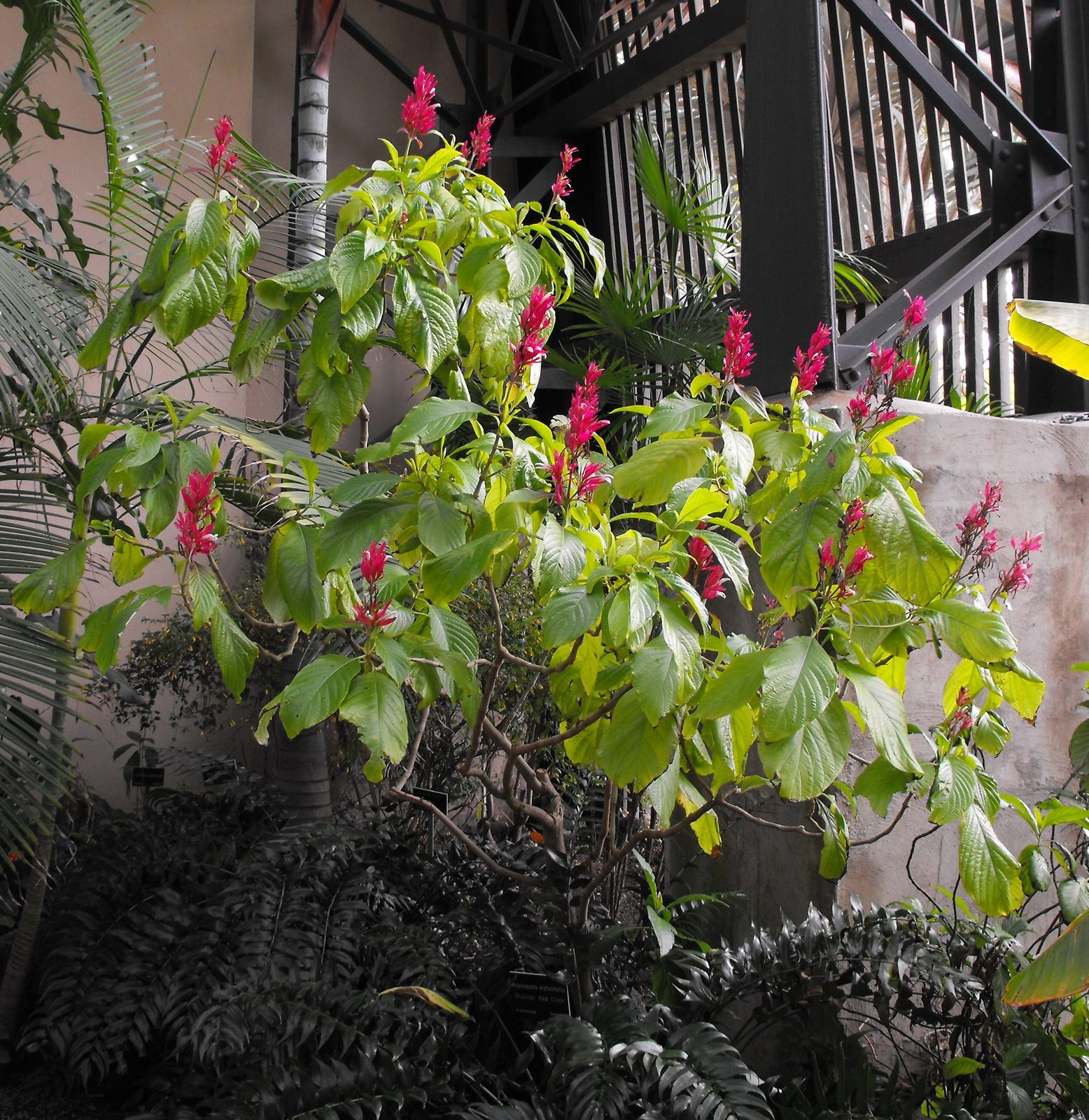
Brazilian Red Cloak
Megaskepasma erythrochlamys
Overview
Brazilian Red Cloak is a fast-growing, evergreen shrub native to South American tropical regions, best known for its eye-catching inflorescences made up of overlapping, vivid red bracts that persist for several months. Small, delicate white flowers emerge from between the bracts, drawing pollinators like hummingbirds and butterflies when grown outdoors. Its large, glossy, deep green ovate leaves create a lush, full backdrop for the bold floral displays, making it a popular focal point in warm-climate landscapes and tropical indoor collections.
Care Guide
Watering
Water Brazilian Red Cloak regularly to keep the soil consistently moist but not waterlogged, allowing the top 1 inch of soil to dry out slightly between waterings during the active growing season. Reduce watering frequency in the winter months when growth slows, taking care not to let the root ball dry out completely, as prolonged drought can cause leaf drop and browning of bract edges. Avoid overwatering, which can lead to root rot, and ensure any excess water drains freely from the pot or planting site.
Light
Brazilian Red Cloak thrives in bright, indirect light for the most vibrant bract color and prolific flowering. Outdoors, it benefits from partial shade, particularly protection from harsh midday sun that can scorch its large, tender leaves. Indoor specimens should be placed near a bright east or west-facing window, receiving at least 4-6 hours of filtered light daily; low light conditions will lead to sparse growth and reduced blooming.
Soil
Plant Brazilian Red Cloak in a well-draining, fertile, loamy soil with a slightly acidic to neutral pH range of 6.0 to 7.0 for optimal growth. For potted specimens, use a high-quality potting mix amended with perlite, orchid bark, or compost to improve drainage and add organic matter, preventing soil compaction that can restrict root growth. Avoid heavy, clay-heavy soils that hold excess moisture, as these increase the risk of root rot in this tropical species.
Fertilizer
Feed Brazilian Red Cloak every 2-3 weeks during the spring and summer growing season with a balanced, water-soluble fertilizer diluted to half strength to support lush foliage and vibrant bract development. Use a fertilizer with a slightly higher phosphorus content prior to the blooming period to encourage more abundant and longer-lasting flower displays. Suspend fertilization entirely in the fall and winter when the plant enters a period of slower growth to prevent salt buildup in the soil.
Temperature
Brazilian Red Cloak prefers warm, tropical temperatures between 65°F and 85°F (18°C to 29°C) for optimal growth and flowering. It is not frost tolerant, and temperatures below 50°F (10°C) can cause leaf drop and stunted growth, so outdoor specimens in cooler climates should be brought indoors during the winter months. Avoid placing potted plants near cold drafts, air conditioning vents, or heating sources that can cause sudden temperature fluctuations.
Pruning
Prune Brazilian Red Cloak immediately after flowering has finished to maintain a compact, bushy shape and encourage new, branching growth that will produce more blooms in the next season. Remove spent bract clusters, dead or yellowing leaves, and any leggy, overgrown stems by cutting just above a leaf node to stimulate new growth. For outdoor specimens, annual pruning can prevent the shrub from becoming too sparse and top-heavy, while indoor plants can be trimmed as needed to fit their allocated space.
Propagation
Brazilian Red Cloak is most commonly propagated from softwood or semi-hardwood stem cuttings taken in late spring or early summer, during the active growing season. Select 4-6 inch cuttings from healthy, non-flowering stems, remove the lower leaves, dip the cut end in rooting hormone, and plant in a moist, well-draining propagation mix, keeping the cuttings warm and humid under a plastic cover until roots develop in 3-4 weeks. Propagation from seed is possible but less common, as seeds are rarely produced in cultivation and have a low germination rate.
Humidity
As a tropical rainforest native, Brazilian Red Cloak thrives in high humidity levels between 60% and 80% to maintain its glossy foliage and prevent browning leaf edges. Indoor specimens benefit from regular misting, placement on a pebble tray filled with water, or the use of a room humidifier to boost ambient humidity, particularly during dry winter months when indoor heating reduces moisture in the air. Avoid placing the plant near dry air sources like radiators or space heaters, which can quickly desiccate its leaves.
Repotting
Repot young Brazilian Red Cloak specimens annually in the spring, moving them to a pot one size larger than their current container to accommodate their fast growth rate. Mature plants only need repotting every 2-3 years, or when roots begin to grow out of the drainage holes at the bottom of the pot. When repotting, gently loosen the root ball, remove any dead or rotting roots, and refresh the potting mix with new, nutrient-rich soil to support healthy growth for the upcoming season.
Uses & Symbolism
Brazilian Red Cloak is widely used as a dramatic ornamental focal point in tropical and subtropical landscape gardens, where it can be planted as a specimen shrub, border plant, or part of a mixed tropical planting scheme for its long-lasting red bracts. It is also a popular houseplant for bright, warm indoor spaces, adding bold color and lush foliage to sunrooms, conservatories, and large living areas. In its native range, it is sometimes planted in pollinator gardens to attract hummingbirds and butterflies that feed on the nectar of its small white flowers.
Diseases & Pests
Brazilian Red Cloak is relatively pest-resistant, but can be susceptible to common houseplant pests including aphids, spider mites, and whiteflies, which tend to infest the undersides of leaves and can be controlled with insecticidal soap or neem oil applications. Overwatering or poorly draining soil frequently leads to root rot, a fungal condition that causes yellowing leaves, wilting, and eventual plant death if not addressed by improving drainage and reducing watering frequency. Low humidity and underwatering can cause browning of leaf edges and premature dropping of bracts, while excessive direct sun can lead to scorched, brown leaf spots.
Related plants
Other plants you might like if you grow Brazilian Red Cloak.