Arabian Jasmine
Jasminum sambac
Overview
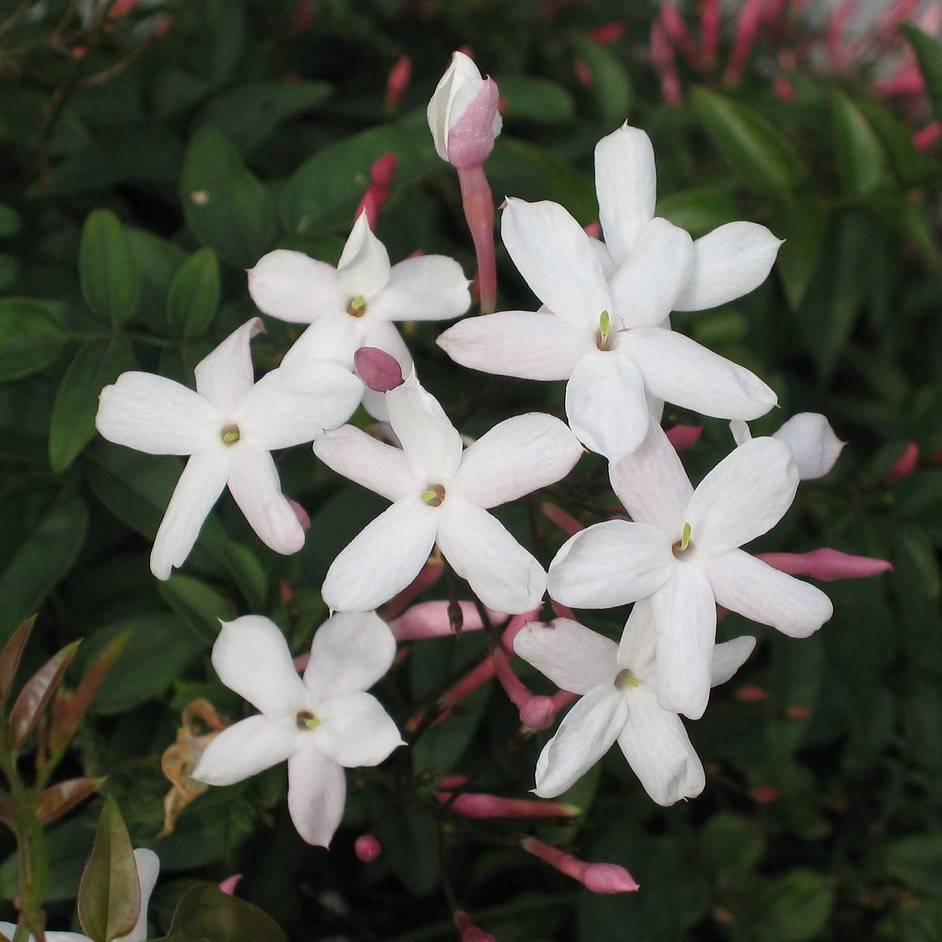
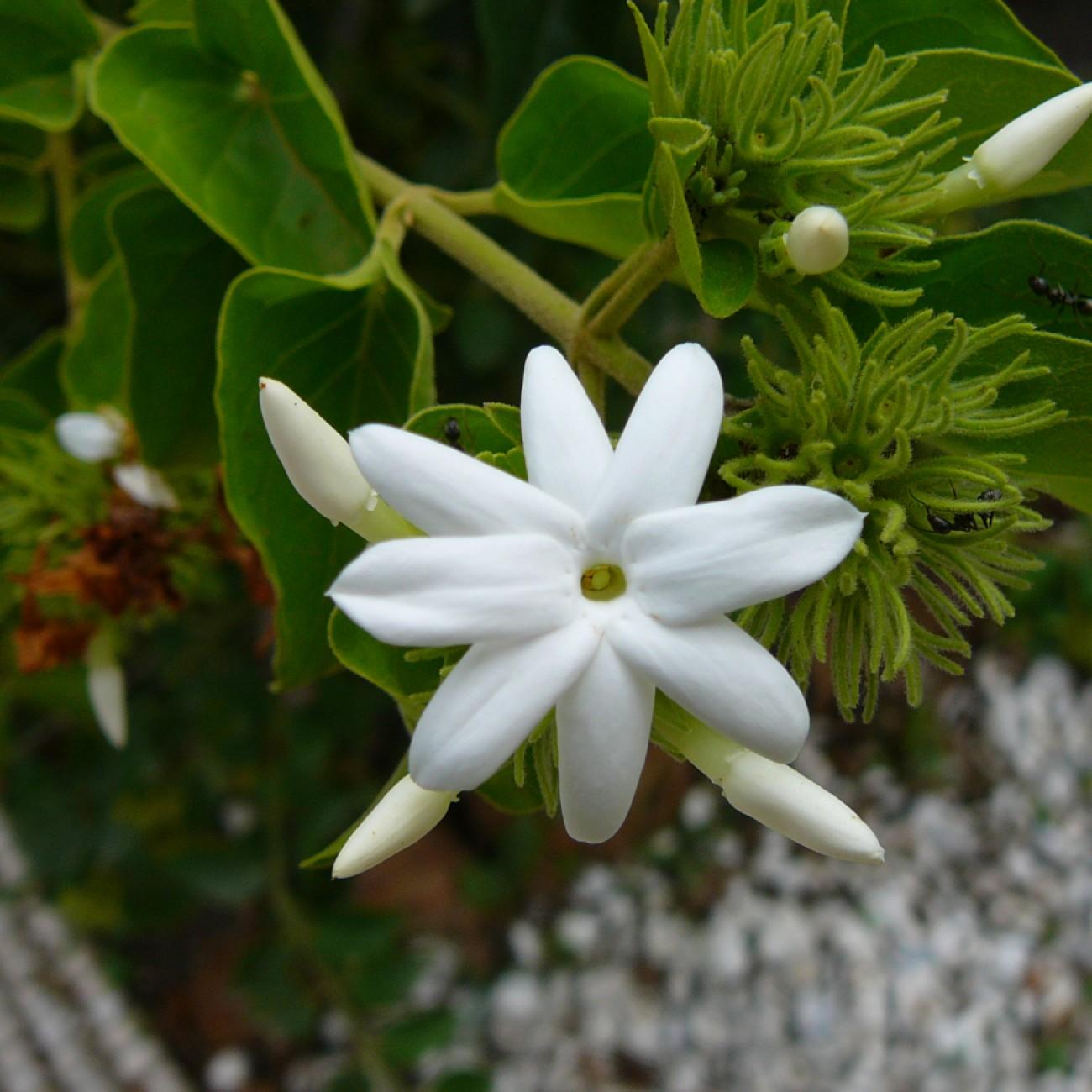
Arabian jasmine is a twining evergreen vine or shrub with glossy, dark green oval leaves and clusters of intensely fragrant, waxy white flowers that fade to pale pink as they age. It holds deep cultural significance in many regions: it is the national flower of the Philippines and Indonesia, used in garlands, religious offerings, and traditional tea infusions. The plant blooms repeatedly throughout warm months, with flowers releasing their strongest scent in the evening to attract pollinating moths.
Care Guide
Watering
Water Arabian jasmine regularly to keep the soil consistently moist but not waterlogged, allowing the top 1 inch of soil to dry out slightly between waterings during the growing season. Reduce watering frequency in winter when growth slows, taking care not to let the root ball dry out completely. Avoid overwatering, as this can lead to root rot, especially in cool, low-light conditions.
Light
This plant thrives in bright, indirect light for 6-8 hours per day, with protection from harsh midday sun that can scorch its delicate leaves. Outdoor plants grow best in partial shade with morning sun, while indoor specimens benefit from placement near a south or west-facing window with a sheer curtain to filter direct rays. Insufficient light will reduce flowering and lead to leggy, sparse growth.
Soil
Plant Arabian jasmine in a well-draining, fertile soil with a slightly acidic to neutral pH between 5.5 and 7.0. A mix of peat moss, perlite, and organic compost works well for potted specimens, while outdoor plants benefit from loamy soil amended with well-rotted manure to improve nutrient content and drainage. Heavy, compacted soils that retain excess moisture will cause root damage over time.
Fertilizer
Feed every 2-3 weeks during the active growing season (spring through summer) with a balanced, water-soluble fertilizer diluted to half strength to support foliage growth and abundant flowering. Use a fertilizer slightly higher in phosphorus during bloom periods to encourage more fragrant, long-lasting flowers. Stop fertilizing entirely in fall and winter when the plant enters dormancy to avoid burning new, tender growth.
Temperature
Arabian jasmine prefers warm temperatures between 65-80°F (18-27°C) during the growing season, and cannot tolerate sustained temperatures below 50°F (10°C). Outdoor plants in frost-prone regions should be brought indoors before the first fall frost, or grown in containers that can be moved to a protected location. Sudden temperature drops or drafts can cause leaf drop and stress the plant.
Pruning
Prune Arabian jasmine in late winter or early spring before new growth emerges to shape the plant, remove dead or damaged branches, and encourage bushier, more floriferous growth. Pinch back the tips of young vines regularly during the growing season to promote branching and prevent the plant from becoming leggy. Remove spent flower clusters promptly to redirect energy toward new bloom production.
Propagation
The most common propagation method is stem cuttings taken in spring or summer from healthy, non-flowering growth, with 3-4 leaf nodes and the lower leaves removed. Dip the cut end in rooting hormone powder, plant in a moist, well-draining propagation mix, and keep the cutting in a warm, humid location with bright indirect light until roots form in 4-6 weeks. Arabian jasmine can also be grown from seed, but this method is slower and less reliable for preserving the fragrant flower traits of the parent plant.
Humidity
This tropical plant thrives in high humidity levels between 50-70% for optimal growth and flowering. Indoor specimens will benefit from regular misting, placement on a pebble tray filled with water, or use of a humidifier, especially during dry winter months when indoor heating reduces ambient moisture. Low humidity can cause brown leaf tips, reduced flowering, and increased susceptibility to spider mite infestations.
Repotting
Repot potted Arabian jasmine every 2-3 years in early spring, moving it to a container one size larger than its current pot with fresh, well-draining potting mix. Check the root system during repotting, trimming away any rotted or damaged roots before placing the plant in its new container. Ensure the new pot has adequate drainage holes to prevent water from pooling at the bottom of the container.
Uses & Symbolism
Arabian jasmine is most widely cultivated for its intensely fragrant flowers, which are used to make jasmine tea, perfumes, essential oils, and ceremonial garlands across South and Southeast Asia. It is grown as an ornamental landscape plant in warm tropical and subtropical regions, trained to climb trellises, arbors, or fences, or pruned into a compact shrub for border plantings. In traditional medicine, extracts of the flowers and leaves are used to treat headaches, inflammation, and anxiety, and the blooms are commonly used in religious and cultural ceremonies as offerings and decorations.
Diseases & Pests
Arabian jasmine is susceptible to common houseplant pests including aphids, spider mites, mealybugs, and whiteflies, which feed on sap and can cause stunted growth, yellowing leaves, and reduced flowering if left untreated. Overwatering and poor drainage lead to root rot, the most common fungal disease, which causes wilting, leaf drop, and eventual plant death if the root system is not allowed to dry out and treated with a fungicide. Powdery mildew may appear on leaves in cool, humid conditions with poor air circulation, forming a white powdery coating that can be treated with neem oil or a copper fungicide, and prevented by spacing plants to improve air flow.
Related plants
Other plants you might like if you grow Arabian Jasmine.