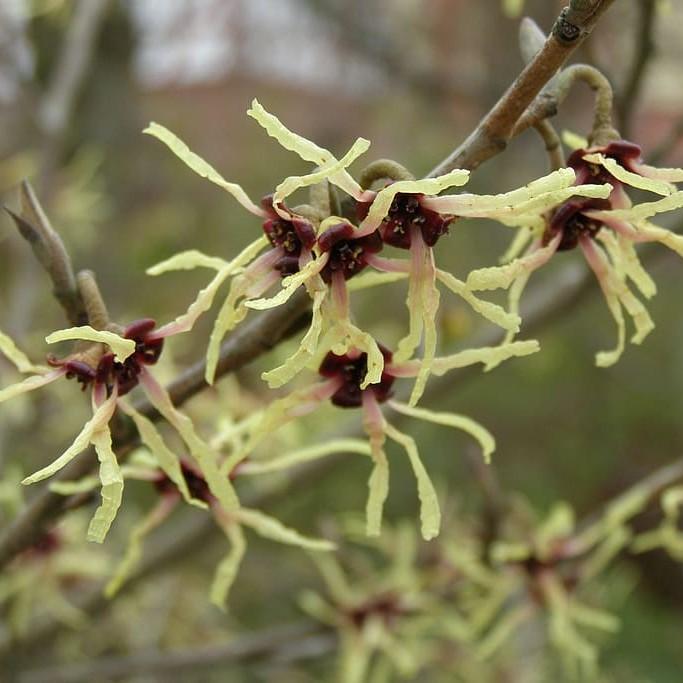
Japanese Witch Hazel
Hamamelis japonica
Overview
Japanese Witch Hazel is a slow-growing deciduous shrub celebrated for its unique winter bloom period, when bare branches are covered in clusters of crinkled, strap-shaped yellow flowers that emit a sweet, spicy fragrance. Native to Japanese mountain forests, it has a broad, rounded growth habit and vibrant golden-orange autumn foliage, making it a multi-season ornamental standout. It is widely cultivated in temperate gardens globally, with numerous cultivars offering varying flower colors from pale yellow to deep red.
Care Guide
Watering
Water regularly during the first two years of establishment to keep the soil consistently moist but not waterlogged. Once mature, it is moderately drought-tolerant, requiring supplemental watering only during prolonged dry spells, especially in summer when heat stress can damage foliage. Avoid overwatering, as soggy soil increases the risk of root rot.
Light
Thrives in full sun to partial shade, with full sun encouraging the most abundant flower production and vibrant autumn foliage color. In regions with extremely hot, intense summer sun, it benefits from light afternoon shade to prevent leaf scorch. Too much deep shade will reduce flowering and result in a leggy, sparse growth habit.
Soil
Prefers moist, well-drained, loamy soil with a slightly acidic to neutral pH between 5.5 and 7.0. It can tolerate mildly alkaline soil but may develop chlorosis (yellowing leaves) in highly alkaline conditions. Amend heavy clay soils with organic matter such as compost or peat moss to improve drainage before planting.
Fertilizer
Feed in early spring before new growth emerges using a balanced, slow-release shrub fertilizer or a layer of well-rotted compost worked into the top inch of soil. Avoid high-nitrogen fertilizers, as they can promote excessive leaf growth at the expense of flower production. Established plants only need fertilization once every 1 to 2 years, as over-fertilization can damage its shallow root system.
Temperature
Cold hardy in USDA zones 5 through 8, tolerating winter temperatures as low as -20°F (-29°C) without damage. It requires a period of winter chilling to trigger consistent bloom, making it unsuitable for regions with consistently mild, frost-free winters. Extreme late spring frosts can damage emerging flower buds, so plant in a sheltered location if late frost is a common risk.
Pruning
Prune immediately after flowering finishes in early spring, before new leaf growth fully emerges, to avoid cutting off next year’s flower buds, which form on old wood. Remove dead, damaged, or crossing branches to improve air circulation, and thin out crowded inner growth to maintain an open, rounded shape. Severe pruning is not required, but mature overgrown shrubs can be rejuvenated by cutting back up to one-third of the oldest branches to the base each year.
Propagation
The most reliable method for home gardeners is softwood cuttings taken in early summer, treated with rooting hormone, and placed in a moist, well-drained rooting medium under high humidity. Seeds require double stratification (warm then cold) and can take 1 to 2 years to germinate, with seed-grown plants often taking 6 to 8 years to reach flowering maturity. Grafting onto Hamamelis virginiana rootstock is the standard commercial propagation method to ensure consistent cultivar traits.
Humidity
Adaptable to a wide range of humidity levels, thriving in the moderate humidity typical of temperate climates. It tolerates average indoor humidity if grown as a large container specimen, though it performs best outdoors where natural air flow prevents fungal issues. High, stagnant humidity paired with poor air circulation can increase the risk of powdery mildew on foliage.
Repotting
If grown in a container, repot every 3 to 4 years in early spring before new growth begins, using a slightly larger pot with drainage holes and a well-drained, acidic potting mix. Japanese Witch Hazel has a shallow, sensitive root system, so avoid disturbing the root ball excessively during repotting to prevent transplant shock. Once the plant reaches a desired mature size, top-dress with fresh compost annually instead of repotting to limit growth.
Uses & Symbolism
Widely planted as an ornamental specimen shrub in temperate gardens, valued for its late winter bloom, sweet fragrance, and striking autumn foliage that adds year-round interest. Extracts from its bark and leaves are used in skincare and medicinal astringents, similar to other witch hazel species, to soothe skin irritation and reduce inflammation. Its cut branches can be forced to bloom indoors in late winter, bringing early color and fragrance to indoor spaces.
Diseases & Pests
Generally resistant to most pests and diseases, though it can develop powdery mildew on foliage in humid, poorly ventilated conditions, which can be managed by improving air circulation and applying fungicidal sprays if severe. Aphids and scale insects may occasionally infest new growth, which can be controlled with horticultural oil or insecticidal soap applications. Root rot can occur in poorly drained, waterlogged soil, so ensuring proper soil drainage is critical to prevent this fatal condition.
Guides that mention Japanese Witch Hazel
Related plants
Other plants you might like if you grow Japanese Witch Hazel.