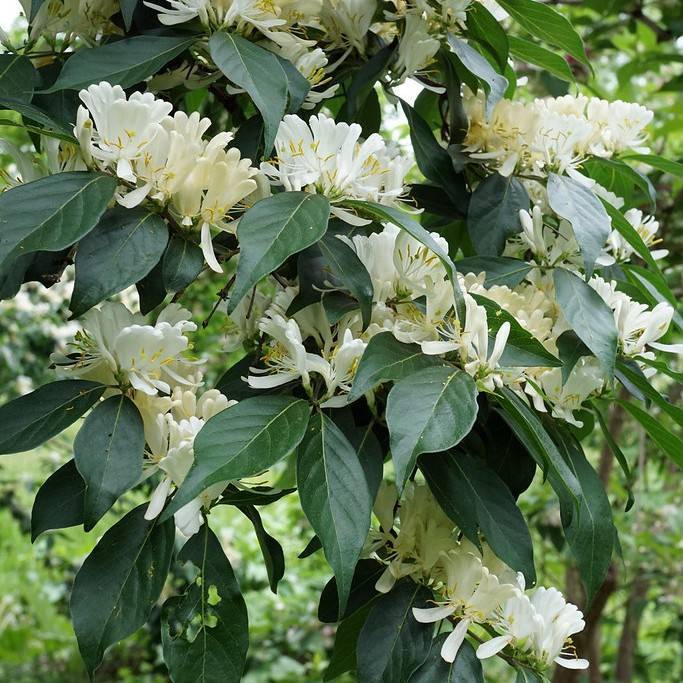
Amur Honeysuckle
Lonicera maackii
Overview
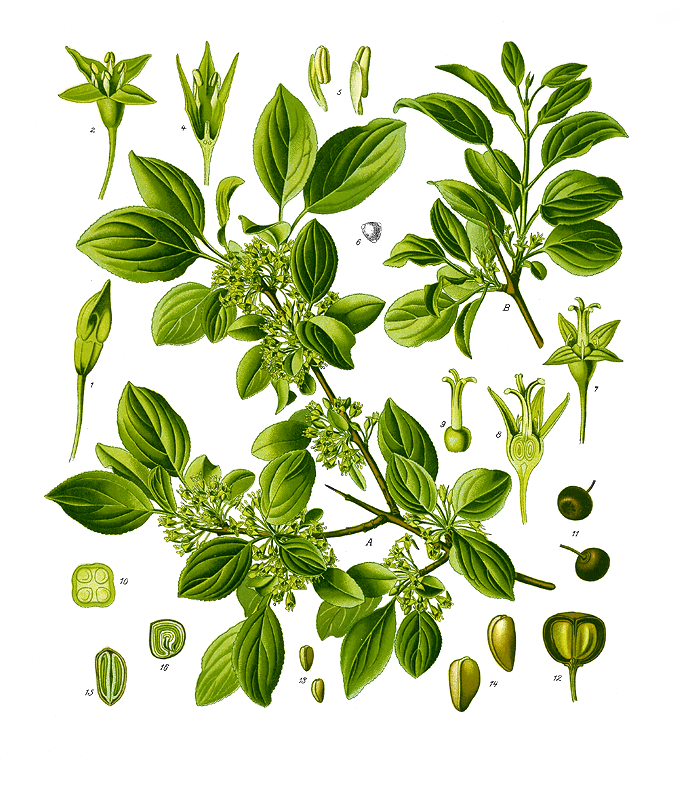
Amur Honeysuckle is a dense, arching deciduous shrub introduced to North America in the late 1800s as an ornamental, erosion control plant, and wildlife food source. It is now classified as a highly invasive species in much of the eastern and midwestern United States, outcompeting native understory plants by shading them out and altering soil chemistry. Its paired, oval leaves emerge earlier in spring than most native shrubs, giving it a competitive advantage for light and resources.
Care Guide
Watering
Amur Honeysuckle is highly drought-tolerant once established, requiring only occasional deep watering during extended dry periods; overwatering can lead to root rot, especially in poorly drained soils. Young shrubs benefit from regular watering for the first 1-2 growing seasons to help establish a robust root system, after which they can thrive with minimal supplemental moisture. It tolerates both occasional flooding and prolonged dry spells, making it adaptable to a wide range of moisture conditions.
Light
This shrub grows best in full sun, where it produces the most abundant flowers and berries, but it tolerates partial to full shade, though flowering and fruiting will be reduced in low-light conditions. Its ability to thrive in full shade allows it to invade undisturbed forest understories, where it outcompetes native understory plants for light. For ornamental use, plant in a location with at least 6 hours of direct sunlight daily to encourage maximum bloom.
Soil
Amur Honeysuckle adapts to nearly all soil types, including sandy, loamy, clay, and even nutrient-poor, compacted soils, with a preferred pH range of 5.5 to 7.5. It tolerates both slightly acidic and slightly alkaline conditions, as well as soils with moderate salt content, making it suitable for roadside plantings in cold regions where deicing salts are used. While it prefers well-drained soil, it can survive occasional standing water for short periods.
Fertilizer
This shrub requires very little supplemental fertilization, as it can extract nutrients efficiently from even poor quality soils. If grown ornamentally in very nutrient-depleted soil, a single application of balanced, slow-release 10-10-10 fertilizer in early spring will support healthy growth without encouraging excessive, leggy foliage. Over-fertilization can lead to overly rapid growth that is more susceptible to pest damage and winter injury.
Temperature
Amur Honeysuckle is extremely cold-hardy, suitable for USDA hardiness zones 3 through 8, tolerating winter temperatures as low as -40°F (-40°C). It tolerates high summer temperatures up to 100°F (38°C) as long as it has access to occasional moisture, though extended heatwaves may cause minor leaf scorch in full sun without supplemental water. It requires a period of cold dormancy in winter to trigger healthy new growth and flowering the following spring.
Pruning
Ornamental specimens can be pruned in late winter or early spring before new growth emerges to maintain a desired shape and remove dead, damaged, or crossing branches. Because it is invasive in many regions, pruning should be followed by proper disposal of cuttings to prevent accidental spread, and removal of entire plants is recommended in areas where it is classified as a noxious weed. To control spread, remove spent flowers before berries develop in late summer to prevent birds from dispersing seeds.
Propagation
Amur Honeysuckle propagates readily from seed, which is primarily dispersed by birds that eat the berries and pass the seeds through their digestive tracts, leading to widespread naturalization. It can also be propagated from softwood cuttings taken in early summer, which root easily in moist potting mix without the need for rooting hormone. For ornamental use, propagation from cuttings ensures the desired growth habit and flowering characteristics of the parent plant.
Humidity
This shrub tolerates a wide range of humidity levels, from the dry continental climates of the midwestern United States to the humid subtropical conditions of the southeastern U.S. It does not require any supplemental humidity when grown outdoors, and is resistant to most humidity-related fungal diseases. Very high humidity combined with poor air circulation may occasionally lead to powdery mildew, but this is rarely a serious issue for healthy plants.
Repotting
Amur Honeysuckle is almost exclusively grown outdoors as a landscape shrub, so repotting is rarely required. If grown in a large container for ornamental use, repot every 2-3 years in early spring before new growth emerges, using a general-purpose potting mix and a container with adequate drainage holes. Once the shrub reaches its desired mature size, root prune every 3-4 years and refresh the top layer of potting mix to avoid the need for increasingly large containers.
Uses & Symbolism
Historically, Amur Honeysuckle was planted for erosion control on slopes, as a fast-growing privacy hedge, and as a food source for wildlife, though its invasive status has led to most intentional plantings being discontinued. Its fragrant white spring flowers are a nectar source for bees, butterflies, and hummingbirds, and its dense foliage provides shelter for small birds and mammals. In its native range, it is occasionally used in traditional herbal medicine for its anti-inflammatory properties, though consumption is not recommended due to its mild toxicity.
Diseases & Pests
Amur Honeysuckle is relatively resistant to most pests and diseases, though it may occasionally be affected by aphids, which feed on new growth and can cause leaf curling, and spider mites in hot, dry conditions. Fungal diseases including powdery mildew, leaf spot, and root rot may occur in overly wet, poorly drained soils or conditions with poor air circulation, though these are rarely fatal for established plants. Its high pest and disease resistance is one factor that contributes to its invasive success in non-native ranges, as it faces few natural population controls.
Related plants
Other plants you might like if you grow Amur Honeysuckle.