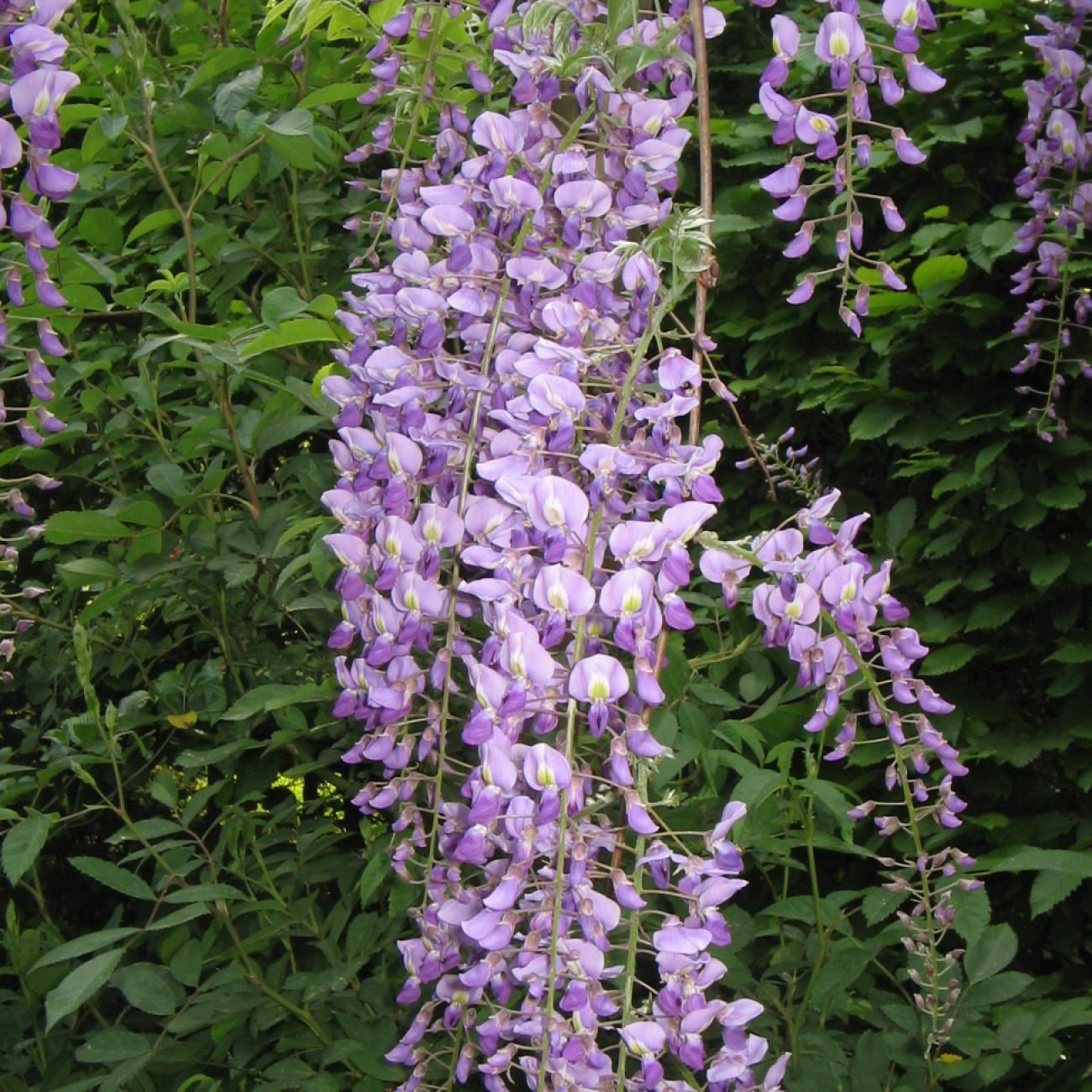
Japanese Wisteria
Wisteria floribunda
Overview
Japanese Wisteria is a fast-growing, woody climbing vine renowned for its dramatic, pendulous flower racemes that can reach 12 to 36 inches (30 to 90 cm) in length, emitting a sweet, heady fragrance during peak spring bloom. It twines clockwise around supports, unlike its Chinese wisteria counterpart, and develops gnarled, thick trunks and branches with age, making it a popular choice for arbors, pergolas, and trellises in temperate landscapes. While highly ornamental, it is considered invasive in some parts of the United States due to its aggressive spreading habit and ability to outcompete native vegetation.
Care Guide
Watering
Water young Japanese Wisteria regularly to keep the soil consistently moist but not waterlogged, as established plants are moderately drought tolerant and only require supplemental watering during extended dry periods. Avoid overwatering mature plants, as excess moisture can reduce flowering and encourage root rot.
Light
Plant in full sun, defined as at least 6 hours of direct unfiltered sunlight daily, to promote abundant flowering; plants grown in partial shade will produce far fewer blooms and may develop leggy, sparse growth. Ensure all parts of the vine receive adequate light, as shaded sections will fail to produce flower buds.
Soil
Grows best in fertile, moist, well-drained loamy soil with a slightly acidic to neutral pH range of 6.0 to 7.0, though it can adapt to most soil types except heavy, waterlogged clay that retains excess moisture. Amending planting sites with compost or well-rotted manure will improve soil structure and nutrient content to support vigorous growth.
Fertilizer
Fertilize sparingly, as excess nitrogen will promote foliage growth over flower production; apply a balanced, slow-release fertilizer with a low nitrogen content, such as a 5-10-10 formula, once per year in early spring before new growth emerges. Avoid using lawn fertilizers near wisteria, as these typically have high nitrogen levels that will inhibit blooming.
Temperature
Thrives in USDA hardiness zones 4 through 9, tolerating winter temperatures as low as -30°F (-34°C) once established, though young vines may require winter protection such as burlap wrapping in the coldest parts of its range. Unusually late spring frosts can damage emerging flower buds, so planting in a sheltered location away from cold, drying winds is recommended.
Pruning
Prune twice per year to encourage flowering: first in late winter, cutting back side shoots to 2 to 3 buds per stem to focus the plant’s energy on flower production, and again in mid-summer, 2 to 3 months after blooming, trimming back unruly new growth to maintain the desired shape and size. Severe pruning may be required to contain aggressive growth, as Japanese Wisteria can quickly overtake nearby structures and vegetation if left untrimmed.
Propagation
Most commonly propagated via softwood cuttings taken in early summer, rooting cuttings in a well-drained potting mix under high humidity for 4 to 6 weeks before transplanting. It can also be grown from seed, but seed-grown plants may take 10 to 15 years to bloom, and may not retain the flower characteristics of the parent plant, so grafted named cultivars are preferred for consistent, early flowering.
Humidity
Tolerates a wide range of humidity levels, thriving in average ambient humidity between 40% and 70% common in its native and cultivated ranges, with no special humidity requirements for indoor or outdoor growth. High humidity does not negatively impact the plant, though good air circulation around foliage is recommended to prevent fungal diseases in particularly damp climates.
Repotting
Container-grown Japanese Wisteria should be repotted every 2 to 3 years in late winter before new growth begins, using a well-drained potting mix and a slightly larger container with adequate drainage holes to prevent waterlogging. Root pruning during repotting will help contain the plant’s size and encourage flowering, as restricted root growth reduces excessive vegetative growth.
Uses & Symbolism
Japanese Wisteria is widely used as an ornamental landscape vine to cover arbors, pergolas, fences, and garden walls, providing dramatic spring color and dappled summer shade under its dense foliage. Its fragrant blooms attract pollinators including bees, butterflies, and hummingbirds, and aged specimens with thick, twisted trunks are popular subjects for bonsai cultivation.
Diseases & Pests
Japanese Wisteria is relatively pest and disease resistant, but may be susceptible to aphids, scale insects, and Japanese beetles, which feed on foliage and can cause defoliation if infestations are severe. Fungal diseases including powdery mildew, leaf spot, and root rot may occur in overly damp, poorly ventilated conditions or in waterlogged soil, so proper spacing, well-drained soil, and good air circulation are key prevention measures.
Related plants
Other plants you might like if you grow Japanese Wisteria.