Heliotrope
Heliotropium arborescens
Overview
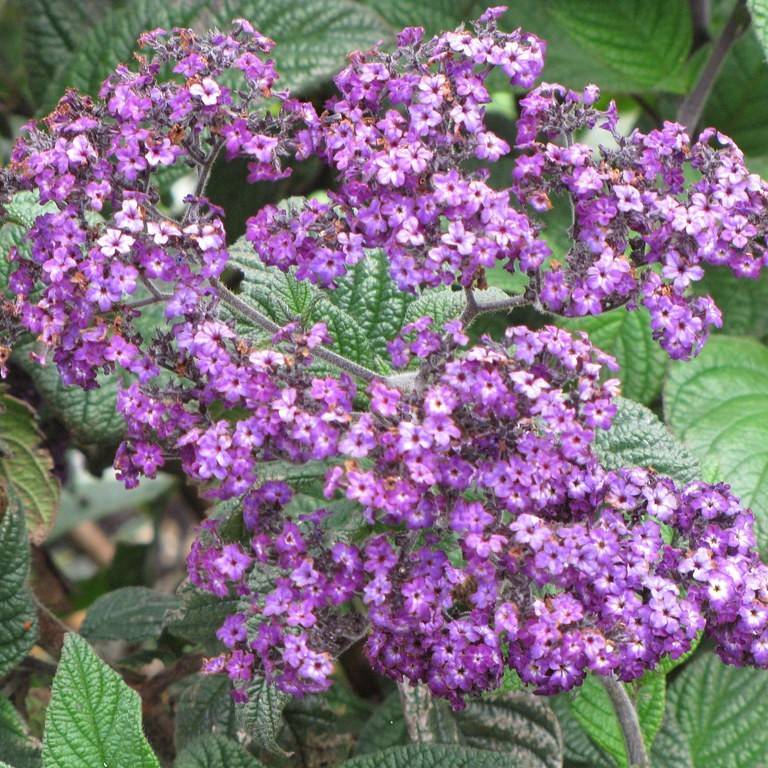
Heliotrope, also called cherry pie plant for its sweet, vanilla-tinged floral aroma, is a tender perennial often grown as an annual in cooler climates. Its dense, domed clusters of tiny purple, lavender, or white flowers bloom from late spring through frost, attracting butterflies and pollinators to garden spaces. The plant’s name derives from the Greek words for sun and turn, referencing its historical association with flowers that orient toward the sun throughout the day.
Care Guide
Watering
Water heliotrope regularly to keep soil consistently moist but not waterlogged, as soggy roots can lead to rot; reduce watering frequency in winter if grown as a perennial indoors. Allow the top 1 inch of soil to dry out slightly between waterings to prevent overwatering, especially for container-grown specimens that drain faster than in-ground plants. Avoid overhead watering to reduce the risk of fungal leaf spots, directing water at the base of the plant instead.
Light
Heliotrope thrives in full sun, requiring at least 6 hours of direct sunlight daily to produce abundant blooms and maintain compact, healthy growth. In regions with extremely hot, intense summer sun, provide partial afternoon shade to prevent leaf scorch and reduce moisture stress. When grown indoors, place it in a south-facing window or under grow lights to ensure it receives sufficient light to flower.
Soil
Plant heliotrope in fertile, well-draining soil with a neutral to slightly alkaline pH between 6.6 and 7.5 for optimal growth. Amend heavy clay soils with compost or well-rotted manure to improve drainage, as the plant is highly susceptible to root rot in poorly draining conditions. For container plantings, use a high-quality potting mix with added perlite or vermiculite to boost drainage and aeration.
Fertilizer
Feed heliotrope every 2 to 3 weeks during the active growing season with a balanced, water-soluble fertilizer diluted to half strength to support continuous blooming. Avoid over-fertilizing with high-nitrogen formulas, as this can encourage lush leaf growth at the expense of flower production. Stop fertilizing in late fall to allow the plant to enter dormancy if grown as a perennial, and resume feeding in early spring as new growth emerges.
Temperature
Heliotrope prefers warm temperatures between 60 and 85°F (15 and 29°C) during the active growing season, and cannot tolerate frost or temperatures below 32°F (0°C). In areas with cold winters, grow it as an annual, or dig up container specimens and overwinter them indoors in a cool, bright location with temperatures between 50 and 60°F (10 and 15°C). Protect plants from strong, cold winds, which can damage tender foliage and reduce blooming.
Pruning
Pinch back the tips of young heliotrope plants in early spring to encourage bushier, more compact growth and increase the number of flower stems. Deadhead spent flower clusters regularly throughout the blooming season to promote continuous flowering and prevent the plant from expending energy on seed production. Cut back overgrown or leggy plants by up to one-third their height in late summer to refresh foliage and encourage a second flush of blooms before fall.
Propagation
Heliotrope is most commonly propagated from softwood stem cuttings taken in late spring or early summer, using 4 to 6 inch cuttings from healthy, non-flowering stems, dipped in rooting hormone and placed in moist potting mix under indirect light. It can also be grown from seed sown indoors 10 to 12 weeks before the last expected frost date, as seeds take 21 to 42 days to germinate at temperatures around 70°F (21°C). Note that seed-grown plants may have less intense fragrance than those propagated from cuttings of named cultivars.
Humidity
Heliotrope prefers moderate humidity levels between 40 and 60 percent, which is typical of most outdoor garden environments in temperate regions. When grown indoors during winter, increase humidity around the plant by placing it on a pebble tray filled with water, or using a small room humidifier, to prevent leaf browning and drop caused by dry heating air. Avoid misting the foliage directly, as this can increase the risk of fungal diseases developing on the leaves.
Repotting
Repot container-grown heliotrope every 1 to 2 years in early spring, before new growth begins, moving it to a pot one size larger than the current container if roots are circling the root ball or growing out of the drainage holes. Use fresh, well-draining potting mix when repotting, and gently loosen tangled roots to encourage new root growth into the new soil. For overwintered plants, repotting provides a nutrient boost to support healthy growth and blooming in the upcoming season.
Uses & Symbolism
Heliotrope is a popular ornamental plant for garden borders, container displays, and cottage gardens, valued for its intense sweet fragrance and vibrant purple blooms that add color and scent to outdoor spaces. Its fragrant flowers are sometimes used in cut flower arrangements, though they wilt quickly once cut, so they are best enjoyed on the plant. Historically, the plant was used in perfumery for its vanilla-like scent, though modern use is limited due to its toxic alkaloid content.
Diseases & Pests
Heliotrope is susceptible to common fungal diseases including powdery mildew, botrytis blight, and root rot, often caused by overwatering, poor air circulation, or excessive moisture on foliage. Common pests that attack the plant include aphids, whiteflies, spider mites, and mealybugs, which feed on sap and can cause stunted growth, leaf yellowing, and reduced blooming if left untreated. To prevent issues, ensure proper spacing between plants for air flow, avoid overwatering, and inspect foliage regularly for signs of pest infestation or disease, treating with insecticidal soap or fungicide as needed.
Related plants
Other plants you might like if you grow Heliotrope.