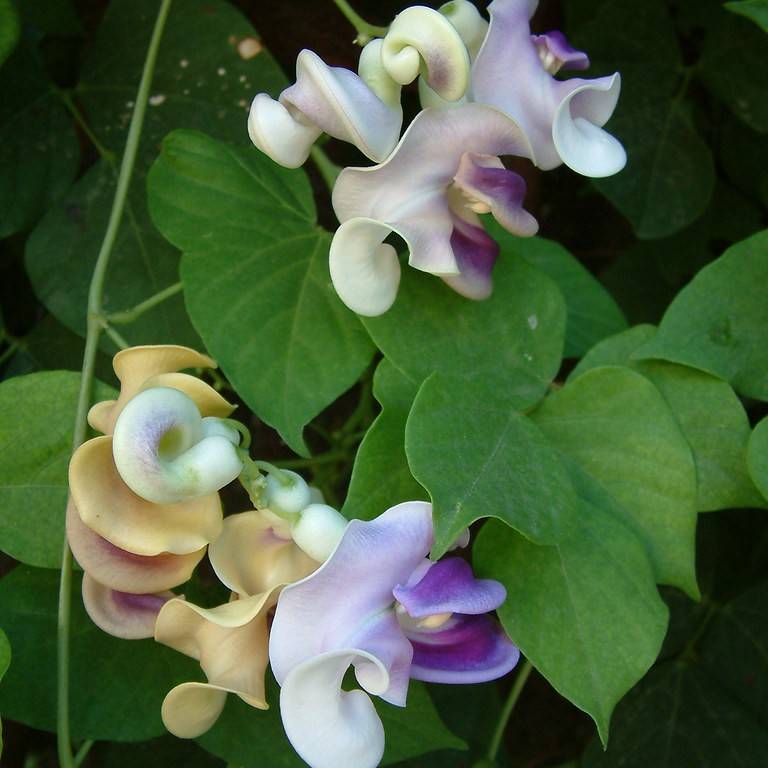
Corkscrew Flower
Vigna caracalla
Overview
Corkscrew flower, also called snail vine, is a vigorous twining legume valued for its uniquely coiled, sweetly scented blooms that resemble tiny snail shells. The flowers emerge in hanging clusters from summer through fall, shifting from pale cream to soft lavender as they mature, emitting a fragrance often compared to jasmine or hyacinth. Its lush, bright green trifoliate leaves provide dense foliage coverage for trellises, arbors, or fences in warm climates, while it is often grown as an annual or container plant in cooler regions.
Care Guide
Watering
Water corkscrew flower regularly to keep the soil consistently moist but not waterlogged, especially during active growth and flowering periods. Reduce watering frequency in the cooler winter months, allowing the top 1-2 inches of soil to dry out between waterings to prevent root rot. Avoid overhead watering to minimize the risk of fungal leaf diseases, targeting water directly at the base of the plant.
Light
Corkscrew flower thrives in full sun, requiring a minimum of 6-8 hours of direct sunlight daily to produce abundant blooms and strong, healthy growth. In extremely hot, arid climates, it benefits from light afternoon shade to protect its leaves from scorching and prevent excessive moisture loss. Insufficient light will lead to sparse foliage, reduced flowering, and weak, leggy vines.
Soil
Plant corkscrew flower in well-draining, loamy soil with a slightly acidic to neutral pH range of 6.0 to 7.0 for optimal root health and nutrient uptake. It tolerates a range of soil types, including sandy or clay soils, as long as drainage is adequate to prevent standing water around the root system. Amending heavy soil with compost or well-rotted manure before planting will improve drainage and add beneficial organic matter.
Fertilizer
Feed corkscrew flower with a balanced, slow-release fertilizer with an NPK ratio of 10-10-10 in early spring, just as new growth begins to emerge. Supplement with a phosphorus-rich liquid fertilizer every 2-3 weeks during the blooming season to support abundant flower production, avoiding high-nitrogen formulas that promote leaf growth over flowers. Cease fertilization entirely in late fall and winter when the plant enters its dormant growth phase.
Temperature
Corkscrew flower is a tropical plant that prefers warm temperatures between 65-85°F (18-29°C) for optimal growth and flowering. It is hardy only in USDA zones 9-11, as it cannot tolerate frost and will die back if exposed to temperatures below 32°F (0°C). In cooler climates, it can be grown in containers and overwintered indoors in a bright, cool location with temperatures above 50°F (10°C).
Pruning
Prune corkscrew flower in late winter or early spring before new growth emerges to remove dead, damaged, or overgrown vines and maintain the desired shape and size. Lightly trim back wayward stems throughout the growing season to encourage bushier growth and prevent the vine from becoming overly tangled on its support structure. Regular deadheading of spent flower clusters will extend the blooming period by prompting the plant to produce more buds.
Propagation
Corkscrew flower is most commonly propagated from seeds, which should be nicked or soaked in warm water for 24 hours before sowing to improve germination rates, planted 1 inch deep in moist seed starting mix in spring. It can also be propagated from semi-hardwood stem cuttings taken in late summer, dipped in rooting hormone, and planted in a well-draining medium with consistent moisture and indirect light until roots develop, typically within 4-6 weeks. Container-grown plants can also be divided during the dormant season, though this method is less common due to the plant’s deep root system.
Humidity
Corkscrew flower prefers moderate to high humidity levels between 50-70% to support lush foliage and healthy bloom development, thriving in the humid conditions of its native tropical range. In dry indoor environments or arid outdoor climates, increase humidity around the plant by placing a tray filled with water and pebbles beneath its container, or misting the leaves regularly during hot, dry periods. It can tolerate average household humidity levels, but very low humidity may cause leaf browning and reduced flowering.
Repotting
Container-grown corkscrew flower should be repotted every 1-2 years in early spring, before new growth begins, to refresh the soil and provide extra space for its expanding root system. Choose a pot that is 2-3 inches larger in diameter than the current container, with multiple drainage holes to prevent waterlogging, and use a high-quality, well-draining potting mix amended with compost. Avoid repotting during the blooming season, as this can shock the plant and cause it to drop its flower buds prematurely.
Uses & Symbolism
Corkscrew flower is widely grown as an ornamental vine for trellises, arbors, fences, and pergolas, adding vertical interest and fragrant blooms to garden landscapes in warm climates. Its sweet, long-lasting fragrance and unique flower shape make it a popular choice for patio containers and hanging baskets near seating areas, where its scent can be easily enjoyed. Historically, some indigenous communities in its native range have used parts of the plant for traditional medicinal purposes, though it is not widely used for culinary or medicinal applications today.
Diseases & Pests
Corkscrew flower is relatively pest-resistant, but it may be susceptible to common garden pests including aphids, spider mites, and whiteflies, which can be controlled with insecticidal soap or neem oil applications. Overwatering or poorly draining soil can lead to root rot, a fungal disease that causes yellowing leaves, wilting, and eventual plant death if not addressed by adjusting watering habits and improving soil drainage. In humid, stagnant conditions, it may also develop powdery mildew or leaf spot, which can be prevented by ensuring adequate air circulation around the vine and avoiding overhead watering.
Related plants
Other plants you might like if you grow Corkscrew Flower.