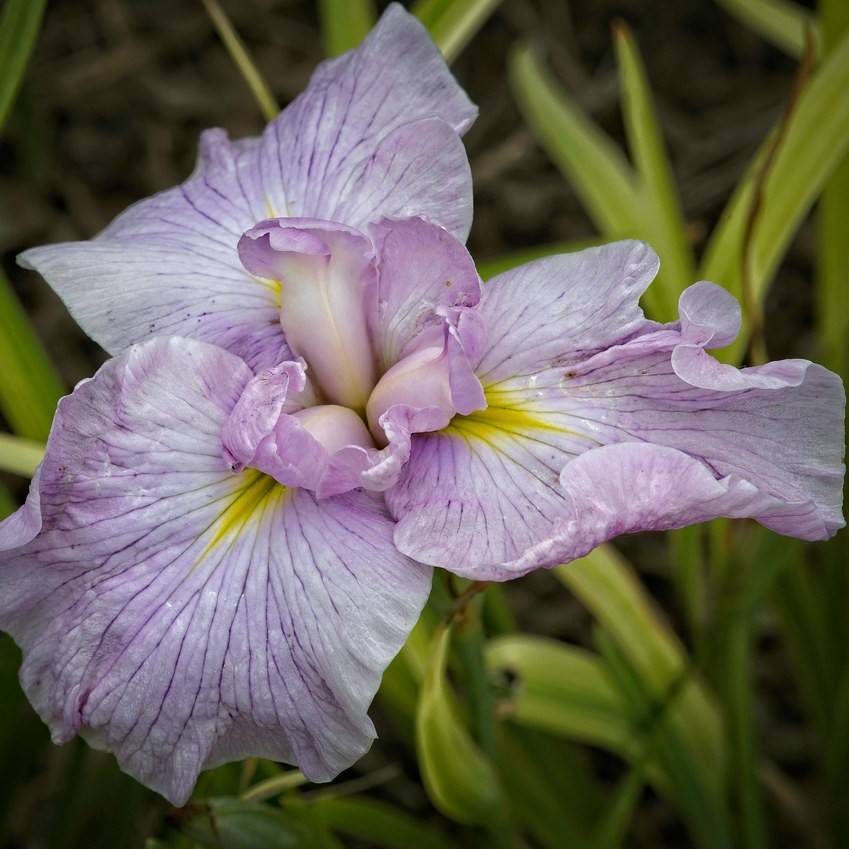
Japanese Water Iris
Iris ensata
Overview
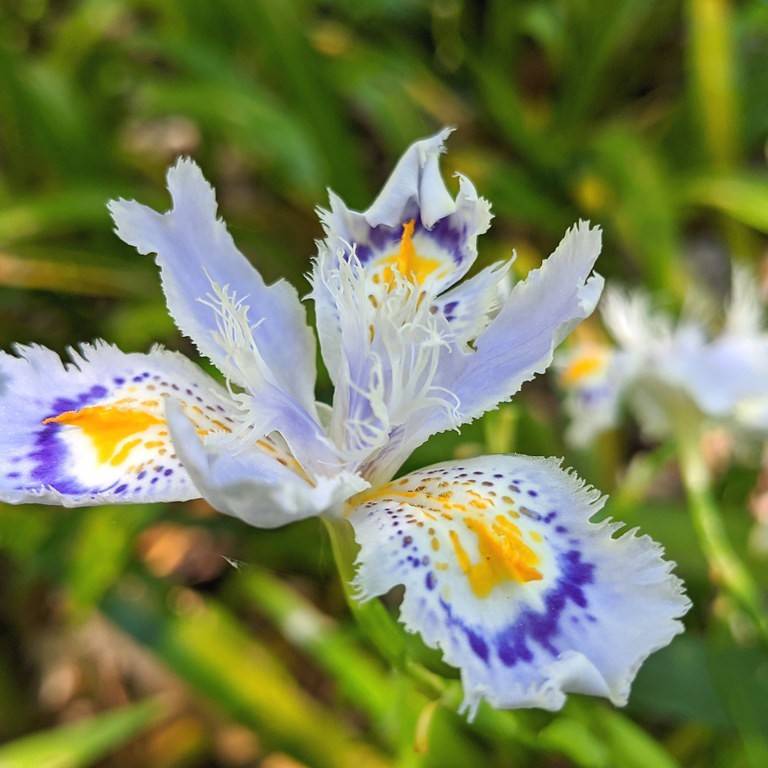
Japanese Water Iris, long celebrated in Japanese horticulture and art, is distinguished by its broad, sword-shaped foliage and ruffled, flat-faced flowers that appear in early to mid-summer. Unlike many other iris species, it thrives in saturated, acidic soils, making it a popular choice for edge-of-pond plantings, rain gardens, and consistently moist border areas. Hundreds of cultivated varieties exist, with bloom sizes ranging from 3 to 12 inches wide and patterns including solid colors, picotee edges, and contrasting central markings.
Care Guide
Watering
Keep soil consistently saturated or submerged up to 6 inches deep during the active growing season, never allowing the root zone to dry out completely. Reduce watering slightly in fall and winter, but maintain moist conditions to prevent rhizome desiccation. Avoid using hard water with high calcium content, as it can raise soil pH and harm growth.
Light
Grow best in full sun, receiving at least 6 hours of direct sunlight daily for optimal flowering. In very hot, arid climates, provide light afternoon shade to prevent foliage scorching and extend bloom life. Too much shade will result in sparse blooms and weak, leggy growth.
Soil
Requires rich, acidic, loamy soil with a pH between 5.0 and 6.5, high in organic matter. Heavy clay soils are tolerated as long as they retain moisture well; avoid sandy, fast-draining soils that cannot stay consistently wet. If grown in containers, use a peat-based acidic potting mix formulated for water-loving plants.
Fertilizer
Feed in early spring just as new growth emerges with a balanced, slow-release fertilizer formulated for acid-loving plants, avoiding high-nitrogen blends that can encourage foliage over blooms. Apply a second light feeding immediately after flowering to support rhizome development for the next year. Do not fertilize in late fall or winter, as this can stimulate tender new growth susceptible to cold damage.
Temperature
Thrives in temperate climates with summer temperatures between 60–85°F (15–29°C), and is winter hardy in USDA zones 4–9. Rhizomes can survive short periods of freezing temperatures if submerged or covered with a thick layer of mulch in colder regions. Extreme heat above 90°F (32°C) may cause foliage burn if plants are not kept consistently moist.
Pruning
Remove spent flower stalks immediately after blooming to prevent seed formation and redirect energy to rhizome growth. Trim back yellowed or damaged foliage as needed throughout the growing season to maintain airflow and reduce disease risk. Cut all foliage back to 2–3 inches above the soil line in late fall after it dies back naturally to prepare for winter.
Propagation
Most reliably propagated by division of mature rhizomes every 3–4 years in late summer or early fall, after flowering has finished. Dig up clumps, separate healthy rhizomes with visible fans of foliage and intact roots, discard any soft or rotted sections, and replant immediately at the same depth as the original clump. Can be grown from seed, but seeds require cold stratification and may take 2–3 years to produce blooms, with offspring not necessarily matching the parent plant’s characteristics.
Humidity
Tolerates a wide range of humidity levels, but grows best in moderate to high humidity between 50–70%, typical of its native wetland habitats. Dry indoor air can cause leaf tip browning if grown as a container houseplant, so mist regularly or place the pot on a tray of pebbles filled with water to raise ambient humidity. Outdoor plants rarely require humidity adjustments as long as their moisture needs are met.
Repotting
Container-grown plants should be repotted every 2–3 years in early spring before new growth starts, or immediately after division. Use a wide, shallow pot with drainage holes, and plant rhizomes so the top third is exposed above the soil line to prevent rot. After repotting, submerge the pot in water up to the soil level to settle the roots and maintain consistent moisture.
Uses & Symbolism
Widely planted as an ornamental in water gardens, rain gardens, boggy borders, and edge-of-pond landscapes for its striking summer blooms and architectural foliage. It is a popular subject in Japanese floral design and traditional gardens, and many historic cultivars are preserved in specialized iris collections across the world. When planted in riparian areas, it helps stabilize soil and reduce erosion along water edges.
Diseases & Pests
Susceptible to iris borer, a pest whose larvae tunnel into rhizomes, causing rot, wilting, and yellowed foliage; inspect rhizomes regularly during division and destroy any infested sections. Fungal diseases including leaf spot, crown rot, and rust can occur in overly crowded plantings with poor airflow, or if foliage is kept wet for extended periods in cool weather. Aphids and slugs may feed on young foliage and flower buds, which can be controlled with insecticidal soap or organic slug baits, respectively.
Related plants
Other plants you might like if you grow Japanese Water Iris.