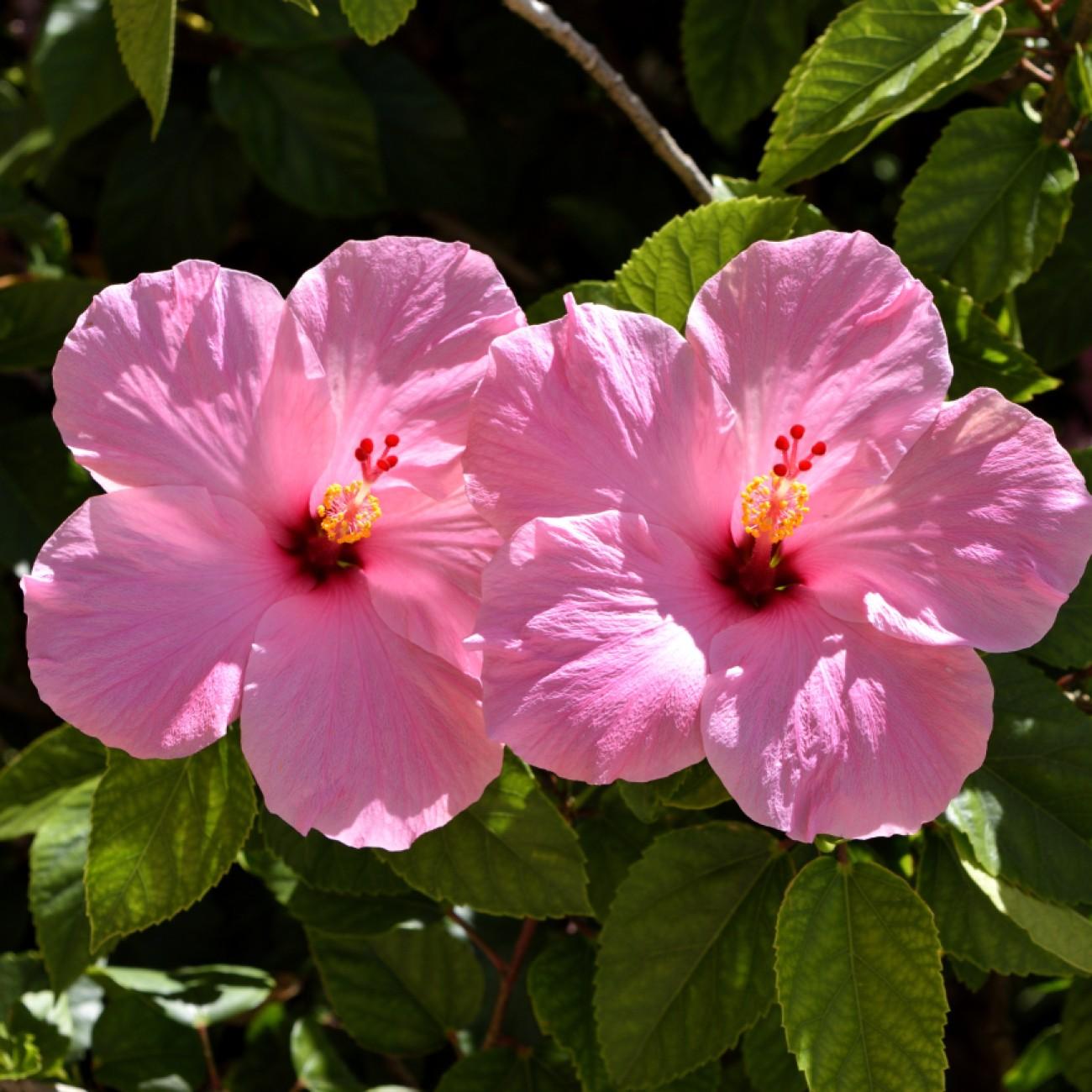
Common Rose Mallow
Hibiscus moscheutos
Overview
Common rose mallow, a cold-hardy member of the hibiscus genus, dies back to the ground each winter in temperate climates before reemerging vigorously in late spring. It produces plate-sized, five-petaled blooms in shades of white, pink, red, and bicolor, often with a contrasting dark central eye, that open for one day each but are produced in succession over months. Adapted to marshy, riparian habitats in its native range, it tolerates poor drainage and seasonal flooding better than most ornamental perennials.
Care Guide
Watering
Keep soil consistently moist, providing 1-2 inches of water per week during active growth; never allow the root zone to dry out completely, as drought stress will stunt growth and reduce flowering. Reduce watering frequency in fall as foliage begins to die back, and only provide minimal water during winter dormancy to prevent root rot in cold, saturated soil.
Light
Grow in full sun, meaning at least 6 hours of direct, unfiltered sunlight daily, to encourage strong stem growth and maximum flower production. Partial shade is tolerated in very hot, arid climates, but too much shade will lead to leggy growth, fewer blooms, and increased risk of fungal disease.
Soil
Prefers rich, moisture-retentive, slightly acidic to neutral soil with a pH between 5.5 and 7.0, though it adapts to most garden soils as long as they do not dry out rapidly. Amending heavy clay or sandy soils with compost, well-rotted manure, or peat moss will improve both water retention and nutrient availability for robust growth.
Fertilizer
Feed with a balanced, slow-release 10-10-10 fertilizer in early spring just as new growth emerges, and follow with a second application of high-phosphorus 5-10-5 fertilizer in early summer to support bloom development. Avoid over-fertilizing with high-nitrogen products, as this will promote excessive leaf growth at the expense of flowers and can weaken stems.
Temperature
Thrives in summer temperatures between 65-90°F (18-32°C), and is winter hardy in USDA zones 4-9, tolerating winter lows down to -30°F (-34°C) when the root zone is insulated with a layer of mulch. Young plants may benefit from extra winter protection in the coldest parts of its range, but established specimens reliably return each spring as long as soil does not stay waterlogged during freeze-thaw cycles.
Pruning
Cut back all dead, woody stems to 4-6 inches above the soil line in late winter or early spring before new growth emerges, to make room for fresh, vigorous shoots. Pinch back the tips of young stems when they reach 12-18 inches tall to encourage bushier growth and more flower-producing side branches, and remove spent blooms throughout the flowering season to extend the bloom period.
Propagation
Most commonly propagated from softwood stem cuttings taken in early summer, rooted in moist potting mix under high humidity for 4-6 weeks until new growth appears. It can also be grown from seed, which should be scarified and stratified for 30 days before sowing to improve germination rates, though seed-grown plants may not retain the exact flower characteristics of the parent cultivar.
Humidity
Tolerates a wide range of humidity levels from 40-80%, and thrives in the high humidity of its native wetland and riparian habitats. While it does not require supplemental humidity in most garden settings, indoor-grown specimens benefit from occasional misting or a pebble tray to prevent leaf edge browning in dry indoor air.
Repotting
Container-grown specimens should be repotted every 2-3 years in early spring before new growth begins, using a slightly larger pot with drainage holes and rich, moisture-retentive potting mix. Add a layer of gravel at the bottom of the pot to improve drainage and prevent root rot, and water thoroughly after repotting to settle the soil around the roots.
Uses & Symbolism
Common rose mallow is a popular ornamental for rain gardens, pond edges, and moist border plantings, where its large, showy blooms add tropical flair to temperate landscapes. It is also a valuable pollinator plant, attracting bumblebees, hummingbirds, and specialized hibiscus bees, while its seed heads provide food for songbirds in fall and winter. Some indigenous North American tribes historically used its roots and leaves to make medicinal teas for treating coughs, colds, and digestive inflammation.
Diseases & Pests
The most common fungal diseases affecting common rose mallow are leaf spot, rust, and powdery mildew, which thrive in humid, poorly ventilated conditions and can be prevented by spacing plants for air flow and avoiding overhead watering. Common pests include Japanese beetles, which skeletonize leaves and eat blooms, aphids that cluster on new growth, and hibiscus sawfly larvae that defoliate plants rapidly; these can be controlled with insecticidal soap, neem oil, or handpicking for small infestations. Root rot can occur in poorly drained soil, especially during winter dormancy, so ensure planting sites or containers have adequate drainage to prevent saturated soil around the root zone.
Related plants
Other plants you might like if you grow Common Rose Mallow.