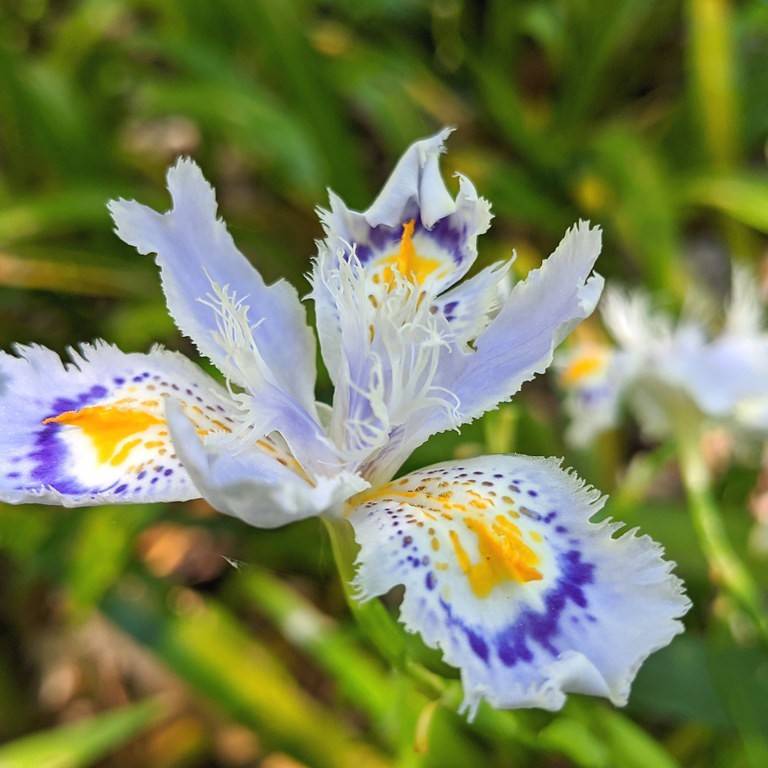
Japanese Iris
Iris ensata
Overview
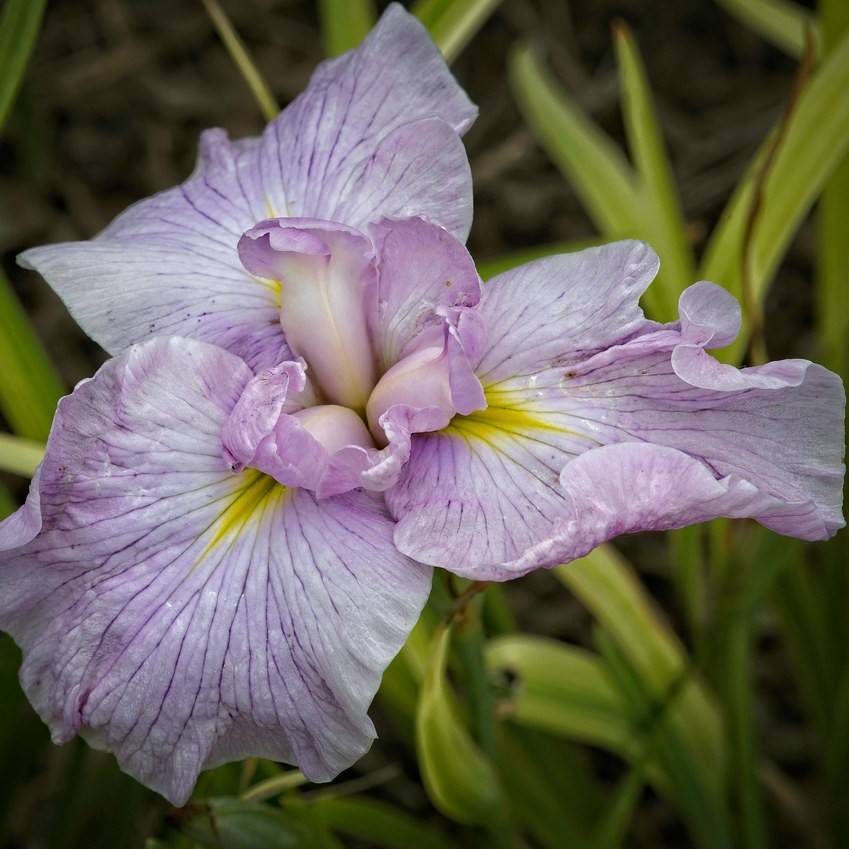
Japanese Iris, long cultivated in Japanese gardens for over 500 years, produces some of the largest flowers in the iris genus, often measuring 6 to 12 inches across with distinct falls and upright standards. It thrives in wet, fertile conditions, making it a popular choice for water gardens, rain gardens, and boggy landscape spots where few other ornamentals perform well. Unlike bearded irises, it lacks fuzzy 'beards' on its lower petals, instead showcasing bold, often veined or patterned falls that draw pollinators like bumblebees and hummingbirds.
Care Guide
Watering
Japanese Iris requires consistently moist soil, even occasional shallow standing water, throughout the growing season; never allow the root zone to dry out completely, especially during bloom development. Reduce watering slightly in fall after foliage dies back, but maintain enough moisture to prevent rhizomes from desiccating over winter. Avoid overwatering in heavy, poorly drained soils that stay soggy in cold weather, as this can cause rhizome rot.
Light
Grow in full sun to partial shade for optimal flowering; at least 6 hours of direct sunlight daily is required to produce abundant, large blooms. In regions with intense, scorching midday summer sun, provide light afternoon shade to prevent petal scorch and extend the bloom period. Too much deep shade will result in sparse flowering and weak, leggy growth that is prone to toppling.
Soil
Prefers rich, acidic, loamy soil with a pH between 5.0 and 6.5, high in organic matter to retain moisture without becoming compacted. Heavy clay soils can be amended with compost, peat moss, or well-rotted leaf mold to improve structure and nutrient content while maintaining the wet conditions this species favors. Avoid alkaline soils, as they will cause nutrient deficiencies, yellowing foliage, and stunted growth over time.
Fertilizer
Feed in early spring just as new growth emerges with a balanced, slow-release fertilizer formulated for acid-loving plants to support strong foliage and bud development. Apply a second light dose of low-nitrogen, high-phosphorus fertilizer right after blooming to nourish rhizomes for the following year’s flowers. Avoid high-nitrogen fertilizers, as they promote excessive leaf growth at the expense of blooms and can increase susceptibility to rot.
Temperature
Thrives in temperate climates with cool to warm summer temperatures between 60-85°F (15-29°C), and is hardy to USDA zones 4 through 9, tolerating winter lows down to -30°F (-34°C) when rhizomes are adequately insulated with mulch. In regions with extremely hot summers, consistent moisture and afternoon shade are necessary to prevent heat stress. Winter temperatures above 60°F (15°C) will prevent the required dormancy period, leading to reduced flowering the next season.
Pruning
Remove spent flower stalks immediately after blooming to prevent seed formation, which diverts energy from rhizome storage, cutting stems down to the base of the foliage. Allow foliage to die back naturally in fall, as the leaves continue to photosynthesize and feed the rhizomes until they turn yellow and brown. Once fully dormant, cut back all dead foliage to 2-3 inches above the soil line to remove overwintering pest and disease pathogens.
Propagation
The most reliable method is division of mature clumps every 3 to 4 years in early fall, right after flowering finishes, to avoid disrupting bloom production. Dig up the entire rhizome clump, gently separate healthy, firm rhizome sections with at least one fan of leaves and a set of roots, discarding any soft, rotted, or woody old sections. Replant divisions 18-24 inches apart with the top of the rhizome 1-2 inches below the soil surface, watering thoroughly to settle the soil around the roots.
Humidity
Tolerates a wide range of humidity levels, from moderate outdoor ambient humidity to the higher humidity of boggy or waterside locations. It does not require supplemental humidity when grown outdoors in its preferred moist soil conditions, as its root system accesses consistent moisture to support foliage health. When grown temporarily in containers, avoid placing it near dry heating or cooling vents that can desiccate leaf edges.
Repotting
Container-grown Japanese Iris should be repotted every 2 to 3 years in early spring, before new growth emerges, to refresh soil and prevent rhizome overcrowding. Use a wide, shallow pot with ample drainage holes, filled with acidic, organic-rich potting mix formulated for water-loving plants, and plant rhizomes 1-2 inches deep. After repotting, water thoroughly and keep the pot in a shallow tray of standing water to maintain consistent soil moisture during establishment.
Uses & Symbolism
Japanese Iris is a staple of traditional Japanese water gardens and is widely planted in rain gardens, bog edges, pond margins, and moist border beds for its dramatic, colorful summer blooms. Cut flowers have a short vase life but are highly prized for floral arrangements, especially for cultural displays like Japanese ikebana. Some historic cultivars have symbolic meaning in Japanese art and folklore, representing purity and good fortune.
Diseases & Pests
The most common issue is rhizome rot, caused by poorly drained soil or overwatering in cold weather, which presents as soft, mushy rhizomes and yellowing, wilting foliage. Fungal leaf spot and rust can occur in humid, crowded conditions, leading to brown or orange spots on leaves; improve air circulation and remove affected foliage to prevent spread. Common pests include iris borers, which tunnel into rhizomes and cause severe damage, and slugs and snails that feed on young foliage in damp conditions.
Related plants
Other plants you might like if you grow Japanese Iris.