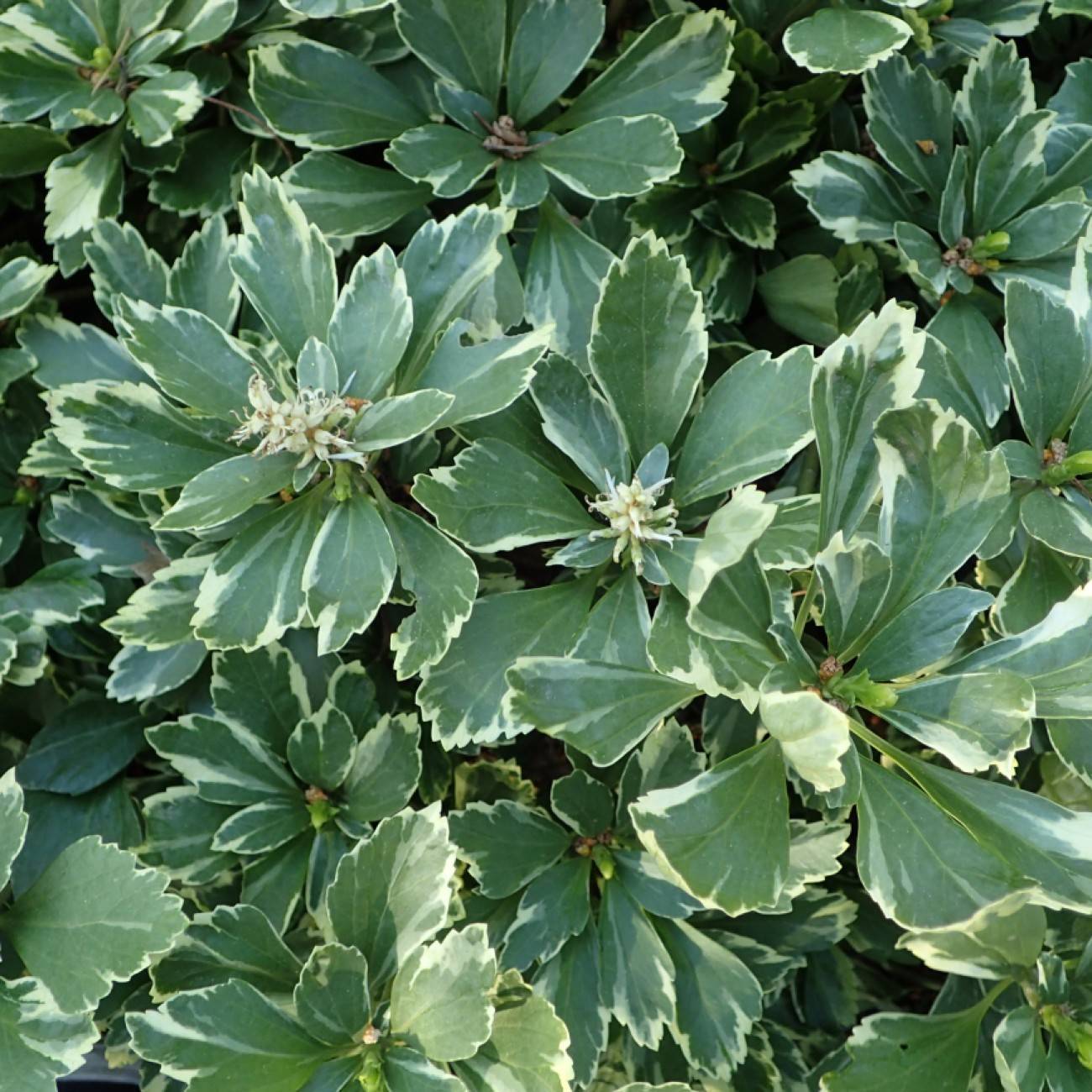
Japanese Spurge
Pachysandra terminalis
Overview
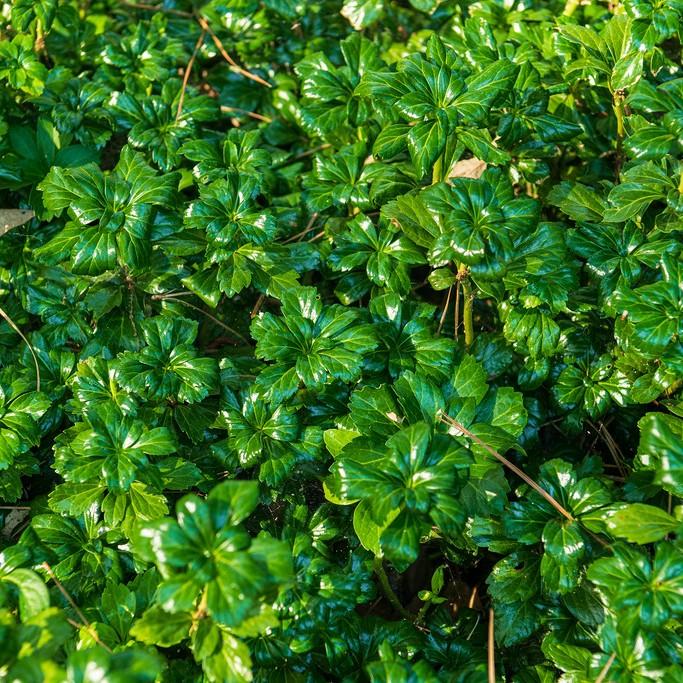
Japanese spurge is a dense, mat-forming evergreen perennial widely cultivated as a low-maintenance ground cover for shaded landscapes. It produces small, fragrant white flower spikes in early spring, followed by tiny, inconspicuous berry-like fruits later in the season. Its creeping rhizomatous growth habit allows it to spread steadily to form a uniform, weed-resistant carpet, making it ideal for underplanting trees or filling narrow shaded beds. It is valued for its tolerance of drought, poor soil, and heavy shade once established.
Care Guide
Watering
Water newly planted Japanese spurge regularly to keep soil consistently moist for the first growing season, helping roots establish fully. Once established, it is highly drought tolerant, requiring only occasional watering during extended dry periods to prevent foliage browning. Avoid overwatering, as saturated soil can lead to root rot and fungal issues.
Light
Thrives in partial to full shade, making it perfect for areas under dense tree canopies or north-facing garden beds where most other ground covers struggle. It can tolerate small amounts of dappled morning sun, but direct midday or afternoon sun will scorch its leaves, causing yellowing or brown scorch marks. In too much sun, the plant will become stunted and lose its lush, deep green appearance.
Soil
Adaptable to a wide range of soil types, including sandy, loamy, or clay soils, as long as they are well-draining. It prefers slightly acidic to neutral soil pH, between 5.5 and 7.0, but will tolerate mildly alkaline conditions as well. Amending heavy or poor soil with organic matter such as compost at planting time will encourage faster establishment and denser growth.
Fertilizer
Japanese spurge has very low fertilizer needs, and often grows well without regular feeding if planted in moderately fertile soil. If growth is sparse or foliage appears pale, apply a balanced, slow-release granular fertilizer in early spring before new growth emerges, taking care to avoid getting fertilizer on the foliage. Do not overfertilize, as this can encourage excessive soft growth that is more susceptible to disease and pest damage.
Temperature
Hardy in USDA zones 4 through 9, tolerating winter temperatures as low as -30°F (-34°C) without significant damage. In the coldest parts of its range, a light layer of winter mulch can help protect roots from extreme temperature fluctuations. In warmer zones, provide extra shade and occasional watering during summer heatwaves to prevent foliage stress.
Pruning
Prune or mow Japanese spurge in early spring before new growth appears to remove winter-damaged foliage and encourage denser, more vigorous new growth. Trim back any stray stems that spread beyond desired planting boundaries to keep the ground cover neat and contained. If the planting becomes thick and overcrowded, thin out sections periodically to improve air circulation and reduce risk of fungal disease.
Propagation
Most easily propagated by division in early spring or fall, when you can dig up established clumps, separate them into smaller sections with intact roots and rhizomes, and replant them 6-12 inches apart in prepared soil. It can also be grown from stem cuttings taken in late spring or early summer, rooted in moist potting mix under indirect light. Rhizome fragments that break off during planting or maintenance will often root on their own if left in contact with moist soil.
Humidity
Tolerates average outdoor humidity levels well, with no special humidity requirements for outdoor cultivation. Indoor potted specimens will thrive in standard household humidity between 40% and 60%. Extremely dry conditions, such as those near heating vents in winter, can cause leaf tip browning, so mist occasionally if growing indoors.
Repotting
Japanese spurge is rarely grown in containers long-term, but if potted, repot every 2-3 years in early spring before new growth begins. Use a well-draining, peat-based potting mix with perlite added to improve drainage, and select a pot that is 1-2 inches larger than the current root ball. Trim back overgrown roots and any crowded foliage during repotting to encourage healthy new growth.
Uses & Symbolism
Primarily used as a low-maintenance evergreen ground cover for shaded landscapes, including under tree canopies, along shaded walkways, and on sloped sites where erosion control is needed. Its dense growth habit suppresses weeds effectively, reducing the need for regular weeding in difficult-to-access shaded areas. It is also occasionally grown as a low edging plant for shaded perennial borders, or as a houseplant in low-light indoor spaces.
Diseases & Pests
The most common issue is leaf blight, caused by the fungus Volutella pachysandrae, which thrives in wet, poorly ventilated conditions and causes brown, spotted lesions on foliage that can spread to kill entire patches. Common pests include scale insects, spider mites, and slugs, which feed on foliage and can cause discoloration or stunted growth if populations are high. Root rot can occur in waterlogged, poorly draining soil, especially in areas with heavy clay or frequent overwatering.
Related plants
Other plants you might like if you grow Japanese Spurge.