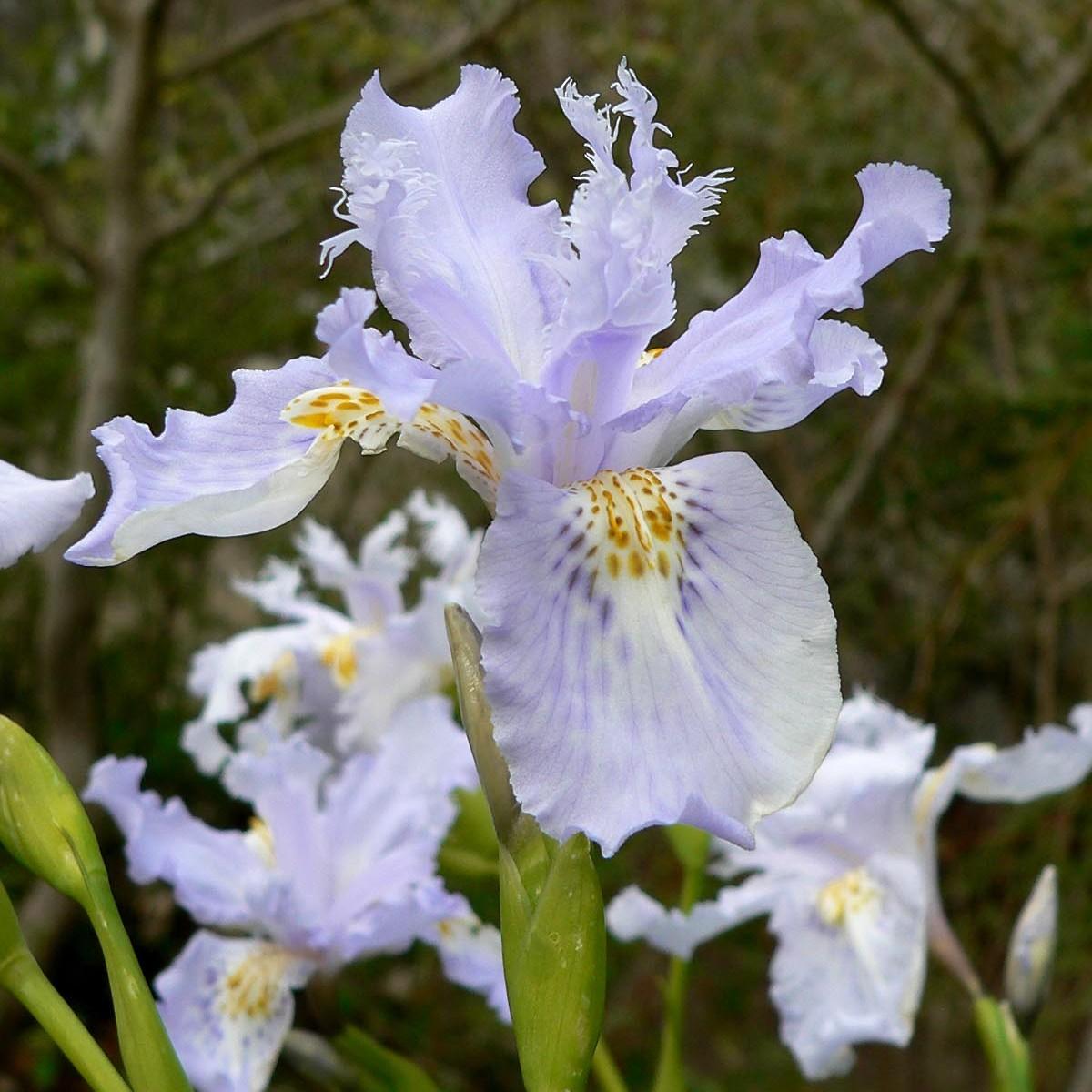
Bamboo Iris
Iris confusa
Overview
Bamboo iris is named for its upright, clumping growth habit and slender, bamboo-like stems that bear flat, glossy, sword-shaped leaves arranged in fan-like clusters. In mid to late spring, it produces profusions of small, flat, orchid-like flowers, typically pale blue, lavender, or white with yellow and purple markings on the falls, each bloom lasting only a day but appearing in succession over several weeks. Native to forest understories and stream banks in subtropical mountain regions, it is far more tolerant of shade and moisture than most other iris species, making it a versatile landscape plant for mild climates. While evergreen in frost-free areas, it dies back to the ground in regions with prolonged freezes, reemerging vigorously in spring.
Care Guide
Watering
Keep soil consistently moist but not waterlogged during the active growing season, watering deeply whenever the top 1 to 2 inches of soil feel dry to the touch. Reduce watering frequency in fall and winter, allowing the soil to dry out slightly between waterings to prevent rhizome rot during cooler, dormant periods. Avoid overhead watering where possible to minimize fungal leaf spot risk, directing water at the base of the plant instead.
Light
Thrives in partial shade, particularly dappled sunlight under tall tree canopies, which mimics its native forest understory habitat. It can tolerate full sun in cool, mild climates if provided with consistent moisture, but hot, direct midday sun will scorch its foliage and cause premature wilting. Too much deep shade will reduce flowering production, so aim for 3 to 6 hours of filtered or morning sun daily for best bloom performance.
Soil
Prefers rich, well-drained, slightly acidic to neutral loamy soil with high organic matter content, though it adapts well to average garden soil as long as drainage is adequate. Heavy clay soils should be amended with compost, leaf mold, or peat moss to improve drainage and aeration, as waterlogged soil will quickly cause rhizome rot. Unlike bearded irises, bamboo iris prefers its rhizomes to be covered by a thin layer of soil rather than exposed to direct sun.
Fertilizer
Feed lightly in early spring just as new growth emerges using a balanced, slow-release 10-10-10 fertilizer, applying it around the base of the plant and watering thoroughly to avoid burning new foliage. A second light application of a phosphorus-rich fertilizer can be applied immediately after flowering to support healthy rhizome development for the next year’s blooms. Avoid over-fertilizing, particularly with high-nitrogen formulas, as this can encourage excessive leaf growth at the expense of flowers and increase susceptibility to frost damage.
Temperature
Grows best in mild temperatures between 60°F and 80°F (15°C to 27°C), and is hardy in USDA zones 7 through 10, tolerating short dips down to 10°F (-12°C) if planted in a sheltered location and mulched heavily in winter. In zones colder than 7, it can be grown in containers and overwintered indoors in a cool, bright location to avoid frost damage. Extended periods of temperatures above 90°F (32°C) will cause leaf scorch, so extra shade and moisture should be provided during heatwaves.
Pruning
Remove spent flower stalks at the base after blooming finishes to maintain a tidy appearance and prevent the plant from expending energy on seed production. Trim away any yellowed, brown, or damaged leaves throughout the growing season to improve air circulation and reduce fungal disease risk. In regions where the plant dies back to the ground in winter, cut all foliage back to 2 to 3 inches above the soil line after the first hard frost, and apply a 2 to 3 inch layer of mulch to protect the rhizomes from cold damage.
Propagation
The easiest and most reliable method of propagation is division of mature clumps, carried out in early fall immediately after flowering finishes, or in early spring before new growth begins. Dig up the entire clump, gently separate the rhizomes into sections with at least 3 to 4 healthy leaf fans and a well-developed root system, and replant immediately at the same depth they were growing previously, spacing new plants 18 to 24 inches apart. Bamboo iris can also be grown from fresh seed sown in fall, though seed-grown plants will take 2 to 3 years to reach flowering size and may not come true to the parent plant.
Humidity
Prefers moderate to high humidity levels between 40% and 70%, which aligns with its native subtropical mountain habitat, though it adapts well to average household and garden humidity levels. In very dry climates, occasional misting or placing a tray of water near container-grown plants can help raise ambient humidity and prevent leaf tip browning. Good air circulation around the foliage is important even in high humidity to prevent fungal diseases, so avoid overcrowding plants.
Repotting
Container-grown bamboo iris should be repotted every 2 to 3 years in early spring, just as new growth emerges, to refresh the soil and prevent the rhizomes from becoming root-bound. Choose a pot that is 2 to 3 inches wider than the previous container, with multiple drainage holes to prevent waterlogging, and use a high-quality potting mix amended with compost or leaf mold for extra organic matter. When repotting, gently loosen any tangled roots and replant the rhizome at the same depth it was growing in the old pot, watering thoroughly after repotting to settle the soil.
Uses & Symbolism
Bamboo iris is widely used as an ornamental plant in shaded garden beds, woodland gardens, and along stream banks, where its tall, graceful foliage provides year-round structure and its delicate spring blooms add subtle color. Its upright growth habit and tolerance of partial shade make it an excellent container plant for patios, porches, and shaded balconies in regions where it may not be winter hardy outdoors. In traditional Chinese medicine, extracts from its rhizomes have been used topically to treat minor skin irritations and swelling, though internal consumption is not recommended due to its toxicity.
Diseases & Pests
Bamboo iris is relatively pest and disease resistant, but it is susceptible to rhizome rot if planted in poorly drained, waterlogged soil, a condition that causes soft, mushy rhizomes, yellowing foliage, and eventual plant death if not addressed quickly. Fungal leaf spot and rust may occur in overly humid conditions with poor air circulation, appearing as small brown or orange spots on the foliage; these can be managed by removing affected leaves, improving air flow, and applying a copper-based fungicide if necessary. Common pests include aphids, which suck sap from new growth, and slugs and snails, which feed on young leaves; aphids can be controlled with insecticidal soap or neem oil, while slugs and snails can be deterred with copper tape, diatomaceous earth, or organic bait.
Related plants
Other plants you might like if you grow Bamboo Iris.