Endres's Cranesbill
Geranium endressii
Overview
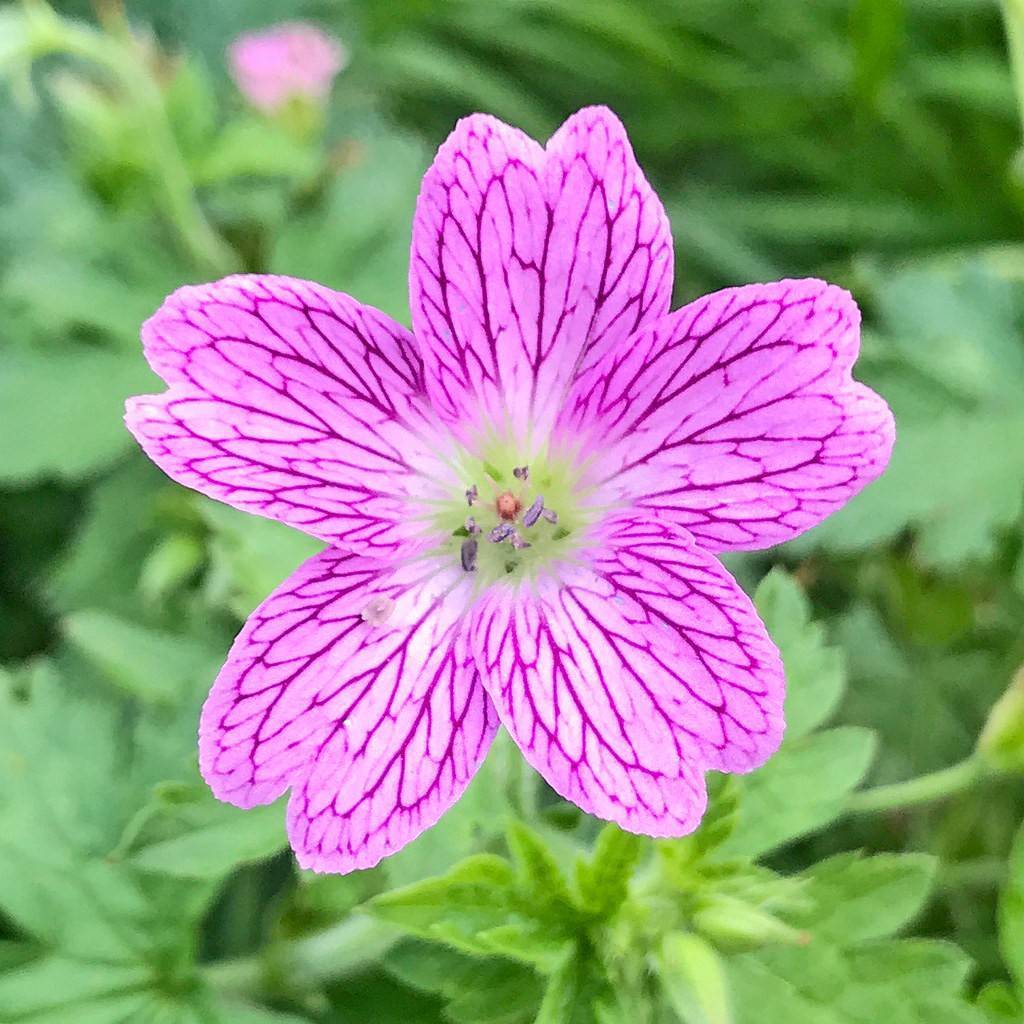
Endres's Cranesbill is a hardy, mounding herbaceous perennial prized for its long flowering period and adaptability to a range of garden conditions. It produces abundant, pale to medium pink five-petaled flowers with subtle darker veining from late spring through early fall, above deeply lobed, fuzzy green foliage that turns warm bronze tones in autumn. This species is one of the most popular cultivated cranesbills, often used to fill gaps in borders, line pathways, or suppress weeds as a low-growing ground cover. It is highly attractive to pollinators including bees and butterflies, and has good resistance to deer and rabbit browsing.
Care Guide
Watering
Water newly planted Endres's Cranesbill regularly to keep the soil consistently moist but not waterlogged for the first growing season, helping it establish a deep root system. Once established, it is moderately drought tolerant, only requiring supplemental water during prolonged periods of hot, dry weather when the top 1-2 inches of soil feel dry to the touch. Avoid overwatering, as soggy soil can lead to root rot, especially in heavy clay soils with poor drainage.
Light
Endres's Cranesbill thrives in full sun to partial shade, performing best with at least 4-6 hours of direct sunlight per day for optimal flowering. In regions with very hot, intense summer sun, it benefits from light afternoon shade to prevent leaf scorch and extend the bloom period. Too much dense shade will cause the plant to become leggy, produce fewer flowers, and be more prone to fungal issues.
Soil
This cranesbill adapts well to a wide range of soil types, including sandy, loam, and clay soils, as long as the site has good drainage. It prefers a slightly acidic to neutral pH between 5.8 and 7.0, and will benefit from the addition of organic matter such as compost or well-rotted manure at planting time to improve soil structure and nutrient content. Avoid planting in sites that are consistently waterlogged, as this will quickly cause root rot and plant death.
Fertilizer
Endres's Cranesbill is a light feeder that rarely requires heavy fertilization; a single application of balanced, slow-release granular fertilizer in early spring as new growth emerges is usually sufficient for the entire growing season. Over-fertilization will lead to excessive, leggy foliage growth at the expense of flower production, so avoid high-nitrogen formulas unless the plant is showing clear signs of nutrient deficiency such as yellowing leaves. If grown in very poor, sandy soil, a light topdressing of compost in mid-summer can provide a gentle nutrient boost without overfeeding.
Temperature
This species is cold hardy in USDA zones 3-8, tolerating winter temperatures as low as -40°F (-40°C) without extra protection once established. It prefers moderate summer temperatures between 60-75°F (15-24°C), and will go dormant early if exposed to prolonged temperatures above 90°F (32°C) without adequate moisture. Mild, cool spring and fall weather encourages the most vigorous growth and heaviest flowering.
Pruning
After the first flush of spring blooms fades in mid-summer, cut back the entire plant by one-third to one-half its height to encourage fresh, compact new growth and a second wave of flowering in late summer or early fall. Remove any yellowed, damaged, or diseased foliage throughout the growing season as needed to improve air circulation and keep the plant looking tidy. In late fall or early spring, cut back all dead, frost-damaged stems to ground level to make way for new emerging growth.
Propagation
Endres's Cranesbill is most easily propagated by division in early spring before new growth starts, or in early fall after flowering has finished; dig up the entire clump, separate it into smaller sections with a sharp knife, ensuring each section has a healthy portion of roots and several growing shoots, then replant immediately at the same depth as the original plant. It can also be grown from seed sown directly in the garden in fall or started indoors 8-10 weeks before the last expected frost date, though seed-grown plants may take 1-2 years to reach flowering size. Softwood cuttings taken from new growth in late spring or early summer will also root readily in a well-draining potting mix if kept consistently moist and out of direct sun for 3-4 weeks.
Humidity
This plant tolerates a wide range of humidity levels, performing well in both moderately dry and moderately humid environments as long as it has good air circulation around its foliage. High humidity combined with poor air circulation can increase the risk of fungal diseases such as powdery mildew and leaf spot, so avoid overcrowding plants and site them in an area with gentle air flow. It does not require any extra humidity supplementation when grown outdoors, and adapts well to average indoor humidity if grown as a potted houseplant.
Repotting
If grown in containers, Endres's Cranesbill should be repotted every 2-3 years in early spring before new growth emerges, or when it becomes root bound, indicated by roots growing out of the drainage holes or stunted growth. Choose a pot that is 1-2 inches larger in diameter than the current container, with ample drainage holes, and use a well-draining potting mix amended with compost to provide nutrients. After repotting, water thoroughly and keep the plant in partial shade for a few days to help it adjust to its new container without stress.
Uses & Symbolism
Endres's Cranesbill is most widely used as a low-growing ground cover in perennial borders, cottage gardens, rock gardens, and along woodland edges, where it suppresses weeds and fills gaps between taller plants with minimal care. Its long flowering period and attractive foliage make it a popular choice for edging pathways, lining garden beds, and growing in containers for patios or balconies, while its pollinator-friendly blooms support local bee and butterfly populations. It is also occasionally used in traditional herbal medicine as an astringent for treating minor skin irritations and diarrhea, though this use is less common than its ornamental application.
Diseases & Pests
Endres's Cranesbill is relatively pest and disease resistant, though it can occasionally be affected by fungal issues such as powdery mildew, leaf spot, and rust, particularly in humid conditions with poor air circulation or overwatering; these can be prevented by spacing plants properly to allow air flow, watering at the base rather than overhead, and removing affected foliage promptly. Common pests include aphids, slugs, and snails, which may feed on young tender foliage; aphids can be controlled with a strong jet of water or insecticidal soap, while slugs and snails can be deterred with diatomaceous earth, beer traps, or organic slug baits. Root rot can occur in poorly draining, waterlogged soils, so ensure planting sites or containers have adequate drainage to avoid this fatal issue.
Related plants
Other plants you might like if you grow Endres's Cranesbill.