Japanese Spiraea
Spiraea japonica
Overview
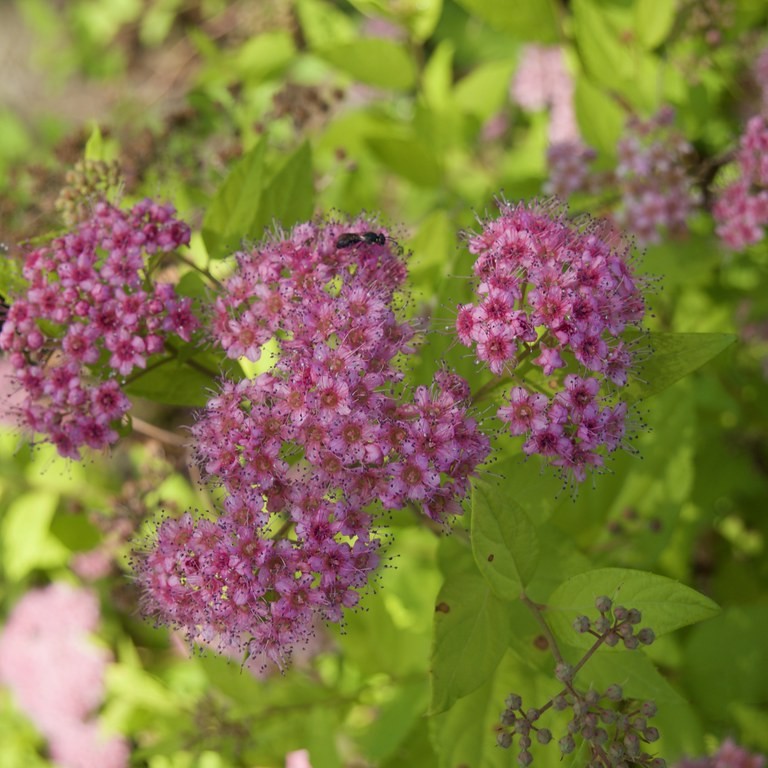
Japanese spiraea is a dense, deciduous shrub prized for its showy, flat-topped flower clusters that bloom from late spring to mid-summer, with many cultivars offering repeat blooms into early fall. Its oval, serrated leaves emerge bright green in spring, often shifting to warm yellow, orange, or red hues in autumn for extended seasonal appeal. A versatile, adaptable landscape plant, it is widely planted in borders, mass plantings, and foundation gardens across temperate regions.
Care Guide
Watering
Water newly planted Japanese spiraea regularly to keep soil consistently moist but not waterlogged for the first growing season, helping it establish a deep root system. Mature shrubs are moderately drought tolerant, requiring supplemental water only during extended periods of hot, dry weather to maintain flowering vigor. Avoid overwatering, as soggy soil can lead to root rot and fungal issues.
Light
Grow Japanese spiraea in full sun for the most abundant, vibrant blooms and the densest, most compact growth habit. It can tolerate partial shade, though flowering will be reduced, and the shrub may become leggy or sparse with too much shade. In regions with intense, scorching afternoon sun, light dappled afternoon shade can prevent leaf scorch without compromising bloom production.
Soil
Japanese spiraea thrives in moist, well-drained loamy soil with a slightly acidic to neutral pH, though it is highly adaptable to a wide range of soil types including clay, sand, and poor, rocky soils. It does not perform well in heavy, waterlogged soils that stay saturated for long periods, so amend heavy clay with compost or coarse sand to improve drainage before planting. Organic mulch applied around the base of the shrub will help retain soil moisture and regulate soil temperature.
Fertilizer
Feed Japanese spiraea once annually in early spring before new growth emerges with a balanced, slow-release granular fertilizer formulated for flowering shrubs. Over-fertilization can lead to excessive, leggy leaf growth at the expense of blooms, so avoid applying more than the recommended dosage on the product label. For shrubs growing in very poor soil, a light second application of diluted liquid fertilizer after the first bloom cycle can support repeat flowering in reblooming cultivars.
Temperature
Japanese spiraea is cold hardy in USDA zones 4 through 8, tolerating winter temperatures as low as -30°F (-34°C) without significant damage once established. It prefers moderate summer temperatures between 60-85°F (15-29°C), though it can tolerate short periods of higher heat if provided with adequate moisture. Late spring frosts can damage newly emerged growth, so cover young shrubs if a late freeze is forecast.
Pruning
Prune Japanese spiraea in late winter or early spring before new growth begins, removing dead, damaged, or crossing branches to improve air circulation and maintain a neat shape. For shrubs that bloom on new wood, you can cut the entire plant back to 6-12 inches (15-30 cm) above the ground every 2-3 years to rejuvenate growth and encourage heavier flowering. Deadheading spent bloom clusters throughout the summer can promote repeat flowering in many cultivars and keep the shrub looking tidy.
Propagation
Japanese spiraea is most easily propagated from softwood cuttings taken in late spring or early summer, when new growth is still green and flexible. Cut 4-6 inch (10-15 cm) stem sections, remove the lower leaves, dip the cut end in rooting hormone, and plant in moist, well-drained potting mix, keeping the cuttings humid and shaded until roots develop in 4-6 weeks. It can also be propagated by division in early spring or fall, though this method works best for mature, well-established shrubs with multiple crowns.
Humidity
Japanese spiraea adapts well to a wide range of humidity levels, thriving in the moderate humidity common to its native temperate Asian habitats as well as drier conditions in continental climates. Very high humidity combined with poor air circulation can increase the risk of fungal leaf spots and powdery mildew, so space shrubs appropriately to allow for airflow between plants. It does not require any supplemental humidity when grown outdoors, and is tolerant of dry air in indoor overwintering settings if needed.
Repotting
Japanese spiraea is primarily grown outdoors in landscape settings, but if grown in containers, repot every 2-3 years in early spring before new growth emerges, moving to a pot one size larger with fresh, well-drained potting mix. Choose a container with ample drainage holes to prevent waterlogging, as potted spiraea is more susceptible to root rot than in-ground specimens. When repotting, gently loosen any compacted roots and prune away any rotted or damaged root sections before planting in the new container.
Uses & Symbolism
Japanese spiraea is widely used in residential and commercial landscapes as a border shrub, mass planting for erosion control on slopes, foundation planting, or specimen plant for its colorful blooms and fall foliage. Many dwarf cultivars are well-suited for container growing or small garden spaces, while larger varieties work well as informal low hedges. Its nectar-rich blooms attract pollinators including bees, butterflies, and beneficial insects, making it a popular addition to pollinator gardens.
Diseases & Pests
Japanese spiraea is relatively pest and disease resistant, though it can be susceptible to fungal issues including powdery mildew, leaf spot, and fire blight, especially in conditions of high humidity and poor air circulation. Common pests include aphids, spider mites, and scale insects, which typically cause minor damage but can be controlled with insecticidal soap or horticultural oil in severe infestations. Root rot can occur in poorly drained, waterlogged soils, so proper site selection and soil amendment are critical to prevent this fatal issue.
Related plants
Other plants you might like if you grow Japanese Spiraea.
%22%2F%3E%0A%20%20%20%20%20%20%3Ccircle%20cx%3D%22920%22%20cy%3D%22180%22%20r%3D%2290%22%20fill%3D%22%23cfe8d5%22%2F%3E%0A%20%20%20%20%20%20%3Cpath%20d%3D%22M600%20590c-90-180-215-255-310-280%200%20165%20118%20296%20270%20296h40z%22%20fill%3D%22%2379b88e%22%2F%3E%0A%20%20%20%20%20%20%3Cpath%20d%3D%22M600%20590c80-150%20198-212%20302-228-8%20142-123%20255-270%20255h-32z%22%20fill%3D%22%235c9f73%22%2F%3E%0A%20%20%20%20%20%20%3Cpath%20d%3D%22M600%20610V360%22%20stroke%3D%22%234f8c64%22%20stroke-width%3D%2218%22%20stroke-linecap%3D%22round%22%2F%3E%0A%20%20%20%20%20%20%3Ctext%20x%3D%22600%22%20y%3D%22700%22%20text-anchor%3D%22middle%22%20font-family%3D%22Arial%2C%20sans-serif%22%20font-size%3D%2244%22%20fill%3D%22%23365c45%22%3E%0A%20%20%20%20%20%20%20%20Plant%20image%20coming%20soon%0A%20%20%20%20%20%20%3C%2Ftext%3E%0A%20%20%20%20%3C%2Fsvg%3E%0A%20%20)