Dwarf Fothergilla
Fothergilla gardenii
Overview
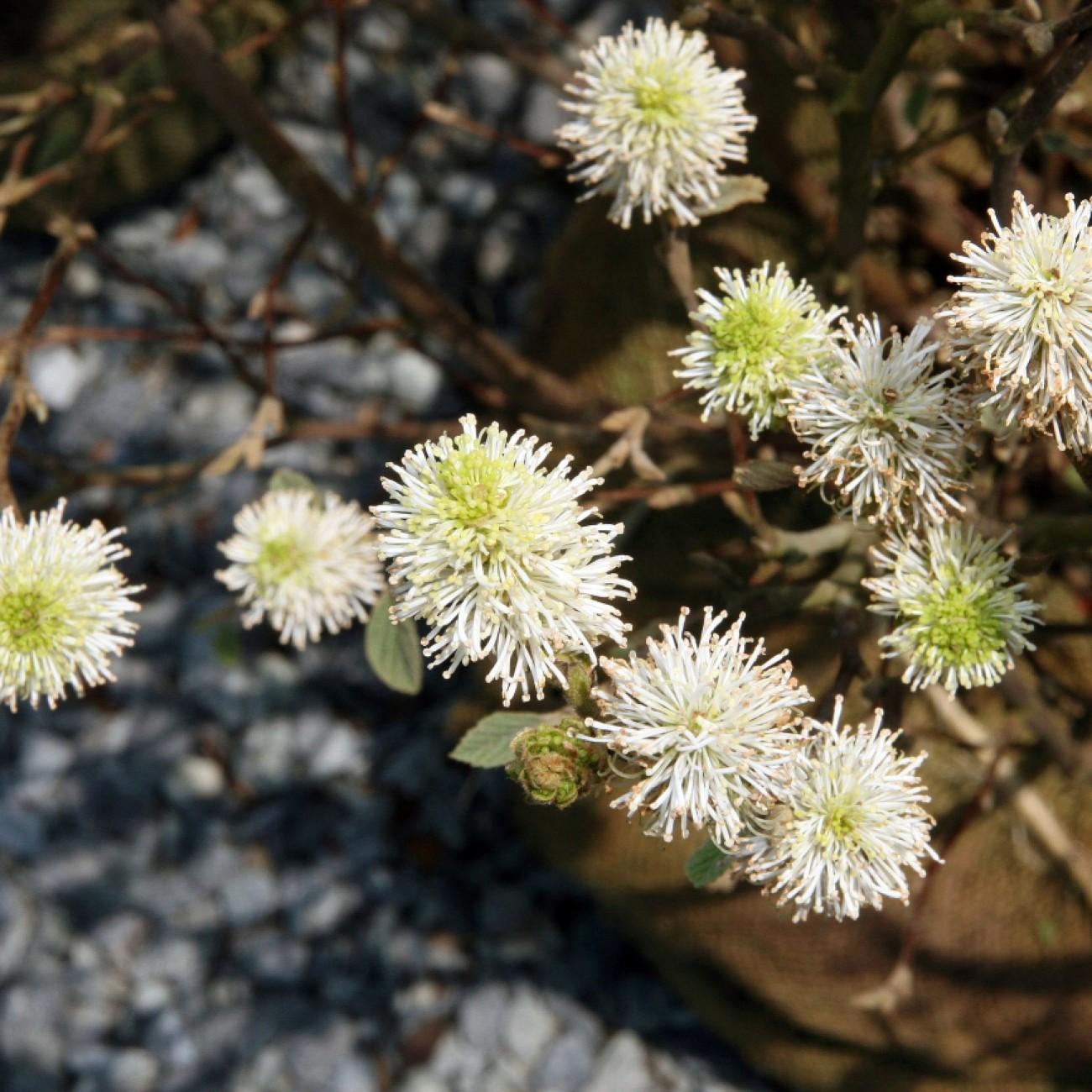
Dwarf fothergilla is a slow-growing, clump-forming deciduous shrub that spreads via root suckers to form dense, rounded mounds. In early spring, it produces bottlebrush-like spikes of creamy white, honey-scented flowers before its blue-green, oval foliage emerges. In autumn, its leaves turn a striking blend of red, orange, and yellow, making it a popular multi-season ornamental for small garden spaces.
Care Guide
Watering
Water dwarf fothergilla regularly during its first growing season to establish a deep, extensive root system, keeping soil consistently moist but not waterlogged. Once established, it is moderately drought tolerant, requiring supplemental water only during extended periods of heat or dryness. Avoid overwatering, as soggy soil can lead to root rot.
Light
Grow dwarf fothergilla in full sun to partial shade for optimal flowering and fall foliage color. Full sun, defined as 6 or more hours of direct sunlight daily, produces the most abundant blooms and the most vibrant autumn leaf hues. In hotter southern climates, it benefits from light afternoon shade to prevent leaf scorch.
Soil
This shrub thrives in acidic, well-drained soil rich in organic matter, with a pH range of 4.5 to 6.0. It can tolerate sandy, loamy, or even clay soils as long as drainage is good, and it does not perform well in alkaline conditions, which can cause chlorosis (yellowing of leaves). Amend heavy or alkaline soils with peat moss, compost, or pine bark before planting to improve acidity and drainage.
Fertilizer
Fertilize dwarf fothergilla in early spring before new growth emerges using a slow-release, acidic fertilizer formulated for azaleas or rhododendrons. Avoid over-fertilizing, as excessive nutrients can lead to lush, weak growth that is more prone to damage and reduced flowering. A 2-3 inch layer of organic mulch such as pine straw or wood chips around the base will slowly release nutrients, conserve moisture, and maintain soil acidity between feedings.
Temperature
Dwarf fothergilla is cold hardy in USDA zones 5 through 8, tolerating winter temperatures as low as -20°F (-29°C). It prefers temperate climates with cool winters to satisfy its dormancy requirement and moderate summer temperatures. Extreme heat above 90°F (32°C) may cause temporary leaf wilting, which usually resolves with supplemental watering and afternoon shade.
Pruning
Prune dwarf fothergilla immediately after flowering finishes in spring, as it blooms on old wood produced the previous growing season. Remove any dead, damaged, or crossing branches to improve air circulation, and trim back stray suckers if you wish to contain the shrub’s spread. Avoid heavy pruning, as this can reduce flowering in the following year and disrupt the plant’s natural rounded form.
Propagation
The most reliable method for home gardeners to propagate dwarf fothergilla is via softwood cuttings taken in early summer, after new growth has partially hardened. Dip cut ends in rooting hormone, plant in a moist, well-drained rooting medium, and keep under high humidity until roots form, typically within 6 to 8 weeks. It can also be propagated by dividing mature suckering clumps in late winter while the plant is dormant, though this can disrupt the parent plant’s shape.
Humidity
Dwarf fothergilla adapts well to average ambient humidity levels common in its native range, which typically fall between 40% and 60%. It can tolerate slightly higher or lower humidity as long as soil moisture levels are consistent. Very dry air combined with intense sun may cause leaf tip browning, which can be mitigated with occasional misting or increased soil moisture.
Repotting
Dwarf fothergilla is rarely grown in containers long-term, but if potted, repot every 2 to 3 years in late winter before new growth begins. Use a porous, acidic potting mix designed for ericaceous plants, and select a pot only 1 to 2 inches larger than the current root ball to prevent excess soil moisture buildup. After repotting, water thoroughly and place in a partially shaded location for 1 to 2 weeks to reduce transplant shock.
Uses & Symbolism
Dwarf fothergilla is a popular ornamental shrub for small residential gardens, foundation plantings, pollinator gardens, and mixed shrub borders, where its compact size and multi-season interest add visual appeal. Its fragrant spring flowers attract bees, butterflies, and other beneficial pollinators, while its dense foliage provides cover for small birds and wildlife. It is also well-suited for rain gardens, as it tolerates occasional wet soil and helps filter runoff.
Diseases & Pests
Dwarf fothergilla is largely pest and disease resistant, with no major common issues, though it may occasionally develop fungal leaf spots in overly wet, poorly ventilated conditions. Root rot can occur if the plant is grown in heavy, poorly drained soil that stays saturated for extended periods. It may also suffer from chlorosis, or yellowing of leaves, if planted in alkaline soil, which can be corrected by amending the soil with sulfur or acidic organic matter.
Related plants
Other plants you might like if you grow Dwarf Fothergilla.
%22%2F%3E%0A%20%20%20%20%20%20%3Ccircle%20cx%3D%22920%22%20cy%3D%22180%22%20r%3D%2290%22%20fill%3D%22%23cfe8d5%22%2F%3E%0A%20%20%20%20%20%20%3Cpath%20d%3D%22M600%20590c-90-180-215-255-310-280%200%20165%20118%20296%20270%20296h40z%22%20fill%3D%22%2379b88e%22%2F%3E%0A%20%20%20%20%20%20%3Cpath%20d%3D%22M600%20590c80-150%20198-212%20302-228-8%20142-123%20255-270%20255h-32z%22%20fill%3D%22%235c9f73%22%2F%3E%0A%20%20%20%20%20%20%3Cpath%20d%3D%22M600%20610V360%22%20stroke%3D%22%234f8c64%22%20stroke-width%3D%2218%22%20stroke-linecap%3D%22round%22%2F%3E%0A%20%20%20%20%20%20%3Ctext%20x%3D%22600%22%20y%3D%22700%22%20text-anchor%3D%22middle%22%20font-family%3D%22Arial%2C%20sans-serif%22%20font-size%3D%2244%22%20fill%3D%22%23365c45%22%3E%0A%20%20%20%20%20%20%20%20Plant%20image%20coming%20soon%0A%20%20%20%20%20%20%3C%2Ftext%3E%0A%20%20%20%20%3C%2Fsvg%3E%0A%20%20)