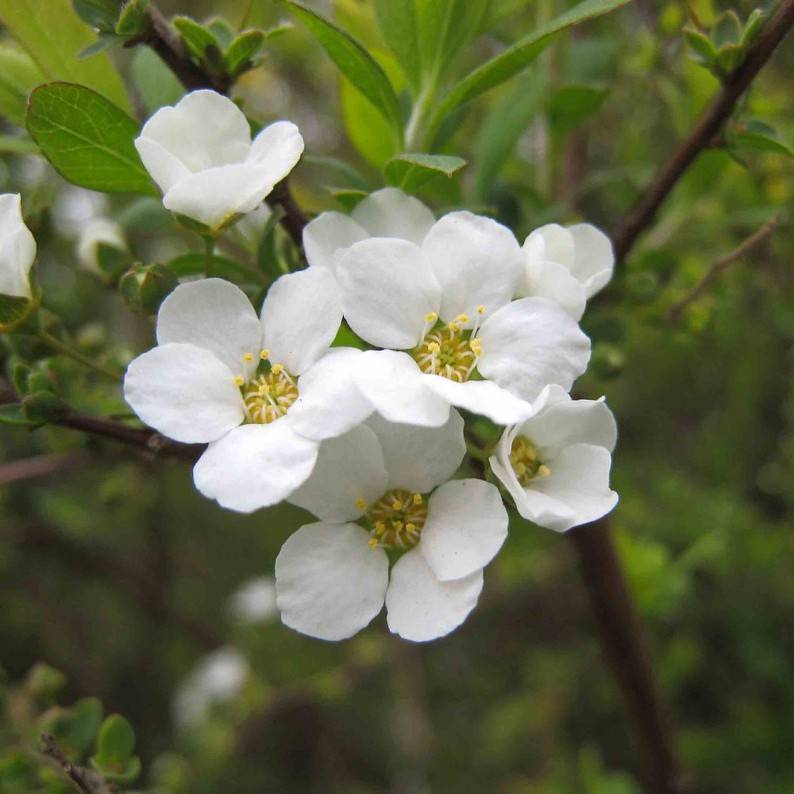
Bridal Wreath Spiraea
Spiraea prunifolia
Overview
Bridal Wreath Spiraea is a popular ornamental deciduous shrub known for its abundant, fragrant white double flowers that bloom in spring, covering long, arching branches to create a lacy, wedding veil-like effect. Its glossy, dark green oval leaves turn attractive shades of red, orange, and yellow in autumn, adding multi-season interest to landscapes. It is widely cultivated in temperate regions as a low-maintenance focal point, hedge, or border planting.
Care Guide
Watering
Water newly planted shrubs deeply once or twice a week to establish a strong root system, keeping soil consistently moist but not waterlogged. Mature plants are drought-tolerant, requiring supplemental watering only during extended periods of hot, dry weather. Avoid overwatering, as soggy soil can lead to root rot.
Light
Grow in full sun for the most abundant flower production, as a minimum of 6 hours of direct sunlight daily encourages dense, uniform blooming. It can tolerate partial shade, though flowering will be sparser and stems may become leggy without sufficient light. Avoid heavily shaded locations, as these increase susceptibility to fungal diseases.
Soil
Thrives in well-drained, loamy soil with a neutral to slightly acidic pH, though it adapts to a wide range of soil types including clay, sand, and alkaline soils. Amend heavy clay or sandy soils with organic matter such as compost at planting time to improve drainage and nutrient retention. Ensure the planting site does not collect standing water after rain to prevent root damage.
Fertilizer
Apply a balanced, slow-release shrub fertilizer in early spring before new growth emerges to support healthy foliage and abundant flowering. Avoid over-fertilizing, as excessive nitrogen can lead to lush, weak growth and reduced flower production. A 2-3 inch layer of organic mulch applied around the base each spring helps conserve moisture, suppress weeds, and gradually adds nutrients to the soil as it decomposes.
Temperature
Grows best in USDA hardiness zones 4 to 8, tolerating winter temperatures as low as -30°F (-34°C) when established. It prefers mild to warm summer temperatures, though it can tolerate short periods of high heat if provided with adequate moisture. Late spring frosts may damage emerging flower buds in colder regions, so avoid planting in low-lying frost pockets if possible.
Pruning
Prune immediately after flowering finishes in spring, as blooms form on the previous year’s wood; pruning later in the season will remove the next year’s flower buds. Remove up to one-third of the oldest, woodiest stems at ground level every 2-3 years to encourage new, vigorous growth and improve air circulation through the shrub. Trim back any damaged, diseased, or crossing branches at any time to maintain a healthy, tidy shape.
Propagation
Easiest to propagate from softwood cuttings taken in late spring or early summer, before stems become woody; dip cut ends in rooting hormone and plant in moist, well-drained growing medium until roots form in 4-6 weeks. It can also be propagated by division of mature clumps in early spring or late fall, when the shrub is dormant. Seeds are viable but require cold stratification to germinate, and may not grow true to the parent plant for double-flowered cultivars.
Humidity
Adaptable to a wide range of humidity levels, thriving in the moderate humidity typical of its native temperate range. It can tolerate low humidity conditions as long as soil moisture is adequate. High humidity combined with poor air circulation may increase the risk of fungal leaf spots, so space shrubs appropriately to allow airflow between plants.
Repotting
Bridal Wreath Spiraea is primarily grown in the landscape, but if cultivated in a container, repot every 2-3 years in early spring before new growth begins. Choose a container at least 2 inches larger in diameter than the current one, with drainage holes to prevent waterlogging. Use a well-drained potting mix amended with compost, and water thoroughly after repotting to settle the soil around roots.
Uses & Symbolism
It is widely used as an ornamental landscape plant, planted as a standalone focal point, informal hedge, border shrub, or cascading accent along slopes or water features. Cut flowering branches are popular for spring floral arrangements, as the blooms last for several days in vases. Historically, some Spiraea species were used in traditional medicine for astringent properties, though this species is primarily valued for ornamental purposes.
Diseases & Pests
Common fungal diseases include leaf spot, powdery mildew, and fire blight, which are most prevalent in humid, poorly ventilated conditions; prevent these by spacing plants for good air circulation and avoiding overhead watering. Common pests include aphids, scale insects, and spider mites, which can be controlled with insecticidal soap or horticultural oil applications. Root rot may occur in poorly drained, waterlogged soil, so proper site selection to ensure drainage is critical for long-term health.
Related plants
Other plants you might like if you grow Bridal Wreath Spiraea.
%22%2F%3E%0A%20%20%20%20%20%20%3Ccircle%20cx%3D%22920%22%20cy%3D%22180%22%20r%3D%2290%22%20fill%3D%22%23cfe8d5%22%2F%3E%0A%20%20%20%20%20%20%3Cpath%20d%3D%22M600%20590c-90-180-215-255-310-280%200%20165%20118%20296%20270%20296h40z%22%20fill%3D%22%2379b88e%22%2F%3E%0A%20%20%20%20%20%20%3Cpath%20d%3D%22M600%20590c80-150%20198-212%20302-228-8%20142-123%20255-270%20255h-32z%22%20fill%3D%22%235c9f73%22%2F%3E%0A%20%20%20%20%20%20%3Cpath%20d%3D%22M600%20610V360%22%20stroke%3D%22%234f8c64%22%20stroke-width%3D%2218%22%20stroke-linecap%3D%22round%22%2F%3E%0A%20%20%20%20%20%20%3Ctext%20x%3D%22600%22%20y%3D%22700%22%20text-anchor%3D%22middle%22%20font-family%3D%22Arial%2C%20sans-serif%22%20font-size%3D%2244%22%20fill%3D%22%23365c45%22%3E%0A%20%20%20%20%20%20%20%20Plant%20image%20coming%20soon%0A%20%20%20%20%20%20%3C%2Ftext%3E%0A%20%20%20%20%3C%2Fsvg%3E%0A%20%20)