Japanese Kerria
Kerria japonica
Overview
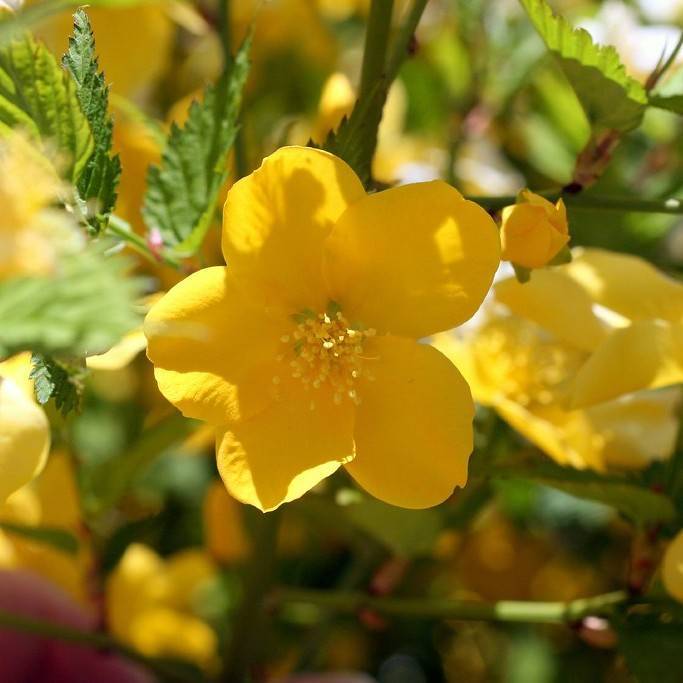
Japanese Kerria is a dense, twiggy deciduous shrub with arching green stems that retain their color through winter, adding year-round visual interest. It produces abundant, bright golden-yellow, rose-like blooms in mid to late spring, with many cultivated varieties featuring double-petaled flowers for a fuller display. It thrives in a range of temperate garden conditions, making it a popular choice for borders, woodland gardens, and mass plantings.
Care Guide
Watering
Water regularly during the first growing season to establish a deep, extensive root system, keeping soil consistently moist but not waterlogged. Once established, Japanese Kerria is moderately drought tolerant, requiring supplemental watering only during extended periods of dry, hot weather. Avoid overwatering, as soggy soil can lead to root rot and stem damage.
Light
Grows best in partial shade, which helps preserve the vibrancy of its yellow blooms and prevents leaf scorch during hot summer months. It can tolerate full sun in cooler climates if provided with consistent moisture, but excessive direct sunlight may cause flowers to fade more quickly. Full shade will reduce flowering volume and lead to leggier, less dense growth.
Soil
Adaptable to a wide range of soil types, including clay, loam, and sandy soils, as long as they are well-draining. It prefers a slightly acidic to neutral pH range between 5.5 and 7.0, but can tolerate mildly alkaline conditions as well. Amending heavy or poor soils with organic matter such as compost will improve drainage and support healthier, more vigorous growth.
Fertilizer
Apply a balanced, slow-release granular fertilizer formulated for flowering shrubs in early spring before new growth emerges. A top dressing of well-rotted manure or compost around the base of the plant in fall will provide additional nutrients and improve soil structure over time. Avoid over-fertilizing, as this can lead to excessive soft, leggy growth and reduced flowering.
Temperature
Hardy in USDA zones 4 through 9, tolerating winter temperatures as low as -30°F (-34°C) without significant damage. In colder regions, winter dieback of newer stems may occur, but the plant will regrow vigorously from the root system in spring. It tolerates high summer temperatures well, as long as it is provided with adequate moisture and partial shade in hotter zones.
Pruning
Prune immediately after flowering ends in late spring to maintain shape and encourage vigorous new growth for the following year’s blooms. Remove one-third of the oldest, woodiest stems at ground level every 2 to 3 years to rejuvenate the shrub and improve air circulation through its canopy. Cut back any damaged, diseased, or crossing stems at any time to keep the plant healthy and tidy.
Propagation
Most easily propagated from softwood cuttings taken in early summer, rooted in a moist, well-draining propagation medium under indirect light. It can also be propagated by division in early spring or fall, separating established clumps into smaller sections with intact roots and stems before replanting. Seeds can be sown in fall, but they have a low germination rate and may not grow true to the parent plant, especially for double-flowered cultivars.
Humidity
Tolerates average ambient humidity levels common in its hardiness zones, with no special humidity requirements for healthy growth. High humidity combined with poor air circulation can increase the risk of fungal leaf spot diseases, so ensure proper spacing between plants when planting in groups. It can tolerate moderately dry air conditions without adverse effects, as long as soil moisture levels are maintained.
Repotting
Japanese Kerria is primarily grown as an outdoor landscape plant, so repotting is rarely required unless cultivated in large containers for patio display. Container-grown specimens should be repotted every 2 to 3 years in early spring, moving to a slightly larger pot with fresh, well-draining potting mix amended with organic matter. When repotting, gently loosen any circling roots to encourage outward growth and ensure the plant is placed at the same soil depth as it was in its previous container.
Uses & Symbolism
Japanese Kerria is widely used in residential and public landscaping as a border shrub, mass planting, or specimen plant, with its winter green stems adding seasonal interest to dormant gardens. Its shade tolerance makes it ideal for woodland gardens and planting under deciduous trees, where many other flowering shrubs struggle to thrive. Historically, parts of the plant have been used in traditional East Asian medicine for treating coughs and inflammatory conditions, though it is not commonly used for this purpose today.
Diseases & Pests
Japanese Kerria is relatively pest and disease resistant, but can be susceptible to fungal leaf spots, twig blight, and root rot when grown in poorly draining, overly wet soil. Common pests include scale insects, aphids, and spider mites, which can be controlled with horticultural oil or insecticidal soap in cases of heavy infestation. The most significant disease affecting the species is kerria twig blight, a fungal infection that causes stem dieback, and can be managed by pruning and destroying affected plant material and improving air circulation around the shrub.
Related plants
Other plants you might like if you grow Japanese Kerria.
%22%2F%3E%0A%20%20%20%20%20%20%3Ccircle%20cx%3D%22920%22%20cy%3D%22180%22%20r%3D%2290%22%20fill%3D%22%23cfe8d5%22%2F%3E%0A%20%20%20%20%20%20%3Cpath%20d%3D%22M600%20590c-90-180-215-255-310-280%200%20165%20118%20296%20270%20296h40z%22%20fill%3D%22%2379b88e%22%2F%3E%0A%20%20%20%20%20%20%3Cpath%20d%3D%22M600%20590c80-150%20198-212%20302-228-8%20142-123%20255-270%20255h-32z%22%20fill%3D%22%235c9f73%22%2F%3E%0A%20%20%20%20%20%20%3Cpath%20d%3D%22M600%20610V360%22%20stroke%3D%22%234f8c64%22%20stroke-width%3D%2218%22%20stroke-linecap%3D%22round%22%2F%3E%0A%20%20%20%20%20%20%3Ctext%20x%3D%22600%22%20y%3D%22700%22%20text-anchor%3D%22middle%22%20font-family%3D%22Arial%2C%20sans-serif%22%20font-size%3D%2244%22%20fill%3D%22%23365c45%22%3E%0A%20%20%20%20%20%20%20%20Plant%20image%20coming%20soon%0A%20%20%20%20%20%20%3C%2Ftext%3E%0A%20%20%20%20%3C%2Fsvg%3E%0A%20%20)