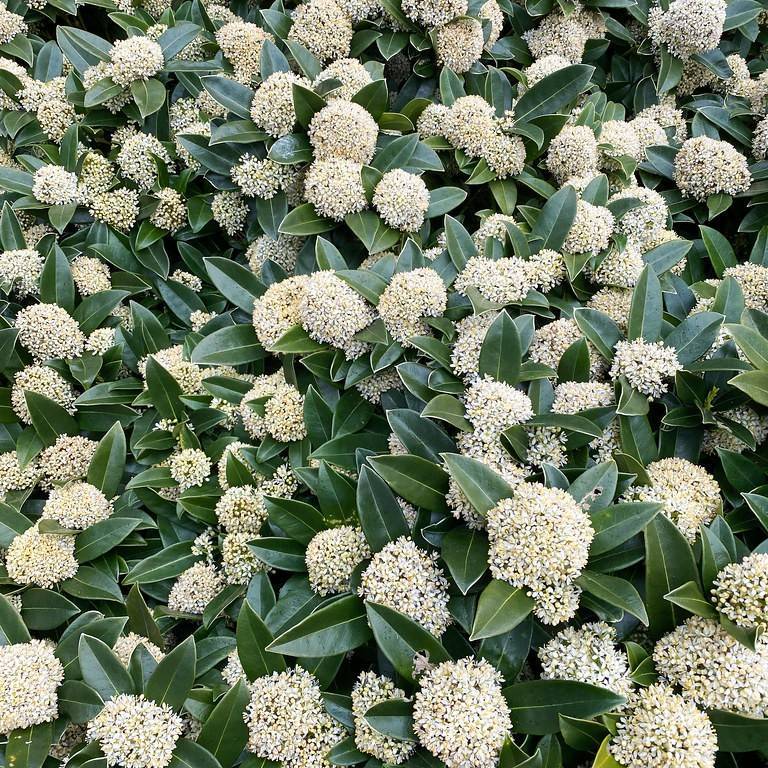
Japanese Skimmia
Skimmia japonica
Overview
Japanese Skimmia is a slow-growing, mounding evergreen shrub prized for its year-round ornamental value. Male plants produce clusters of creamy white, highly fragrant spring flowers, while female plants bear glossy, vibrant red berries that persist through winter if a male pollinator is nearby. Its leathery, dark green foliage emits a pleasant citrusy scent when crushed, making it a sensory addition to shaded landscapes or indoor container arrangements.
Care Guide
Watering
Water Japanese Skimmia regularly to keep soil consistently moist but not waterlogged, especially during dry spells; reduce watering frequency in winter when growth slows, allowing the top 1-2 inches of soil to dry out between sessions. Avoid overwatering, as soggy soil can quickly lead to root rot, particularly in poorly draining containers or heavy garden soils.
Light
Thrives in partial to full shade, making it ideal for north-facing garden spots or indoor locations with bright, indirect light; avoid prolonged direct midday sun, which can scorch its glossy leaves and cause unsightly browning along leaf margins. Indoors, place it near a window with filtered light, such as behind a sheer curtain, to maintain vibrant foliage color and support flowering and berry production.
Soil
Requires moist, well-drained, humus-rich soil with a slightly acidic to neutral pH (5.0 to 7.0) for optimal growth; amend heavy clay soils with compost or peat moss to improve drainage and add organic matter. For container-grown plants, use a high-quality acidic potting mix formulated for ericaceous plants to prevent nutrient deficiencies and support healthy root development.
Fertilizer
Feed in early spring before new growth emerges with a slow-release, balanced acidic fertilizer formulated for ericaceous plants, such as azalea or rhododendron fertilizer, to support foliage growth, flowering, and berry production. Avoid fertilizing in late summer or fall, as this can stimulate tender new growth that is vulnerable to damage from cold winter temperatures.
Temperature
Prefers cool to moderate temperatures between 50-75°F (10-24°C) and is cold hardy down to USDA zones 6-8, tolerating light winter frosts without damage when planted outdoors. Indoor plants should be kept away from direct heat sources such as radiators or heating vents, as dry, hot air can cause leaf drop and reduce overall plant vigor.
Pruning
Prune lightly in late winter or early spring before new growth starts to remove dead, damaged, or diseased branches, and shape the plant to maintain its compact, mounding form. Avoid heavy pruning, as Japanese Skimmia flowers and berries form on previous year’s growth, so over-cutting can reduce ornamental display for the coming season.
Propagation
The most reliable method is semi-hardwood cuttings taken in late summer or early fall, treated with rooting hormone and placed in a moist, well-drained rooting medium under high humidity. It can also be grown from fresh seed sown in fall, but seed-grown plants take several years to reach maturity, and sex cannot be determined until the first flowering, which can take 3-4 years.
Humidity
Adaptable to average household humidity levels of 40-60%, but benefits from occasional misting during dry winter months to prevent leaf tips from browning, especially for indoor-grown specimens. Outdoors, it naturally tolerates the higher humidity of its native woodland habitats, but avoid planting it in overly saturated, poorly ventilated spots that can encourage fungal disease.
Repotting
Repot container-grown Japanese Skimmia every 2-3 years in early spring, moving it to a pot only 1-2 inches larger than the current one to prevent overwatering from excess unused soil. Refresh the top inch of soil annually between repottings to replenish nutrients, and ensure the new pot has adequate drainage holes to reduce the risk of root rot.
Uses & Symbolism
Widely used as a low-maintenance ornamental shrub in shaded garden borders, foundation plantings, and woodland gardens, where its year-round foliage, fragrant blooms, and winter berries provide multi-season interest. It is also a popular container plant for patios or indoor display, and cut branches with berries are commonly used in winter floral arrangements and holiday wreaths.
Diseases & Pests
Japanese Skimmia is relatively pest and disease resistant, but can be susceptible to aphids, scale insects, and spider mites, which typically infest stressed plants, especially those grown in too much sun or overly dry conditions. Overwatering or poorly drained soil can lead to root rot, while fungal leaf spot may occur in excessively humid, poorly ventilated growing areas; these issues can be prevented by proper cultural care, including appropriate watering and spacing.
Related plants
Other plants you might like if you grow Japanese Skimmia.
%22%2F%3E%0A%20%20%20%20%20%20%3Ccircle%20cx%3D%22920%22%20cy%3D%22180%22%20r%3D%2290%22%20fill%3D%22%23cfe8d5%22%2F%3E%0A%20%20%20%20%20%20%3Cpath%20d%3D%22M600%20590c-90-180-215-255-310-280%200%20165%20118%20296%20270%20296h40z%22%20fill%3D%22%2379b88e%22%2F%3E%0A%20%20%20%20%20%20%3Cpath%20d%3D%22M600%20590c80-150%20198-212%20302-228-8%20142-123%20255-270%20255h-32z%22%20fill%3D%22%235c9f73%22%2F%3E%0A%20%20%20%20%20%20%3Cpath%20d%3D%22M600%20610V360%22%20stroke%3D%22%234f8c64%22%20stroke-width%3D%2218%22%20stroke-linecap%3D%22round%22%2F%3E%0A%20%20%20%20%20%20%3Ctext%20x%3D%22600%22%20y%3D%22700%22%20text-anchor%3D%22middle%22%20font-family%3D%22Arial%2C%20sans-serif%22%20font-size%3D%2244%22%20fill%3D%22%23365c45%22%3E%0A%20%20%20%20%20%20%20%20Plant%20image%20coming%20soon%0A%20%20%20%20%20%20%3C%2Ftext%3E%0A%20%20%20%20%3C%2Fsvg%3E%0A%20%20)