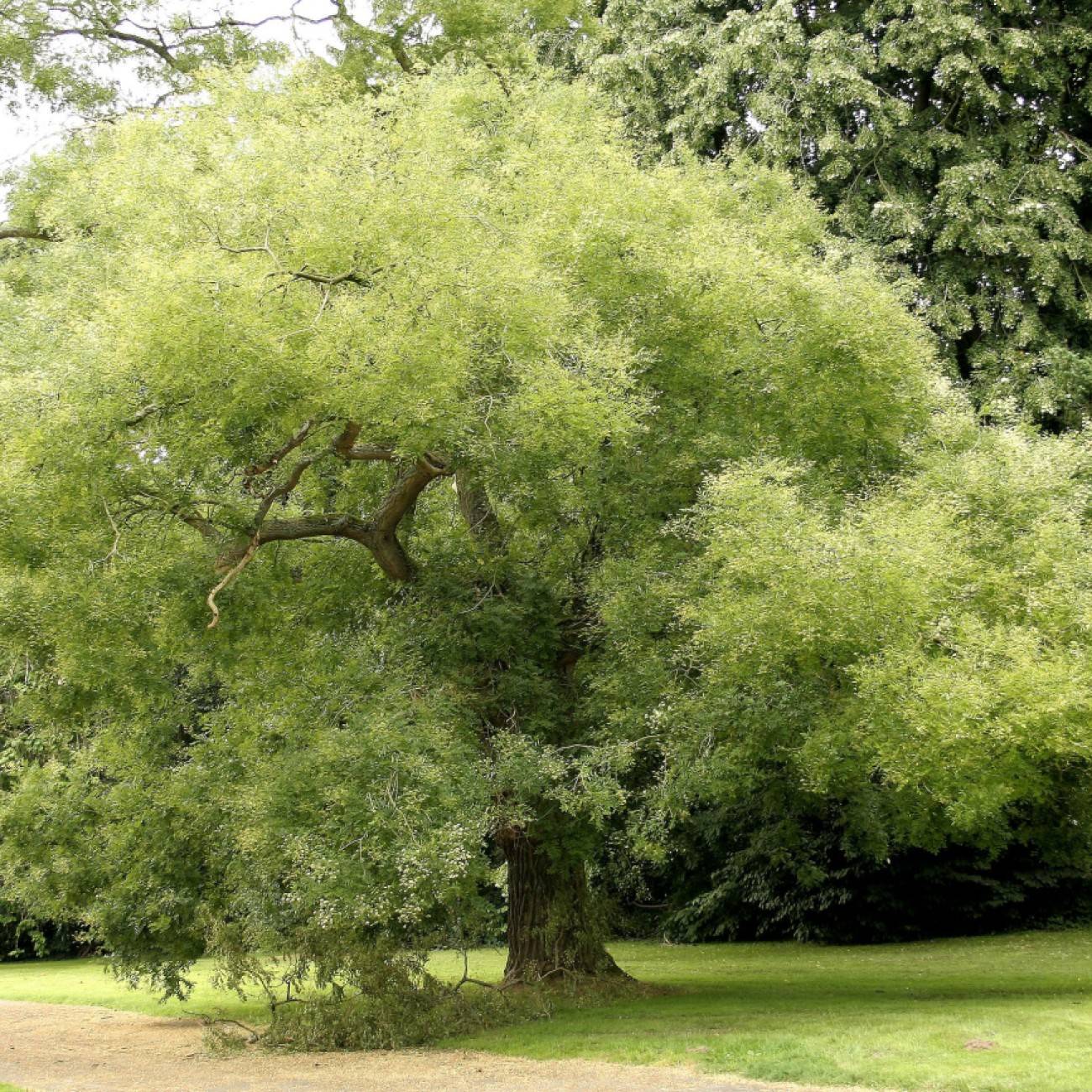
Japanese Pagoda Tree
Styphnolobium japonicum
Overview
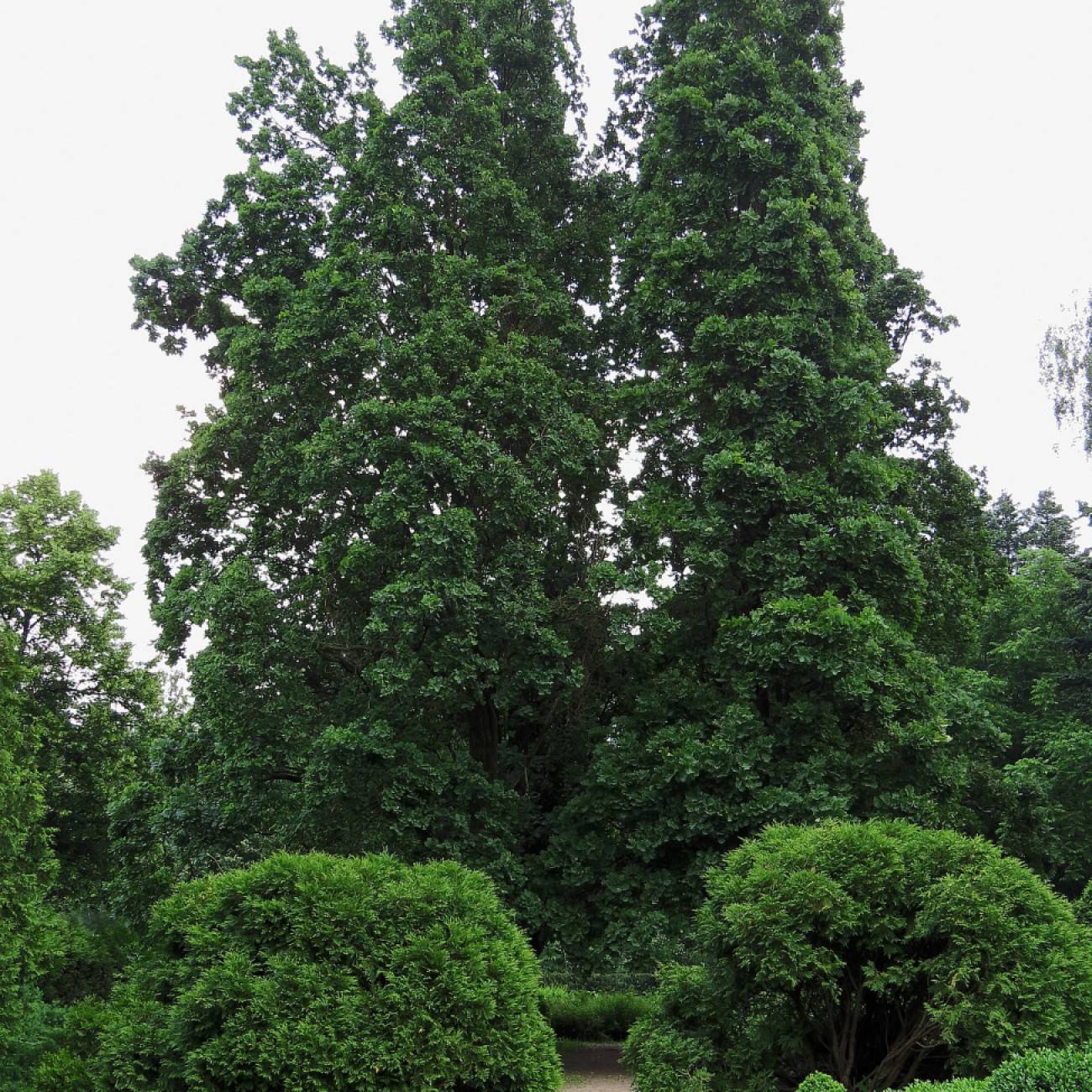
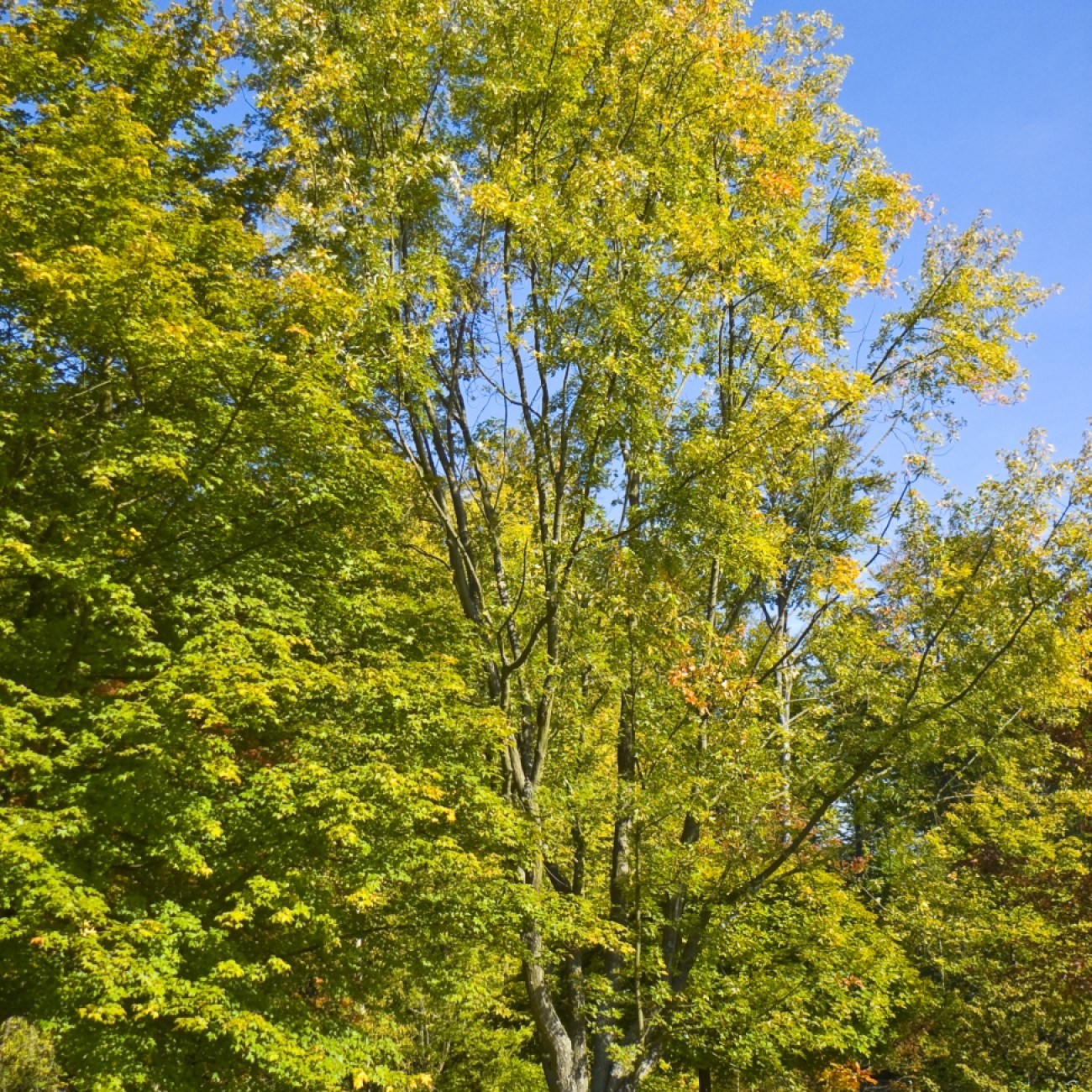
The Japanese Pagoda Tree, formerly classified as Sophora japonica, is a long-lived deciduous tree with a broad, rounded canopy and distinctive layered, horizontal branching that resembles traditional Japanese pagoda architecture. It produces cascading clusters of fragrant, creamy-white pea-like flowers in late summer, followed by long, segmented seed pods that persist through winter. Highly adaptable to harsh urban environments, it is widely planted as a street and shade tree across temperate regions worldwide.
Care Guide
Watering
Water young trees regularly during the first 2-3 growing seasons to establish a deep root system, keeping soil consistently moist but not waterlogged. Mature trees are highly drought-tolerant, requiring only occasional supplemental watering during extended periods of extreme heat or dryness. Avoid overwatering, as soggy soil can lead to root rot and other fungal issues.
Light
Grow in full sun for optimal flowering and canopy development, as the tree requires a minimum of 6 hours of direct, unfiltered sunlight daily. It can tolerate very light partial shade, but shaded specimens will produce fewer blooms and develop a sparser, less structured canopy. Plant in an open, unobstructed location to allow for its mature spread.
Soil
Thrives in average, well-drained soil with a neutral to slightly alkaline pH, though it adapts readily to a wide range of soil types including clay, loam, sand, and compacted urban soils. It tolerates moderate soil salinity, making it suitable for planting near roads treated with deicing salts or in coastal areas with mild salt exposure. Avoid heavy, permanently waterlogged soils to prevent root damage.
Fertilizer
Apply a balanced, slow-release granular fertilizer formulated for trees in early spring before new growth emerges, spreading it evenly across the root zone out to the dripline. Young, rapidly growing trees benefit from annual fertilization to support canopy development, while mature established trees only need fertilization every 2-3 years if growth is stunted or foliage appears pale. Avoid high-nitrogen fertilizers, as they can promote excessive vegetative growth at the expense of flowering.
Temperature
Hardy in USDA zones 4 through 8, tolerating winter lows down to -30°F (-34°C) and summer highs up to 100°F (38°C). Young trees may benefit from a layer of mulch around the base in their first 2-3 winters to insulate shallow roots from extreme temperature fluctuations. It does not perform well in tropical or extremely arid desert climates with prolonged, intense heat above 105°F (40°C).
Pruning
Prune in late winter or early spring while the tree is dormant, removing dead, damaged, crossing, or diseased branches to maintain a strong, open canopy structure. Young trees should be pruned annually to develop a central leader and well-spaced lateral branches to support the mature pagoda-like form. Avoid heavy pruning after new growth emerges in spring, as this can reduce flowering in the current season.
Propagation
Most commonly propagated from seed, which requires scarification (nicking the hard seed coat) and cold stratification for 2-3 months to break dormancy before sowing in spring. Softwood cuttings taken in early summer can also root successfully if treated with rooting hormone and kept in a warm, humid environment under mist. Grafting is sometimes used to preserve specific cultivars with unique flower or growth traits.
Humidity
Tolerates a wide range of humidity levels, thriving in the moderate humidity of its native temperate East Asian range as well as the drier conditions of interior North American and European regions. It does not require supplemental humidity, even in arid climates, as long as soil moisture needs are met. High humidity combined with poor air circulation can increase susceptibility to foliar fungal diseases.
Repotting
Japanese Pagoda Trees are rarely grown in containers long-term, as their large size and deep root system make them unsuitable for potted culture. Young saplings being held for landscape planting should be repotted annually into larger containers using a well-drained potting mix until they are planted out permanently. Ensure containers have ample drainage holes to prevent waterlogging of root systems.
Uses & Symbolism
Widely planted as a street, shade, and ornamental landscape tree for its attractive form, fragrant summer blooms, and tolerance of urban pollution, compacted soil, and drought. In traditional Chinese medicine, extracts from its flowers and buds are used to make treatments for fever, inflammation, and high blood pressure, though consumption is not recommended due to toxicity. Its hard, durable wood is occasionally used for specialty woodworking and construction projects.
Diseases & Pests
Common pests include aphids, scale insects, Japanese beetles, and spider mites, which feed on foliage and can cause leaf yellowing, stippling, or defoliation if infestations are severe. Fungal diseases such as powdery mildew, leaf spot, verticillium wilt, and root rot can occur in poorly drained soils or conditions with high humidity and poor air circulation. Young trees are occasionally targeted by deer browsing, though mature specimens are relatively deer-resistant.
Related plants
Other plants you might like if you grow Japanese Pagoda Tree.