Giant Rhubarb
Gunnera manicata
Overview
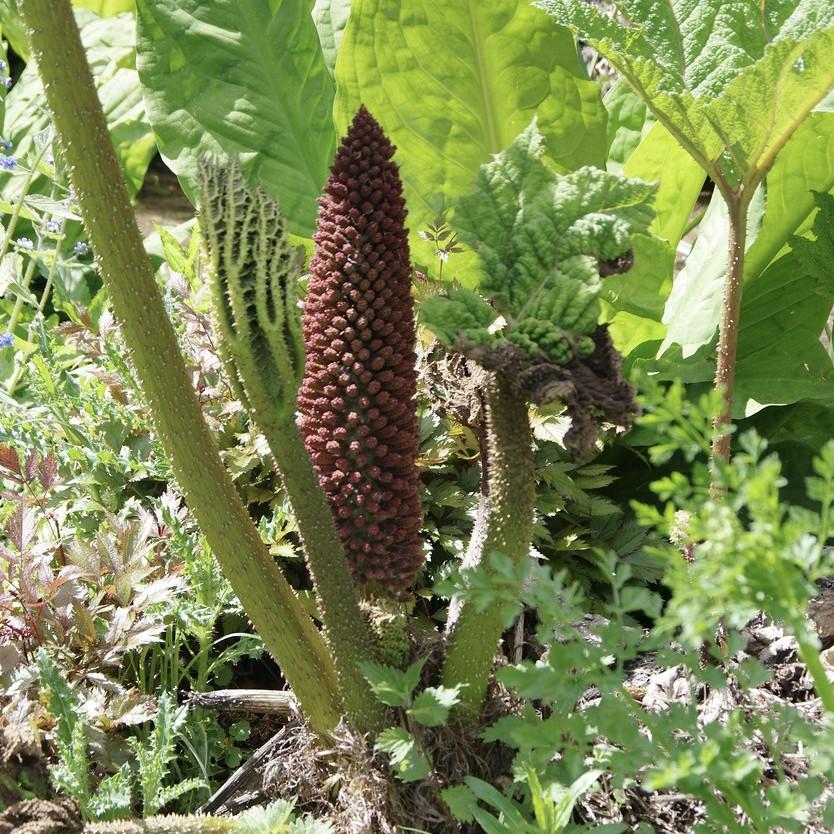
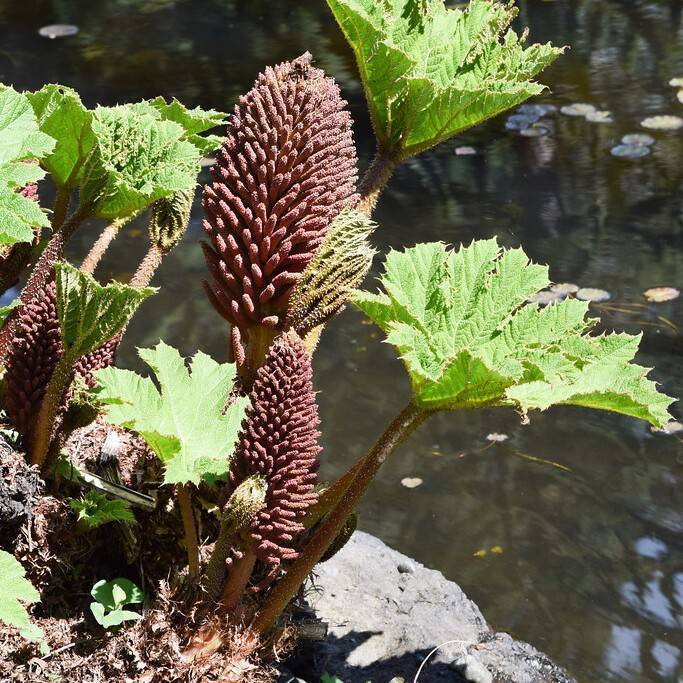
Giant rhubarb, often mistaken for common culinary rhubarb despite no close relation, is renowned for its oversized, textured, palmately lobed leaves that sit atop thick, spiky, reddish-green stalks. Native to cool, wet South American highlands, it thrives in boggy, shaded environments where it forms large, spreading clumps over time. In early summer, it produces tall, cone-shaped, reddish-brown flower spikes that can reach up to 6 feet (1.8 m) tall, adding further structural interest to garden landscapes.
Care Guide
Watering
Giant rhubarb requires consistently moist, almost waterlogged soil at all times, as it is adapted to boggy native habitats; never allow the root zone to dry out completely, even during short periods of drought. Water deeply and frequently during warm, dry weather, ensuring water penetrates to the full depth of the extensive root system. Avoid overhead watering of leaf centers in cool weather to reduce risk of fungal rot.
Light
It grows best in partial shade, particularly dappled afternoon shade in regions with hot summer sun, which prevents leaf scorch and wilting. It can tolerate full sun only in cool, coastal climates where temperatures rarely exceed 75°F (24°C) and soil moisture remains constant. Too much deep shade will reduce leaf size and limit flower production.
Soil
Plant in rich, fertile, humus-heavy soil with excellent moisture retention and a slightly acidic to neutral pH between 5.5 and 7.0. Sandy or fast-draining soils should be amended heavily with compost, rotted manure, or leaf mold to improve water-holding capacity before planting. It can tolerate shallow standing water for short periods, making it ideal for planting near pond edges or in rain gardens.
Fertilizer
Feed in early spring with a balanced, slow-release organic fertilizer, such as well-rotted cow manure or fish emulsion, to support the growth of large, healthy leaves. A second light application of nitrogen-rich fertilizer can be applied in early summer to boost foliage development, but avoid fertilizing after mid-summer to prevent tender new growth that is susceptible to frost damage. Mulch heavily with organic matter each fall to replenish soil nutrients and protect roots over winter.
Temperature
Giant rhubarb prefers cool, temperate climates with average summer temperatures between 60 and 75°F (16 and 24°C), and is hardy in USDA zones 7 to 9. It can tolerate short dips to 10°F (-12°C) if roots are heavily mulched over winter, but prolonged freezing temperatures will kill above-ground growth and may damage unprotected roots. In regions with harsh winters, cut back foliage after the first frost and cover the crown with a thick layer of straw or leaves for insulation.
Pruning
Remove damaged, yellowed, or frost-killed leaves at the base of the stalk throughout the growing season to maintain a tidy appearance and encourage new foliage growth. After the first fall frost, cut back all remaining stalks to 6 inches (15 cm) above ground level to prepare the plant for winter dormancy. Deadhead spent flower spikes after blooming if you do not want the plant to self-seed, as it can become invasive in ideal damp conditions.
Propagation
Giant rhubarb is most easily propagated by root division in early spring before new growth emerges, carefully digging up clumps and splitting the thick, woody crown into sections with at least one visible growth bud each. It can also be grown from fresh seed sown in fall or stratified for 2 to 3 months before sowing in spring, though seed-grown plants take 3 to 5 years to reach full mature size. Divisions will establish quickly and often produce full-sized leaves within 1 to 2 growing seasons.
Humidity
It thrives in high humidity levels of 60% or higher, typical of its native cloud forest and coastal habitats. In dry inland climates, regular misting of foliage or placement near a constant water source can help raise ambient humidity around the plant. Low humidity will cause leaf edges to brown and curl, reducing the plant’s ornamental value.
Repotting
Giant rhubarb is rarely grown in containers due to its massive size and extensive root system, but if potted, it will need to be repotted every 1 to 2 years in early spring into a much larger container with fresh, humus-rich soil. When repotting, be careful not to damage the thick, fleshy roots, and ensure the container has ample drainage holes to prevent waterlogging even with frequent watering. Once a container reaches 20 gallons or larger, top-dress with fresh compost each spring instead of full repotting to avoid disturbing the root system.
Uses & Symbolism
Giant rhubarb is primarily grown as a dramatic ornamental focal point in large, damp gardens, particularly near water features, bog gardens, or shaded woodland edges where its massive leaves create a tropical, prehistoric aesthetic. In its native range, the thick, fleshy leaf stalks are occasionally used in traditional medicine to treat wound inflammation and digestive issues, though they are not considered safe for regular consumption. Dried leaf stalks are also sometimes used in craft and floral arrangement projects for their unique, textured structure.
Diseases & Pests
Giant rhubarb is relatively pest-resistant, but slugs and snails are extremely attracted to young, tender new leaves in spring, and can cause significant damage to emerging foliage if not controlled. Fungal leaf spot and crown rot can occur in poorly drained soils or if the crown is buried too deeply during planting, leading to yellowed, spotted leaves and rotting stalks at the base. In overly warm, dry conditions, spider mites may infest the undersides of leaves, causing stippling and premature leaf drop, which can be treated with regular hosing of foliage and insecticidal soap.
Related plants
Other plants you might like if you grow Giant Rhubarb.