Gunnera
Gunnera manicata
Overview
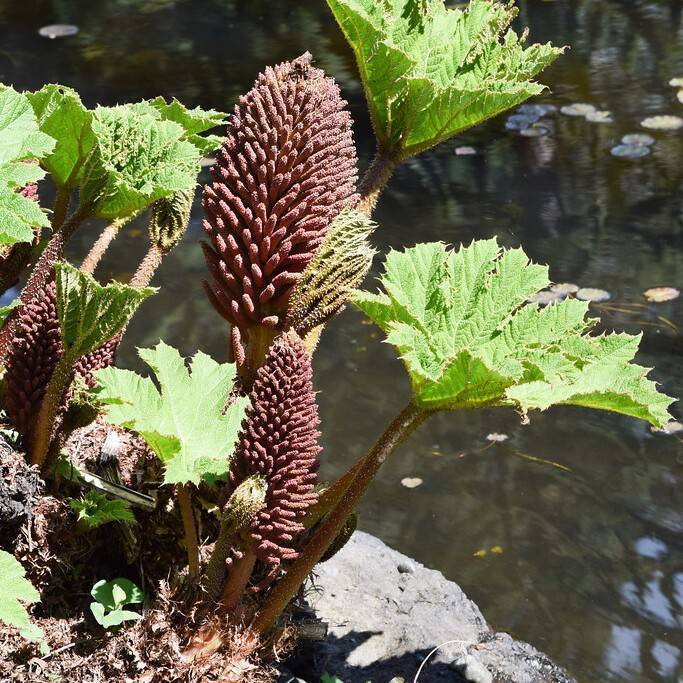
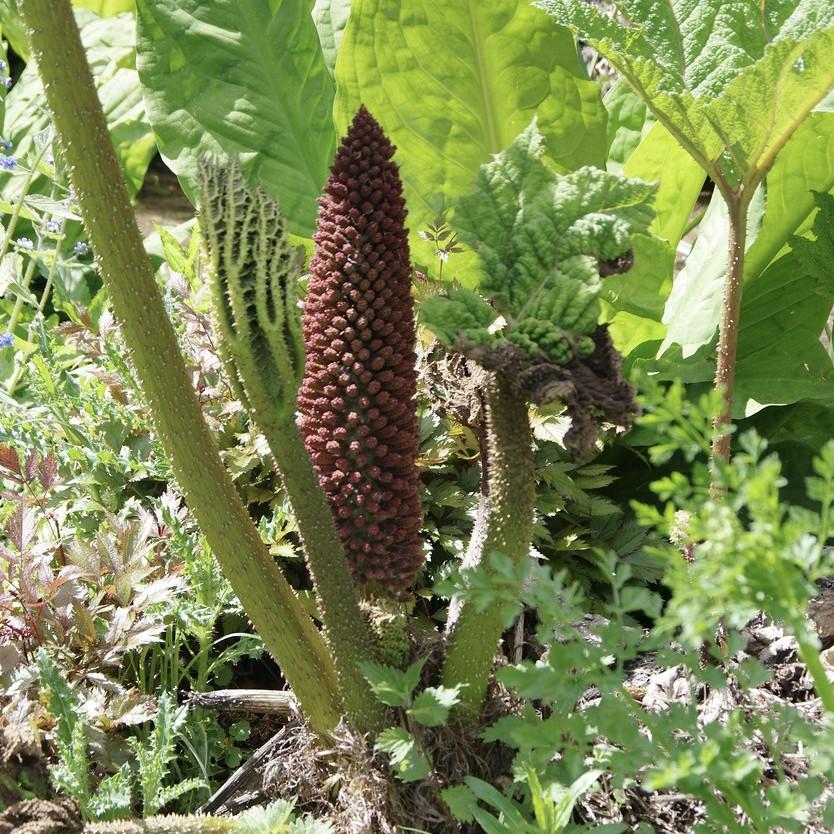
Gunnera manicata, often called giant rhubarb (though unrelated to edible rhubarb), is one of the largest herbaceous perennials on Earth, famed for its enormous, heavily veined, rounded leaves edged with sharp, spiky teeth. Its thick, bristly stems can grow several feet tall, supporting leaves that are large enough to shelter small children or pets from rain. In summer, it produces tall, upright, cone-shaped spikes of tiny, greenish-red flowers that mature into clusters of small, reddish berry-like fruits. Though it has a tropical appearance, it is surprisingly cold-hardy in temperate climates with mild winters.
Care Guide
Watering
Gunnera requires constant, abundant moisture to thrive, as its native habitat is wet bogs, stream banks, and rainforest edges. Never allow the soil to dry out completely; during hot, dry periods, water deeply 2-3 times per week, and mist the leaves regularly to maintain ambient moisture. Avoid overwatering in frozen winter conditions, as waterlogged frozen soil can rot dormant crowns.
Light
Gunnera grows best in partial shade, particularly dappled sunlight that filters through overhead tree cover, which protects its large leaves from scorching in intense midday sun. It can tolerate full sun only in very cool, foggy coastal regions where temperatures rarely exceed 75°F (24°C) and soil remains consistently damp. Too much deep shade will slow growth and reduce the size of its iconic leaves.
Soil
Plant gunnera in rich, humus-heavy, consistently moist soil with a slightly acidic to neutral pH range of 5.5 to 7.0. The soil must retain water well but have minimal drainage to avoid drying out; adding large amounts of compost, leaf mold, or well-rotted manure at planting time will improve water retention and nutrient density. It thrives in boggy, poorly drained sites where most other ornamental plants would rot.
Fertilizer
Feed gunnera monthly during the active growing season (spring through early fall) with a balanced, slow-release organic fertilizer, or apply a diluted liquid all-purpose fertilizer every two weeks to support its rapid, large growth. In early spring, top-dress the root zone with a 3-4 inch layer of well-rotted manure or compost to replenish soil nutrients and help retain moisture. Stop fertilizing in late fall to allow the plant to enter dormancy before cold weather arrives.
Temperature
Gunnera is hardy in USDA zones 7 through 9, tolerating winter temperatures as low as 10°F (-12°C) if its crown is properly protected with a thick layer of mulch or cut, dried leaves during dormancy. It prefers cool summer temperatures between 55°F and 75°F (13°C to 24°C), and will struggle in extended heat above 85°F (29°C), especially if not provided with ample shade and water. In regions with harsh winters, it can be grown in large containers and overwintered in a cool, frost-free garage or shed.
Pruning
Prune away damaged, yellowed, or frost-killed leaves at any time by cutting the thick stem at the base near the soil line to keep the plant looking tidy and encourage new growth. In late fall after the first frost kills back the foliage, cut all stems down to 6-12 inches above the crown, and use the cut leaves to mulch the crown for winter protection, removing the mulch in early spring once the risk of hard frost has passed. Remove spent flower spikes after blooming if you do not want the plant to self-seed, as it can become invasive in ideal wet conditions.
Propagation
Gunnera is most easily propagated by division in early spring, just as new growth begins to emerge from the dormant crown. Dig up the entire root mass, use a sharp, sterilized knife to cut the crown into sections, each with at least one visible growth bud and a portion of the root system, and replant sections immediately in prepared moist soil. It can also be grown from seed, but seeds require cold stratification for 2-3 months before sowing, and seedlings grow very slowly for the first 2-3 years before reaching mature size.
Humidity
Gunnera prefers high humidity levels of 60% or higher, matching its native rainforest and bog habitat, and will develop brown, crispy leaf edges in dry air. In dry climates or during periods of low humidity, mist the leaves daily with room-temperature water, or place a tray of water filled with pebbles near the plant to raise ambient moisture levels. Indoor-grown gunnera will benefit from placement near a humidifier, especially during winter when indoor heating dries out the air.
Repotting
Container-grown gunnera requires repotting every 1-2 years in early spring before new growth starts, as its fast-growing, extensive root system will quickly fill a pot and reduce drainage. Use an extra-large, heavy pot (at least 20-24 inches in diameter for mature plants) to support its top-heavy growth and prevent it from tipping over, and use a rich, compost-heavy potting mix that retains moisture well. When repotting, gently loosen tangled roots and trim any rotted or damaged root sections before placing in the new pot with fresh soil.
Uses & Symbolism
Gunnera is primarily grown as a dramatic ornamental focal point in large, wet gardens, rain gardens, or along the edges of ponds, streams, and water features, where its massive leaves create a bold, tropical aesthetic. In its native range, the young, tender leaf stalks are sometimes peeled and eaten raw or cooked, similar to rhubarb, and the large, waterproof leaves are used as temporary wrappers for food or goods. Its dense root system also helps stabilize soil on steep, wet banks to prevent erosion.
Diseases & Pests
Gunnera is relatively pest-resistant, but slugs and snails are highly attracted to its young, tender new growth in spring, and can quickly riddle small leaves with holes if not controlled with bait, traps, or copper barriers around the root zone. Root rot can occur in well-drained soil that dries out and becomes waterlogged inconsistently, or if the crown is buried too deeply when planting. In hot, dry conditions, spider mites may infest the undersides of leaves, causing yellow stippling and leaf drop, which can be treated with regular horticultural oil sprays and increased humidity.
Related plants
Other plants you might like if you grow Gunnera.