Common Pitcher Plant
Sarracenia purpurea
Overview
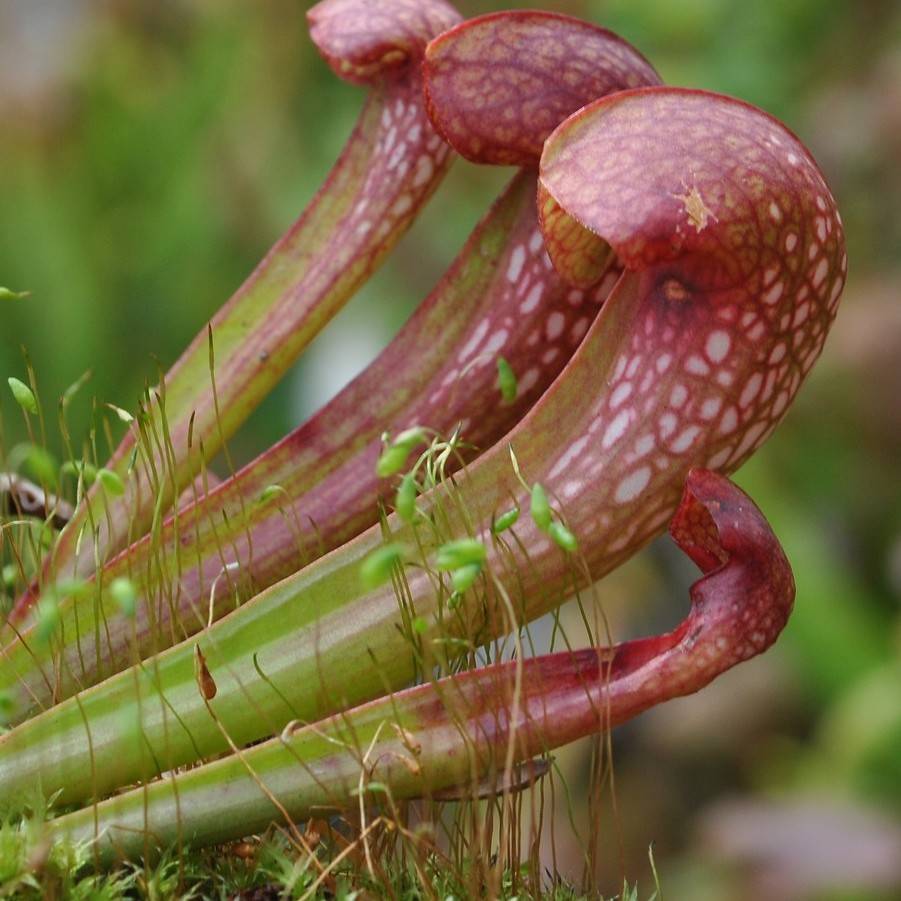
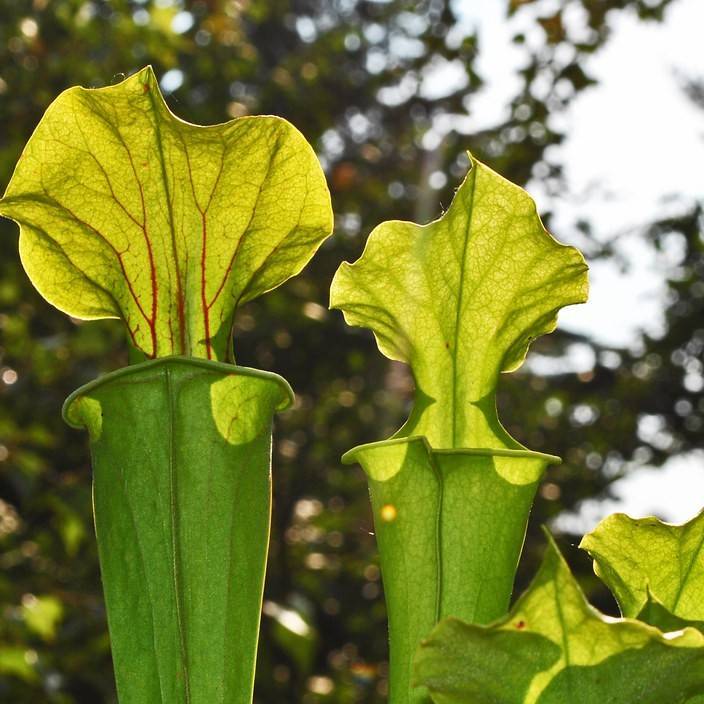
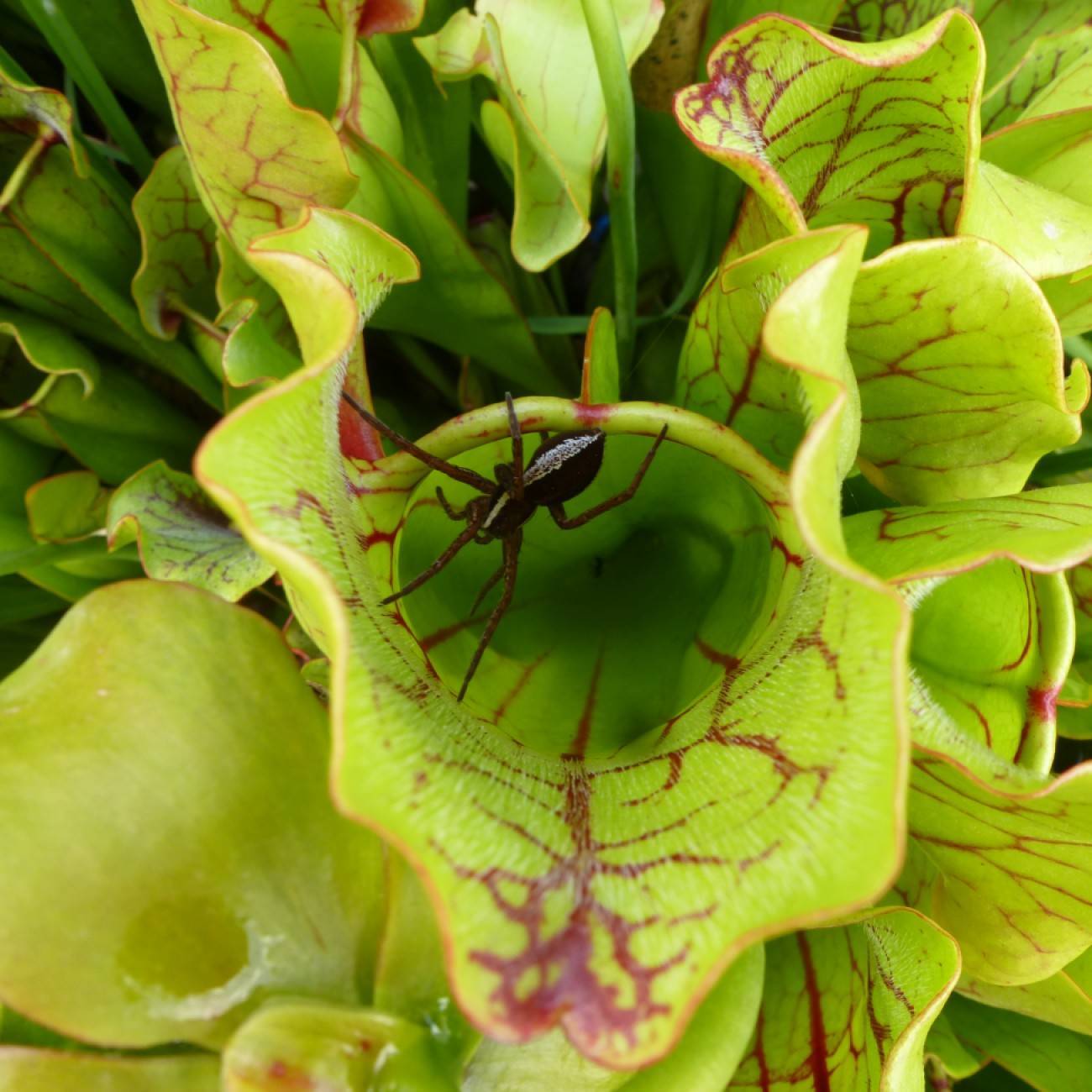
The common pitcher plant, also called the purple pitcher plant, is a cold-hardy carnivorous species distinguished by its hollow, tube-shaped leaves lined with downward-pointing hairs and a slippery rim that prevent insect prey from escaping. Digestive fluids inside each pitcher break down trapped bugs to supply the plant with nitrogen, a nutrient scarce in its native bog habitats. It produces nodding, deep red to purple flowers in spring that sit atop tall stalks separate from the pitcher leaves to avoid trapping pollinators. This species is the floral emblem of Newfoundland and Labrador, Canada.
Care Guide
Watering
Keep soil consistently saturated at all times using distilled, rain, or reverse-osmosis water, as tap water contains minerals that will damage the plant’s sensitive roots. Never let the growing medium dry out, and maintain a shallow 0.25-0.5 inch layer of water in the plant’s saucer during the active growing season. Reduce watering slightly in winter, but keep the medium damp to avoid desiccation during dormancy.
Light
Requires full, direct sunlight for 6-8 hours per day to thrive, which encourages vibrant pitcher coloration and robust growth. In extremely hot, arid climates, provide light afternoon shade to prevent leaf scorch during the peak of summer. Indoor specimens should be placed in a south-facing window or under grow lights providing a minimum of 10 hours of bright light daily.
Soil
Plant in a nutrient-poor, well-drained acidic medium with a pH between 3.5 and 5.0, ideally a 1:1 mix of sphagnum peat moss and perlite or horticultural sand. Never use standard potting soil, compost, or any medium containing added fertilizers, as these will burn the plant’s roots and kill it. Ensure the planting container has ample drainage holes to prevent stagnant, oxygen-deprived soil around the root zone.
Fertilizer
Do not apply any conventional fertilizer, as the plant’s natural adaptation to low-nutrient environments makes it intolerant of added nutrients in soil. If grown indoors where insect access is limited, you can feed 1-2 small insects per pitcher once a month during the growing season to supplement its nutritional needs. Avoid overfeeding, as excess undigested prey can cause pitchers to rot prematurely.
Temperature
Thrives in summer temperatures between 60-85°F (16-29°C), and requires a 3-4 month cold dormancy period in winter with temperatures between 32-45°F (0-7°C) to survive long-term. It is extremely cold-hardy, tolerating winter temperatures as low as -30°F (-34°C) when grown outdoors in its native range, provided it is insulated with a layer of mulch or snow. Indoor specimens should be moved to a cool, unheated space such as a garage or basement during dormancy to meet its cold requirement.
Pruning
Remove any brown, wilted pitchers or spent flower stalks at the base using clean, sharp scissors to improve air circulation and prevent fungal growth. Prune dead foliage only after it has fully turned brown, as partially dying leaves still provide energy to the plant. Avoid cutting healthy green pitchers, as these are the plant’s primary structures for photosynthesis and nutrient capture.
Propagation
Most commonly propagated by division in early spring just as new growth emerges, carefully separating the rhizome into sections with at least 2-3 healthy growing points per division, and repotting each section into its own container. It can also be grown from seed, but seeds require 4-6 weeks of cold stratification to germinate, and plants grown from seed take 3-5 years to reach mature size. Leaf cuttings are possible but less reliable for this species, with low success rates compared to rhizome division.
Humidity
Prefers high humidity levels between 50-70%, which mimics its native bog environment, though it can tolerate slightly lower levels if kept consistently well-watered. Indoor specimens in dry climates may benefit from being placed on a pebble tray filled with water, or grouped with other humidity-loving plants to raise ambient moisture levels. Avoid misting the pitchers directly, as excess water inside the pitcher can dilute digestive fluids and reduce their ability to trap prey.
Repotting
Repot every 2-3 years in early spring before new growth begins, to refresh the acidic growing medium as peat moss breaks down and loses its acidity over time. Choose a pot that is 1-2 inches wider than the root ball, as the plant has a shallow, spreading root system that does not require excessive deep or large containers. Gently shake off old medium from the roots when repotting, and trim any soft, rotting rhizome sections before planting in fresh medium.
Uses & Symbolism
The common pitcher plant is widely grown as an ornamental plant in bog gardens, water features, and carnivorous plant collections, valued for its unique foliage and unusual spring flowers. Indigenous peoples of North America historically used the plant’s roots to make herbal remedies for a range of ailments including fevers, coughs, and digestive issues, though modern medical use is limited. It is also planted in naturalized wetland restoration projects to support native biodiversity and provide habitat for specialized insect species that live inside its pitchers.
Diseases & Pests
The most common issues are root rot and fungal leaf spot, caused by overly compacted soil, poor air circulation, or using water with high mineral content. Aphids, thrips, and scale insects may occasionally feed on new growth, particularly on indoor specimens, and can be controlled with insecticidal soap or by manually removing pests with a cotton swab dipped in rubbing alcohol. Overfeeding or allowing excess debris to accumulate inside pitchers can lead to premature pitcher rot, which can be prevented by limiting feedings and removing any undigested organic material that does not break down within a few weeks.
Related plants
Other plants you might like if you grow Common Pitcher Plant.