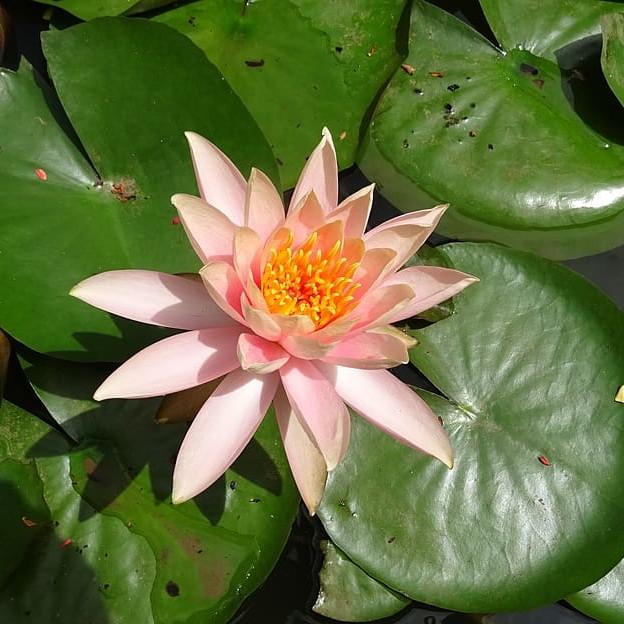
Hardy Water Lily
Nymphaea spp. (hardy cultivars)
Overview
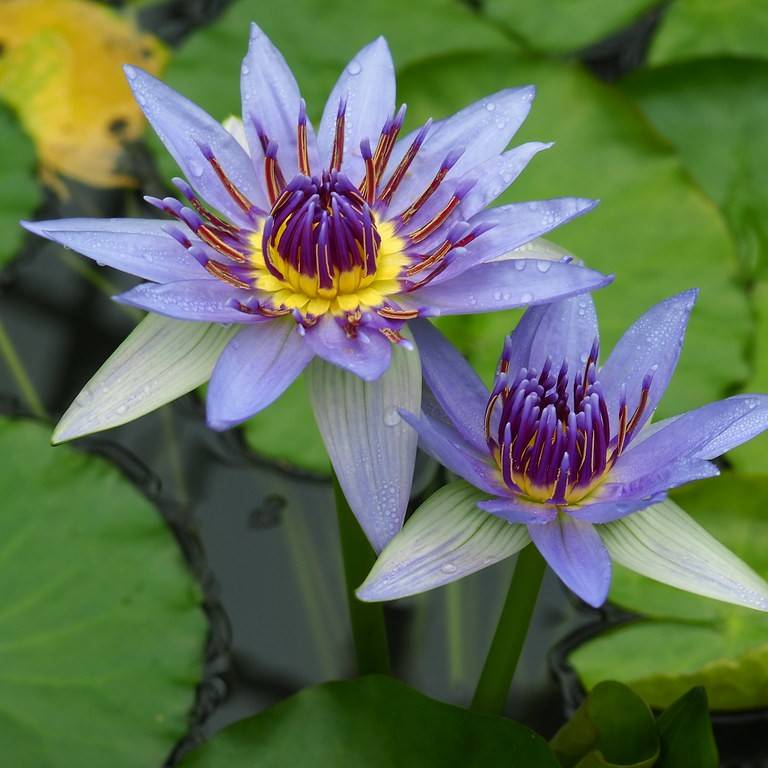
Hardy water lilies are cold-hardy members of the Nymphaea genus, adapted to survive freezing winter temperatures when their rhizomes are submerged below ice level. They produce round, waxy floating leaves that range from 2 to 12 inches in diameter, often with variegated or purple-tinged undersides, and flowers in shades of white, pink, yellow, red, and peach that open during daylight hours. Unlike tropical water lilies, they enter full dormancy in cold months, dying back to their thick, fleshy rhizomes until spring temperatures rise.
Care Guide
Watering
As fully aquatic plants, hardy water lilies require constant submersion in still, non-flowing freshwater, with a water depth of 1 to 8 feet above their rhizomes depending on the cultivar. Maintain stable water levels throughout the growing season, avoiding sudden fluctuations that can stress the plant, and ensure water is free of harsh chemicals like chlorine.
Light
Hardy water lilies thrive in full, direct sunlight, requiring a minimum of 6 hours of unobstructed sun per day to produce abundant blooms. They can tolerate partial shade, but reduced light will lead to fewer flowers, leggier growth, and increased susceptibility to fungal diseases.
Soil
Plant rhizomes in heavy, clay-rich loam soil specifically formulated for aquatic plants, avoiding light potting mixes that will float away or decompose rapidly in water. The soil should be low in organic matter to prevent water pollution, and top-dressed with a 1 to 2 inch layer of gravel or river rocks to hold the soil in place and discourage fish from disturbing the roots.
Fertilizer
Feed hardy water lilies with slow-release aquatic fertilizer tablets every 4 to 6 weeks during the active growing season, pushing the tablets deep into the soil near the rhizome to avoid releasing nutrients directly into the water. Avoid high-nitrogen fertilizers, which encourage excessive leaf growth at the expense of blooms and can contribute to algae overgrowth in the pond.
Temperature
Hardy water lilies grow best in water temperatures between 65 and 75°F (18 to 24°C) during the summer growing season. They can survive winter temperatures well below freezing as long as their rhizomes are submerged below the ice line, typically at least 18 inches deep, in regions where ponds freeze over completely.
Pruning
Remove yellowed, damaged, or dead leaves and spent flower stalks regularly throughout the growing season by cutting them off at the base near the rhizome to prevent rot and improve water circulation. Cut back all remaining foliage to just above the rhizome in late fall once the plant enters dormancy, before the first hard frost.
Propagation
The most reliable method for propagating hardy water lilies is division of mature rhizomes in early spring, just as new growth begins to emerge. Cut rhizomes into sections with at least one healthy growing bud per piece, replant each section in its own aquatic pot, and submerge at the appropriate depth for the cultivar.
Humidity
As aquatic plants, hardy water lilies do not require additional atmospheric humidity, thriving in the natural humidity levels present around outdoor ponds. They are not suited to dry indoor air, as their floating leaves will desiccate quickly if exposed to low humidity outside of a water feature.
Repotting
Repot mature hardy water lilies every 2 to 3 years in early spring before new growth starts, lifting the rhizome from its pot, trimming off any dead or rotting portions, and replanting in fresh aquatic loam in a slightly larger pot if the rhizome has outgrown its current container. Avoid overpotting, as excess soil can lead to rhizome rot in stagnant water conditions.
Uses & Symbolism
Hardy water lilies are widely planted in ornamental garden ponds and water features for their showy, fragrant blooms and attractive foliage, which also provides shade that reduces algae growth and shelter for fish and aquatic invertebrates. Some indigenous cultures historically used the starchy rhizomes of edible hardy water lily species as a cooked food source after processing to remove toxic compounds, though most modern cultivated varieties are not intended for consumption.
Diseases & Pests
Hardy water lilies are relatively pest-resistant, but can be affected by aphids and water lily leaf beetles, which chew holes in foliage and can be removed by spraying leaves with a strong stream of water or introducing natural predators like ladybugs. Fungal leaf spot and crown rot can occur in low-light, stagnant water conditions, so ensure good water circulation and remove damaged foliage promptly to prevent spread.
Related plants
Other plants you might like if you grow Hardy Water Lily.
%22%2F%3E%0A%20%20%20%20%20%20%3Ccircle%20cx%3D%22920%22%20cy%3D%22180%22%20r%3D%2290%22%20fill%3D%22%23cfe8d5%22%2F%3E%0A%20%20%20%20%20%20%3Cpath%20d%3D%22M600%20590c-90-180-215-255-310-280%200%20165%20118%20296%20270%20296h40z%22%20fill%3D%22%2379b88e%22%2F%3E%0A%20%20%20%20%20%20%3Cpath%20d%3D%22M600%20590c80-150%20198-212%20302-228-8%20142-123%20255-270%20255h-32z%22%20fill%3D%22%235c9f73%22%2F%3E%0A%20%20%20%20%20%20%3Cpath%20d%3D%22M600%20610V360%22%20stroke%3D%22%234f8c64%22%20stroke-width%3D%2218%22%20stroke-linecap%3D%22round%22%2F%3E%0A%20%20%20%20%20%20%3Ctext%20x%3D%22600%22%20y%3D%22700%22%20text-anchor%3D%22middle%22%20font-family%3D%22Arial%2C%20sans-serif%22%20font-size%3D%2244%22%20fill%3D%22%23365c45%22%3E%0A%20%20%20%20%20%20%20%20Plant%20image%20coming%20soon%0A%20%20%20%20%20%20%3C%2Ftext%3E%0A%20%20%20%20%3C%2Fsvg%3E%0A%20%20)