Japanese Hydrangea Vine
Schizophragma hydrangeoides
Overview
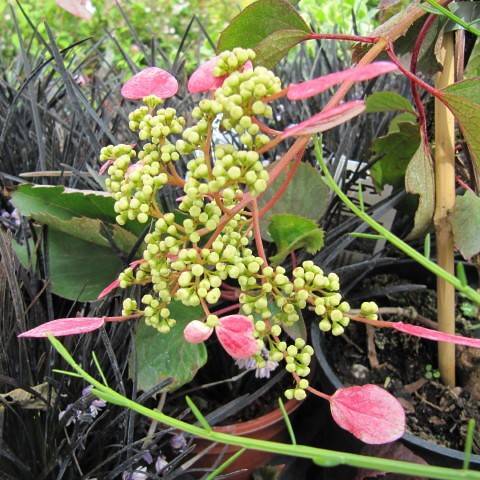
Japanese Hydrangea Vine is a vigorous, cold-hardy deciduous climber that adheres to surfaces via aerial rootlets, making it ideal for vertical gardening without extensive support. In mid to late summer, it produces broad, flat clusters of tiny fertile flowers framed by large, showy, heart-shaped sterile bracts that resemble those of mophead hydrangeas. Its deep green, serrated, heart-shaped leaves turn soft yellow in fall, adding seasonal interest to shaded garden spaces.
Care Guide
Watering
Water regularly to keep soil consistently moist but not waterlogged, especially during the first two years of establishment and periods of prolonged drought. Reduce watering frequency in late fall and winter as the plant enters dormancy, allowing the top 2-3 inches of soil to dry out between sessions. Avoid overhead watering to minimize fungal disease risk on foliage and blooms.
Light
Thrives in partial to full shade, with dappled morning sun and afternoon shade producing the most abundant flowering while preventing leaf scorch in hot climates. It can tolerate deep shade, though bloom production will be significantly reduced. Avoid exposure to intense midday sun, which can burn leaves and cause premature wilting.
Soil
Requires rich, well-drained, loamy soil with a high organic matter content and a slightly acidic to neutral pH between 5.5 and 7.0 for optimal growth. Amending heavy clay or sandy soils with compost, leaf mold, or well-rotted manure before planting will improve drainage and nutrient retention. Avoid waterlogged, compacted soils, which can cause root rot and stunted growth.
Fertilizer
Feed in early spring before new growth emerges with a slow-release, balanced 10-10-10 fertilizer formulated for acid-loving flowering shrubs, applied around the base of the vine away from the stem. A light second application of compost or diluted liquid seaweed fertilizer can be applied in early summer to support bloom development. Avoid overfertilizing, especially with high-nitrogen formulas, which can promote excessive leaf growth at the expense of flowers.
Temperature
Hardy in USDA zones 4 through 8, tolerating winter lows as low as -30°F (-34°C) when established. Young vines may benefit from a 2-3 inch layer of mulch around the root zone in late fall to insulate roots from extreme temperature fluctuations in cold climates. In warmer zone 8 regions, provide extra shade and consistent moisture to prevent heat stress during summer heatwaves.
Pruning
Prune in late winter or early spring before new growth begins, removing any dead, damaged, or crossing branches to improve air circulation and maintain the desired shape. Mature vines can be cut back hard to reduce size if they become overgrown, as they readily resprout from old wood. Light trimming of stray stems can also be done immediately after flowering to avoid removing next year’s bloom buds, which form on old wood.
Propagation
The most reliable method for home gardeners is softwood stem cuttings taken in early summer, using 4-6 inch long cuttings from healthy, non-flowering shoots, dipped in rooting hormone and planted in a moist, sterile potting mix under high humidity. It can also be propagated via layering in spring, where a low-growing stem is nicked, buried partially in soil, and left to root for 1-2 growing seasons before being separated from the parent plant. Growing from seed is possible but very slow, with plants taking 5-7 years to reach flowering maturity.
Humidity
Prefers moderate to high humidity levels between 40% and 70%, typical of its native forest understory habitats. In dry climates, regular misting or placing a tray of water near the base of the vine can help raise ambient humidity and prevent leaf browning. Good air circulation around the foliage is important to prevent fungal issues even in high-humidity environments.
Repotting
Japanese Hydrangea Vine is rarely grown in containers long-term due to its large size, but young plants intended for landscape planting can be repotted annually in early spring before new growth emerges, using a slightly larger pot with drainage holes. Use a well-draining, acidic potting mix amended with peat moss and perlite to support healthy root growth. Once planted in the landscape, repotting is not required.
Uses & Symbolism
Primarily used as an ornamental climbing vine to cover stone walls, wooden trellises, arbors, pergolas, and even large tree trunks, adding vertical interest to shaded woodland gardens and cottage landscapes. Its large, fragrant flower clusters are highly attractive to pollinators including bees and butterflies, supporting local ecosystem health. Cut flowers and dried bracts are sometimes used in floral arrangements for their delicate, long-lasting appearance.
Diseases & Pests
Japanese Hydrangea Vine is relatively pest and disease resistant, but can be susceptible to fungal issues including powdery mildew, leaf spot, and botrytis blight in humid, poorly ventilated conditions, which can be prevented by avoiding overhead watering and pruning to improve air flow. Aphids, scale insects, and spider mites may occasionally infest new growth, particularly on stressed plants, and can be controlled with insecticidal soap or neem oil applications. Root rot can occur in waterlogged, poorly drained soils, so proper site preparation and moderate watering are critical to prevent this fatal condition.
Related plants
Other plants you might like if you grow Japanese Hydrangea Vine.