Blue Trumpet Vine
Thunbergia grandiflora
Overview
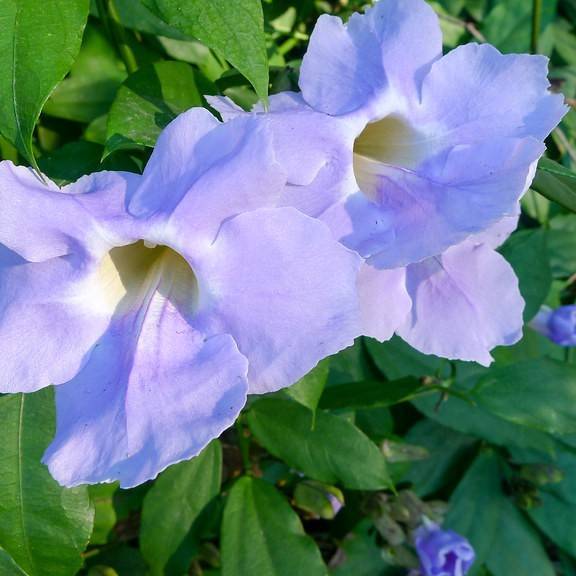
Blue Trumpet Vine, often called Bengal clockvine, is a fast-growing woody evergreen vine prized for its prolific clusters of 3-inch wide, ruffled blue flowers with pale yellow throats that bloom from late spring through early fall. In its native tropical habitat, it climbs aggressively over nearby vegetation and structures, while in temperate regions it is often grown as a container plant or seasonal annual. Its broad, heart-shaped dark green leaves provide dense, lush foliage coverage even when not in bloom.
Care Guide
Watering
Water regularly to keep soil consistently moist but not waterlogged during the active growing season, reducing frequency in winter when growth slows. Avoid allowing the root ball to dry out completely, as this can trigger leaf drop and reduced flowering. Container-grown specimens may require watering 2-3 times per week during hot, dry weather.
Light
Thrives in full sun to partial shade, with at least 4-6 hours of direct sunlight daily to support abundant flowering. In extremely hot, arid climates, provide light afternoon shade to prevent leaf scorch and reduce water stress. Indoor grown plants need bright, indirect light from a south or west-facing window to bloom reliably.
Soil
Prefers well-drained, fertile loamy soil with a slightly acidic to neutral pH between 6.0 and 7.5. Amending heavy clay or sandy soil with organic matter such as compost or well-rotted manure will improve drainage and nutrient retention. Container-grown plants do well in a high-quality general potting mix with added perlite to enhance drainage.
Fertilizer
Feed with a balanced, slow-release granular fertilizer formulated for flowering plants in early spring, just before new growth emerges. Supplement with a diluted liquid bloom fertilizer every 2-4 weeks during the flowering season to support continuous bloom production. Avoid over-fertilizing with high-nitrogen formulas, as this will encourage excess foliage growth at the expense of flowers.
Temperature
Thrives in warm temperatures between 65-85°F (18-29°C), and is hardy only in USDA zones 9-11, where winter temperatures rarely drop below 25°F (-4°C). In cooler regions, bring container-grown plants indoors before the first frost and overwinter in a cool, bright location above 50°F (10°C). Exposure to temperatures below 20°F (-7°C) will kill above-ground growth, though established plants in zone 8 may regrow from the roots in spring.
Pruning
Prune heavily in late winter or early spring before new growth emerges to control size, remove dead or damaged stems, and encourage bushier, more floriferous growth. Trim back wayward or overgrown stems throughout the growing season to maintain the desired shape and prevent the vine from spreading into unwanted areas. Regular deadheading of spent blooms is not required, but can extend the flowering period slightly.
Propagation
Easily propagated from softwood stem cuttings taken in spring or early summer, using 4-6 inch cuttings with 2-3 sets of leaves, dipped in rooting hormone and placed in moist, well-drained potting mix under high humidity. Can also be grown from fresh seed sown in warm, moist soil in spring, though seed-grown plants may take 2-3 years to reach flowering maturity. Layering is another reliable method, where low-hanging stems are pinned to the soil and left to root before being severed from the parent plant.
Humidity
Prefers moderate to high humidity levels between 50-70%, which supports lush growth and consistent flowering. In dry indoor environments, increase humidity by placing the container on a pebble tray filled with water, or by using a small room humidifier near the plant. Outdoor plants in arid climates benefit from occasional misting during extended dry periods to reduce leaf browning.
Repotting
Repot container-grown Blue Trumpet Vine every 1-2 years in early spring, before new growth begins, moving to a pot just one size larger to avoid excess soil moisture around the roots. Use fresh potting mix amended with compost to replenish nutrients, and gently loosen tangled roots before repotting to encourage healthy root spread. Mature, large specimens can be top-dressed with fresh compost annually instead of repotting to reduce stress.
Uses & Symbolism
Widely used as an ornamental climbing vine to cover trellises, arbors, fences, pergolas, and unsightly garden structures, providing dense shade and vibrant seasonal color. In warm tropical regions, it is often planted as a living screen for privacy, while in temperate climates it is grown as a patio container plant or seasonal hanging basket feature. Its long blooming period and attractive flowers also make it a valuable addition to pollinator gardens, drawing in bees, butterflies, and hummingbirds.
Diseases & Pests
Generally pest-resistant, but may be susceptible to common sap-sucking insects such as aphids, whiteflies, and spider mites, especially when grown in dry, low-humidity conditions or overcrowded areas. Fungal diseases including powdery mildew and root rot can occur if the plant is overwatered, planted in poorly drained soil, or has poor air circulation around its foliage. In areas with high humidity, leaf spot may develop, which can be managed by removing affected leaves and avoiding overhead watering.
Related plants
Other plants you might like if you grow Blue Trumpet Vine.
%22%2F%3E%0A%20%20%20%20%20%20%3Ccircle%20cx%3D%22920%22%20cy%3D%22180%22%20r%3D%2290%22%20fill%3D%22%23cfe8d5%22%2F%3E%0A%20%20%20%20%20%20%3Cpath%20d%3D%22M600%20590c-90-180-215-255-310-280%200%20165%20118%20296%20270%20296h40z%22%20fill%3D%22%2379b88e%22%2F%3E%0A%20%20%20%20%20%20%3Cpath%20d%3D%22M600%20590c80-150%20198-212%20302-228-8%20142-123%20255-270%20255h-32z%22%20fill%3D%22%235c9f73%22%2F%3E%0A%20%20%20%20%20%20%3Cpath%20d%3D%22M600%20610V360%22%20stroke%3D%22%234f8c64%22%20stroke-width%3D%2218%22%20stroke-linecap%3D%22round%22%2F%3E%0A%20%20%20%20%20%20%3Ctext%20x%3D%22600%22%20y%3D%22700%22%20text-anchor%3D%22middle%22%20font-family%3D%22Arial%2C%20sans-serif%22%20font-size%3D%2244%22%20fill%3D%22%23365c45%22%3E%0A%20%20%20%20%20%20%20%20Plant%20image%20coming%20soon%0A%20%20%20%20%20%20%3C%2Ftext%3E%0A%20%20%20%20%3C%2Fsvg%3E%0A%20%20)