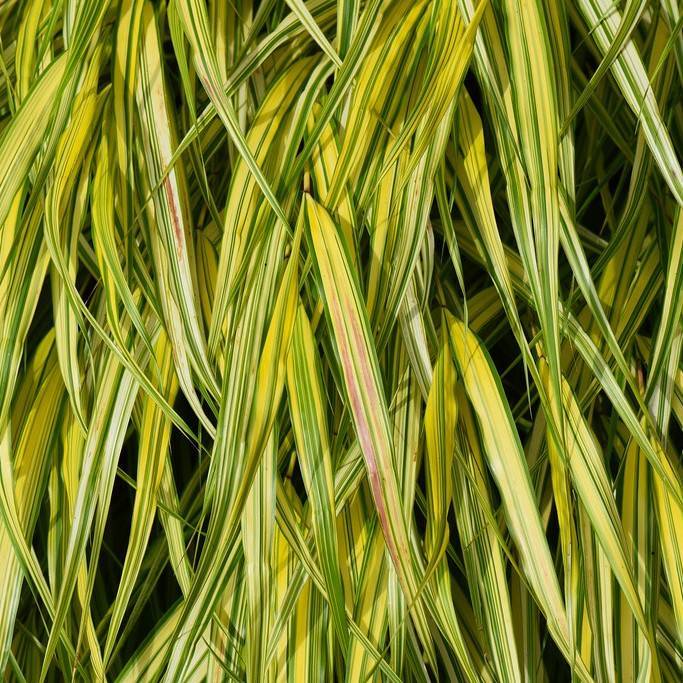
Japanese Forest Grass
Hakonechloa macra
Overview
Japanese forest grass is a clumping, slow-spreading ornamental grass native to Japan’s cool mountain woodlands, celebrated for its soft, arching blades that cascade gently like flowing water. Most cultivated cultivars boast variegated foliage in shades of green, gold, or cream, which often develops warm bronze or reddish tints in autumn as temperatures drop. Unlike many ornamental grasses, it thrives in partial to full shade, making it a versatile choice for dimmer garden spots that lack options for textured, colorful foliage. It spreads gradually via short rhizomes without becoming invasive, forming neat, mounded clumps that blend well with other shade-loving perennials.
Care Guide
Watering
Japanese forest grass prefers consistently moist, well-drained soil, and should be watered regularly to prevent the root zone from drying out completely, especially during periods of summer heat or drought. Avoid overwatering or allowing the plant to sit in standing water, as this can lead to root rot, particularly in heavy, poorly draining soils. Once established, it has mild drought tolerance, but will exhibit lusher, more vibrant foliage with regular, even moisture.
Light
This grass grows best in partial to full shade, with dappled sunlight or morning sun followed by afternoon shade providing ideal conditions to support vibrant foliage color without scorching. Direct, intense midday sun will burn the delicate leaf tips, causing unsightly browning and fading, particularly on variegated cultivars. In cooler climates, it can tolerate slightly more sun, but still benefits from protection during the hottest part of the day.
Soil
Japanese forest grass thrives in rich, loamy, well-drained soil with a slightly acidic to neutral pH, amended with organic matter such as compost or leaf mold to boost moisture retention and nutrient content. It will not tolerate heavy, compacted clay soils that hold standing water, as these conditions quickly lead to root rot and decline. For container growth, use a high-quality, peat-free potting mix with added perlite or pumice to improve drainage while retaining consistent moisture.
Fertilizer
Feed Japanese forest grass once annually in early spring, just as new growth emerges, using a balanced, slow-release granular fertilizer or a top dressing of well-rotted compost to provide steady nutrients throughout the growing season. Avoid over-fertilizing, especially with high-nitrogen formulas, as this can cause overly lush, weak growth that is more prone to flopping and pest damage. Container-grown specimens can benefit from a half-strength balanced liquid fertilizer once every 4 to 6 weeks during the active growing season, if growth appears stunted or pale.
Temperature
This grass is hardy in USDA zones 5 through 9, tolerating winter temperatures as low as -20°F (-29°C) when planted in the ground, and benefits from a light layer of mulch over the root zone in colder regions to insulate roots from freeze-thaw cycles. It prefers cool, mild summer temperatures between 60-75°F (16-24°C), and may go dormant or exhibit scorched foliage if exposed to prolonged temperatures above 90°F (32°C) combined with dry soil. In areas with hot, humid summers, it requires extra shade and consistent moisture to remain healthy through the warmest months.
Pruning
Prune Japanese forest grass once annually in late winter or early spring, before new growth begins, by cutting back the entire clump to 2-3 inches (5-7.5 cm) above the soil line to remove dead, brown foliage and make way for fresh, vibrant new growth. During the growing season, trim away any brown, scorched, or damaged leaf blades as needed to maintain a neat appearance, taking care not to remove more than 1/3 of the plant’s foliage at one time. No regular deadheading is required, as this grass is grown primarily for its foliage, and its small, inconspicuous flower spikes do not detract from its appearance.
Propagation
The most reliable method of propagating Japanese forest grass is via division, performed in early spring just as new growth emerges, or in early fall before temperatures drop too low. Dig up the entire mature clump, gently separate it into smaller sections each with a healthy portion of roots and foliage, then replant the divisions at the same depth they were growing previously, watering thoroughly to settle the soil around the roots. Propagation from seed is possible but very slow, and most named cultivars will not come true from seed, so division is the preferred method for retaining desired foliage characteristics.
Humidity
Japanese forest grass prefers moderate to high humidity levels between 40-70%, which mimics the conditions of its native mountain woodland habitat, and will exhibit lusher foliage with higher ambient moisture. In dry, arid climates or indoor environments with low humidity, misting the foliage regularly or placing a tray of pebbles and water beneath container-grown specimens can help raise local humidity levels. It can tolerate average household humidity when grown as a houseplant, but may develop brown leaf tips if exposed to prolonged dry air from heating or cooling vents.
Repotting
Container-grown Japanese forest grass should be repotted every 2 to 3 years in early spring, before new growth begins, to refresh the soil and prevent the plant from becoming root-bound, which can restrict growth and lead to moisture stress. Choose a pot that is 1-2 inches (2.5-5 cm) larger in diameter than the current container, with adequate drainage holes to prevent standing water, and use a rich, well-draining potting mix amended with compost or leaf mold. When repotting, gently loosen tangled roots before placing the plant in the new container, and water thoroughly after planting to help the roots establish in their new environment.
Uses & Symbolism
Japanese forest grass is widely used as a groundcover, edging plant, or accent in shaded garden borders, woodland gardens, and rock gardens, where its cascading foliage softens hard edges and provides textural contrast against broad-leaved shade perennials such as hostas and ferns. Variegated cultivars are particularly popular for brightening dim garden spots, and the plant also works well in container displays, either as a standalone specimen or as a trailing element in mixed planters. Its clumping, non-invasive growth habit makes it a low-maintenance choice for mass plantings in shaded public landscapes, and its cut foliage is sometimes used in floral arrangements for its delicate, flowing texture.
Diseases & Pests
Japanese forest grass is relatively pest and disease resistant, but can be susceptible to root rot if planted in poorly draining soil or overwatered, which presents as yellowing, wilting foliage and stunted growth. In hot, dry conditions, it may attract spider mites, which cause fine webbing on the foliage and yellow, stippled leaf surfaces, and can be controlled with regular misting to raise humidity or applications of insecticidal soap. Rust fungus may occasionally affect plants in overly humid, poorly ventilated conditions, causing orange or brown pustules on the undersides of leaves, and can be managed by removing affected foliage and improving air circulation around the plant.
Related plants
Other plants you might like if you grow Japanese Forest Grass.