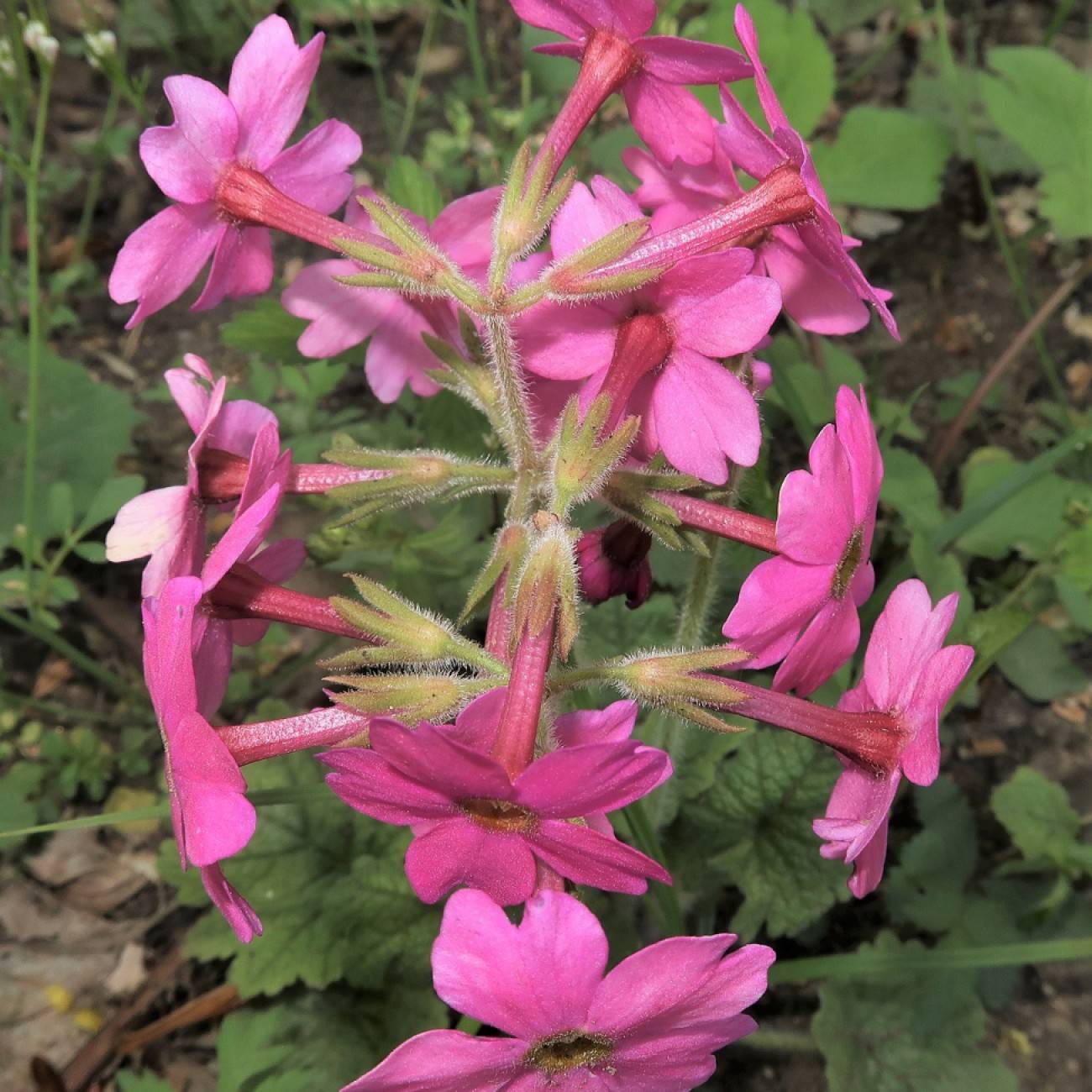
Hardy Primrose
Primula vulgaris
Overview
Hardy primrose is a beloved early-spring flowering perennial that thrives in cool, shaded garden spots, producing clusters of five-petaled blooms in shades of yellow, pink, purple, white, and red, often with contrasting yellow centers. Native to temperate regions of Europe and western Asia, it naturalizes readily in suitable climates, forming low, spreading mounds of crinkled, oval green foliage. It is a staple of cottage gardens, woodland borders, and shaded container displays, valued for its ability to bloom when many other plants are still dormant.
Care Guide
Watering
Keep soil consistently moist but not waterlogged, as soggy conditions can cause root rot; reduce watering frequency in summer after foliage dies back, only watering during extended dry spells. Water at the base of the plant to avoid wetting the foliage, which can reduce the risk of fungal diseases.
Light
Grow best in partial to full shade, particularly in regions with warm summers, where direct midday sun can scorch delicate foliage and dry out soil quickly. In cooler, northern climates, they can tolerate gentle morning sun to encourage more abundant blooming, but require protection from intense afternoon sunlight.
Soil
Prefers rich, well-draining, loamy soil with a slightly acidic to neutral pH (6.0-7.0) amended with plenty of organic matter such as compost, leaf mold, or well-rotted manure to retain moisture. Heavy clay soils should be amended with coarse sand or perlite to improve drainage, as standing water will kill the plant’s shallow root system.
Fertilizer
Feed lightly in early spring just as new growth emerges with a balanced, slow-release granular fertilizer or diluted liquid all-purpose fertilizer to support healthy foliage and abundant blooms. Avoid over-fertilizing, as this can lead to lush, weak foliage that is more susceptible to pests and fungal diseases, and may reduce flowering in subsequent years.
Temperature
Thrives in cool temperatures between 40-65°F (4-18°C), and is winter hardy in USDA zones 4-8, tolerating temperatures as low as -30°F (-34°C) when planted in the ground with a light layer of winter mulch for insulation. In regions with hot summers, plants will go dormant and die back to the ground, reemerging the following spring when cool temperatures return.
Pruning
Remove spent flower stalks after blooming to encourage tidy growth and prevent the plant from expending energy on seed production, which can reduce flowering the following year. Cut back any yellowed or damaged foliage in late autumn after the plant goes dormant, and clear away debris from around the crown to reduce overwintering pest and disease spores.
Propagation
Most easily propagated by division in early autumn or immediately after flowering, carefully lifting clumps and separating them into smaller sections with intact roots and crowns, replanting immediately at the same depth as the parent plant. Can also be grown from seed sown in late summer or early autumn, as seeds require a period of cold stratification to germinate; seed-grown plants may not come true to the parent cultivar’s flower color.
Humidity
Prefers moderate humidity levels between 40-60%, typical of its native woodland habitats, and will suffer in excessively dry, arid conditions that cause leaf browning and wilting. In dry climates or during periods of drought, misting the surrounding air or adding a layer of organic mulch around the base of the plant can help maintain consistent soil moisture and raise local humidity levels.
Repotting
Container-grown hardy primroses should be repotted every 1-2 years in early spring before new growth begins, using a fresh, peat-free potting mix amended with leaf mold to improve drainage and nutrient content. Choose a pot that is only 1-2 inches larger than the current root ball, as overly large pots can hold excess moisture that leads to root rot; ensure the pot has adequate drainage holes.
Uses & Symbolism
Hardy primroses are widely used as ornamental plants in shaded cottage garden borders, woodland gardens, rock gardens, and underplantings for deciduous trees and shrubs, where their early spring blooms add bright color to otherwise dormant landscapes. They are also popular as container plants for patios, windowsills, and shaded balconies, and are often sold as seasonal potted gifts in late winter and early spring. Historically, the flowers were occasionally used to make conserves and herbal teas, though consumption is no longer recommended due to the plant’s toxic properties.
Diseases & Pests
Hardy primroses are susceptible to several fungal diseases, including powdery mildew, gray mold (botrytis), and root rot, most often caused by overwatering, poor air circulation, or wet foliage; these can be prevented by watering at the base, spacing plants adequately, and removing infected foliage promptly. Common pests include aphids, spider mites, slugs, and snails, which feed on tender new growth and foliage; slugs and snails can be controlled with bait, copper tape, or hand-picking, while aphids and mites can be treated with insecticidal soap or neem oil.
Related plants
Other plants you might like if you grow Hardy Primrose.