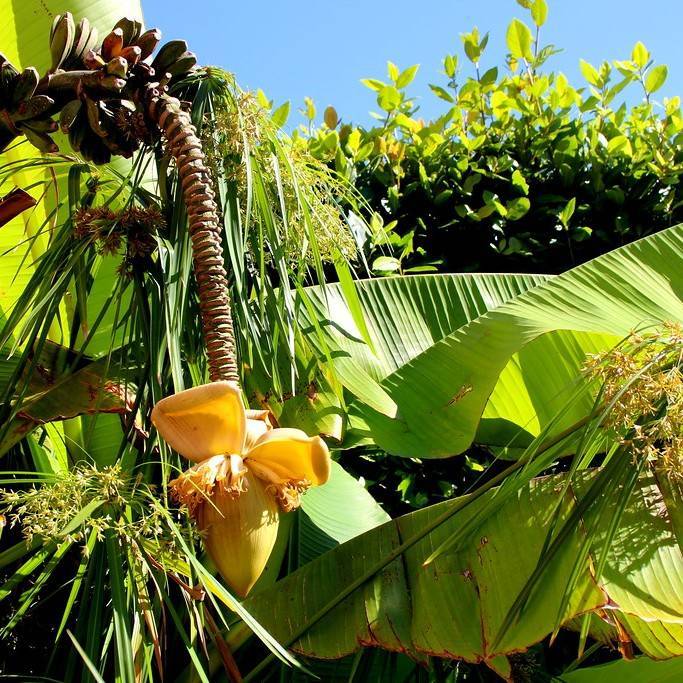
Japanese Banana
Musa basjoo
Overview
The Japanese banana is a herbaceous perennial, not a true woody tree, that produces large, paddle-shaped bright green leaves up to 6 feet long and 2 feet wide. While it produces small, inedible seedy fruits in its native range, it is primarily grown for its dramatic tropical aesthetic in gardens across temperate zones. Its root system can survive temperatures as low as -10°F (-23°C) when properly mulched, making it one of the most cold-tolerant banana species available to home growers.
Care Guide
Watering
Water deeply and regularly during the active growing season, keeping the soil consistently moist but not waterlogged to avoid root rot. Reduce watering frequency in fall and winter when growth slows, allowing the top 2-3 inches of soil to dry out between waterings. Potted specimens will require more frequent watering than in-ground plants, especially during hot, dry weather.
Light
Plant in full sun for best growth and foliage development, though it can tolerate partial shade in particularly hot, arid climates. Ensure it receives a minimum of 6 hours of direct sunlight daily to support robust leaf production; too much shade will result in lanky growth and smaller leaves. Indoor grown specimens should be placed near a south or west-facing window to get adequate light.
Soil
Grows best in fertile, well-draining loamy soil with a slightly acidic to neutral pH between 5.5 and 7.0. Avoid heavy clay soils that retain standing water, as this will quickly cause root rot in the plant’s shallow rhizome system. Amending planting sites with well-rotted compost or aged manure will improve soil structure and nutrient content to support vigorous growth.
Fertilizer
Feed every 2-3 weeks during the active growing season (spring through summer) with a balanced, water-soluble 10-10-10 fertilizer to support fast foliage growth. Reduce fertilization completely in fall and winter when the plant enters dormancy, as nutrient uptake slows significantly. Potted plants may benefit from a slow-release fertilizer applied at the start of the growing season to provide consistent nutrition.
Temperature
Thrives in warm summer temperatures between 70-90°F (21-32°C), and actively grows when conditions are consistently above 60°F (15°C). While the above-ground foliage dies back at the first frost, the root system can survive temperatures down to -10°F (-23°C) if covered with a thick layer of mulch over winter. In regions with extreme cold, potted specimens can be moved indoors to a cool, frost-free location for the dormant season.
Pruning
Remove brown, damaged, or dead leaves as needed throughout the growing season to maintain a tidy appearance and prevent pest or disease buildup. After the first frost kills back above-ground foliage in temperate climates, cut the stalks down to 1-2 feet above the ground before applying winter mulch. Avoid pruning healthy green leaves, as they are critical for photosynthesis and energy storage for the next growing season.
Propagation
Most commonly propagated by dividing suckers (offsets) that grow from the base of mature plants in spring or early summer. Use a sharp, sterilized knife to separate offsets with their own attached root systems, then replant them immediately in prepared soil or pots. It can also be grown from seed, though seed-grown plants take several years to reach mature size and germination rates are often low and inconsistent.
Humidity
Prefers moderate to high humidity levels between 50-70%, similar to its native subtropical habitat, to prevent leaf browning at the edges. In dry indoor environments or arid outdoor climates, mist the foliage regularly or place a tray of pebbles filled with water under potted specimens to raise ambient humidity. Outdoor plants generally adapt well to average outdoor humidity levels in most temperate regions during the growing season.
Repotting
Potted Japanese banana plants should be repotted every 1-2 years in early spring before new growth begins, as they have fast-growing root systems that quickly outgrow containers. Choose a pot that is 2-3 inches larger in diameter than the current one, with ample drainage holes to prevent waterlogging. When repotting, gently loosen the root ball and add fresh, nutrient-rich potting mix to support new growth throughout the season.
Uses & Symbolism
Primarily grown as an ornamental plant to add a tropical aesthetic to temperate gardens, patio containers, or indoor spaces, with its large foliage creating a lush, dramatic focal point. In its native range, its strong fibrous stalks are used to make traditional textiles, paper, and cordage. It is also sometimes planted as a fast-growing seasonal screen for privacy in warmer temperate regions.
Diseases & Pests
Japanese banana is relatively pest and disease resistant, but can be susceptible to root rot if grown in waterlogged, poorly draining soil. Common pests include aphids, spider mites, and scale insects, which can infest foliage, especially on indoor or stressed plants; these can be controlled with insecticidal soap or neem oil applications. Fungal leaf spot may occur in overly humid, poorly ventilated conditions, which can be managed by removing affected leaves and improving air circulation around the plant.
Related plants
Other plants you might like if you grow Japanese Banana.