Jade Vine
Strongylodon macrobotrys
Overview
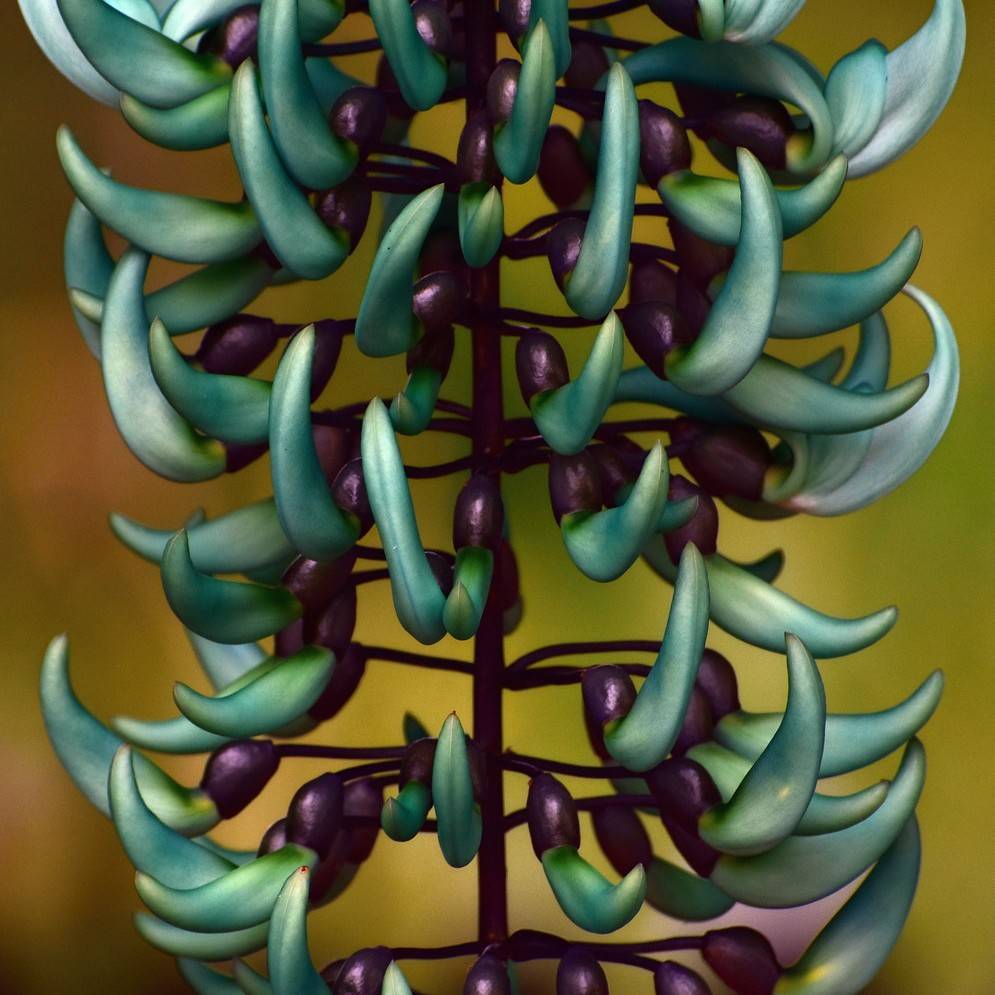
Jade vine is a rare, evergreen climbing plant in the pea family, famous for its uniquely colored, pendant flower racemes that can reach 3 feet (90 cm) in length. Its waxy, turquoise-blue blooms have an iridescent sheen under natural light, adapted to be pollinated by bats in its native range. It is a highly sought-after ornamental for tropical gardens and conservatories, though it is endangered in the wild due to habitat loss.
Care Guide
Watering
Keep soil consistently moist but never waterlogged during the active growing season, watering when the top 1 inch (2.5 cm) of soil feels dry. Reduce watering frequency in the cooler winter months, allowing the top 2-3 inches of soil to dry out slightly to prevent root rot. Use lukewarm, non-chlorinated water to avoid shocking the plant’s sensitive root system.
Light
Provide bright, indirect light or dappled sunlight for optimal growth and flowering, avoiding direct midday sun which can scorch its leathery, trifoliate leaves. It can tolerate a few hours of gentle morning sun, but prolonged full sun will cause foliage yellowing and stunted growth. Indoors, place it near a south or west-facing window with a sheer curtain to filter harsh light.
Soil
Plant in a loose, well-draining, nutrient-rich potting mix with a slightly acidic to neutral pH between 5.5 and 7.0. A mix of equal parts peat moss, perlite, orchid bark, and compost works well, as it retains just enough moisture without becoming compacted. Ensure the planting container or garden bed has ample drainage holes to prevent standing water around the roots.
Fertilizer
Feed every 2-4 weeks during the spring and summer growing season with a balanced, water-soluble fertilizer diluted to half the recommended strength. Switch to a phosphorus-rich fertilizer in early spring to support bud development and encourage abundant flowering. Avoid fertilizing in fall and winter when the plant enters a period of slower growth.
Temperature
Jade vine thrives in warm, tropical temperatures between 65-85°F (18-29°C), and cannot tolerate temperatures below 55°F (13°C) for extended periods. Frost or prolonged cold will kill the vine, so it must be overwintered indoors in regions with cool winters. Avoid placing it near cold drafts from windows, doors, or air conditioning units, as sudden temperature drops can cause leaf drop.
Pruning
Prune lightly after flowering to control size, remove dead or damaged stems, and encourage bushier, more compact growth. Trim back overly long, unruly vines to maintain the desired shape, but avoid heavy pruning as this can remove the woody growth where next year’s flower buds form. Always use clean, sharp pruning shears to prevent the spread of disease.
Propagation
Jade vine is most commonly propagated from semi-hardwood cuttings taken in late spring or early summer, rooting them in a moist, well-draining medium with bottom heat and high humidity. It can also be grown from fresh, scarified seeds, though seed-grown plants can take 5-7 years to reach flowering maturity, compared to 2-3 years for cutting-grown specimens. Propagation can be challenging for home gardeners, as cuttings often fail to root without consistent warm, humid conditions.
Humidity
Requires high humidity levels between 60-80% to thrive, mimicking its native rainforest habitat. Low indoor humidity will cause leaf browning, stunted growth, and prevent flower formation. Boost humidity by placing the plant on a pebble tray filled with water, using a room humidifier, or grouping it with other moisture-loving plants.
Repotting
Repot young jade vine plants every 1-2 years in spring, moving them to a container one size larger to accommodate their fast-growing root system. Mature plants only need repotting every 3-4 years, or when roots begin to grow out of the drainage holes. Be gentle when handling the roots during repotting, as they are fragile and easily damaged. Provide a sturdy trellis or support structure at repotting time to accommodate the vine’s climbing growth habit.
Uses & Symbolism
Jade vine is primarily grown as a high-value ornamental for tropical landscapes, conservatories, and large indoor atriums, prized for its one-of-a-kind turquoise flower displays that attract pollinators including birds and bees in suitable climates. Its cut flowers are used in high-end floral arrangements and leis in its native Philippines, as the blooms retain their color and shape for several days after cutting. It also has minor traditional medicinal uses in Philippine folk medicine, though these are not widely documented in modern herbalism.
Diseases & Pests
Jade vine is susceptible to root rot if overwatered or planted in poorly draining soil, which presents as yellowing, wilted leaves and soft, mushy stems. Common pests include spider mites, mealybugs, and aphids, which feed on sap and cause leaf discoloration and stunted growth, especially in low-humidity indoor environments. It may also develop fungal leaf spots if foliage remains wet for prolonged periods, which can be prevented by watering at the base of the plant and ensuring good air circulation around the foliage.
Guides that mention Jade Vine
Related plants
Other plants you might like if you grow Jade Vine.