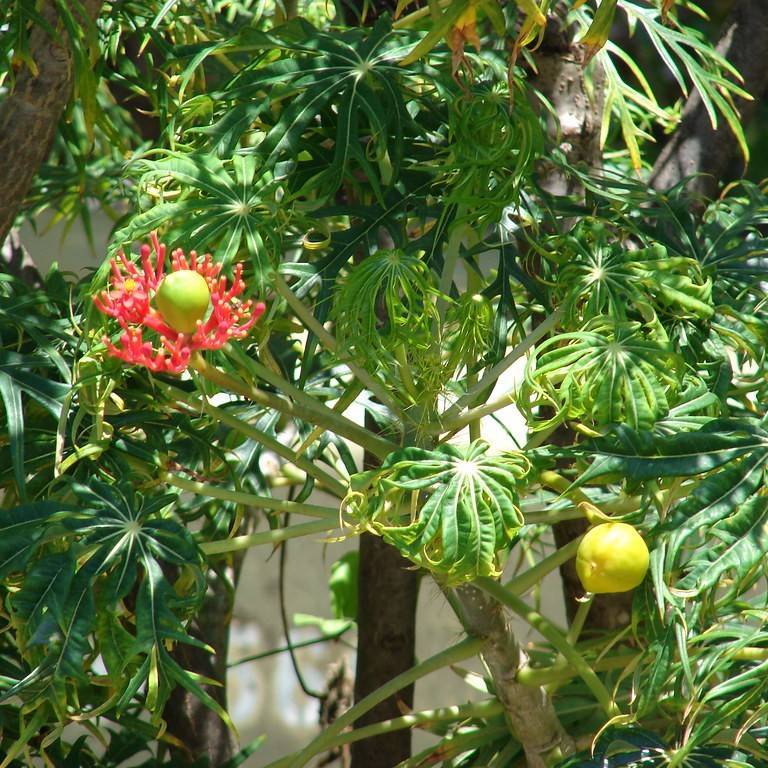
Coralbush
Jatropha multifida
Overview
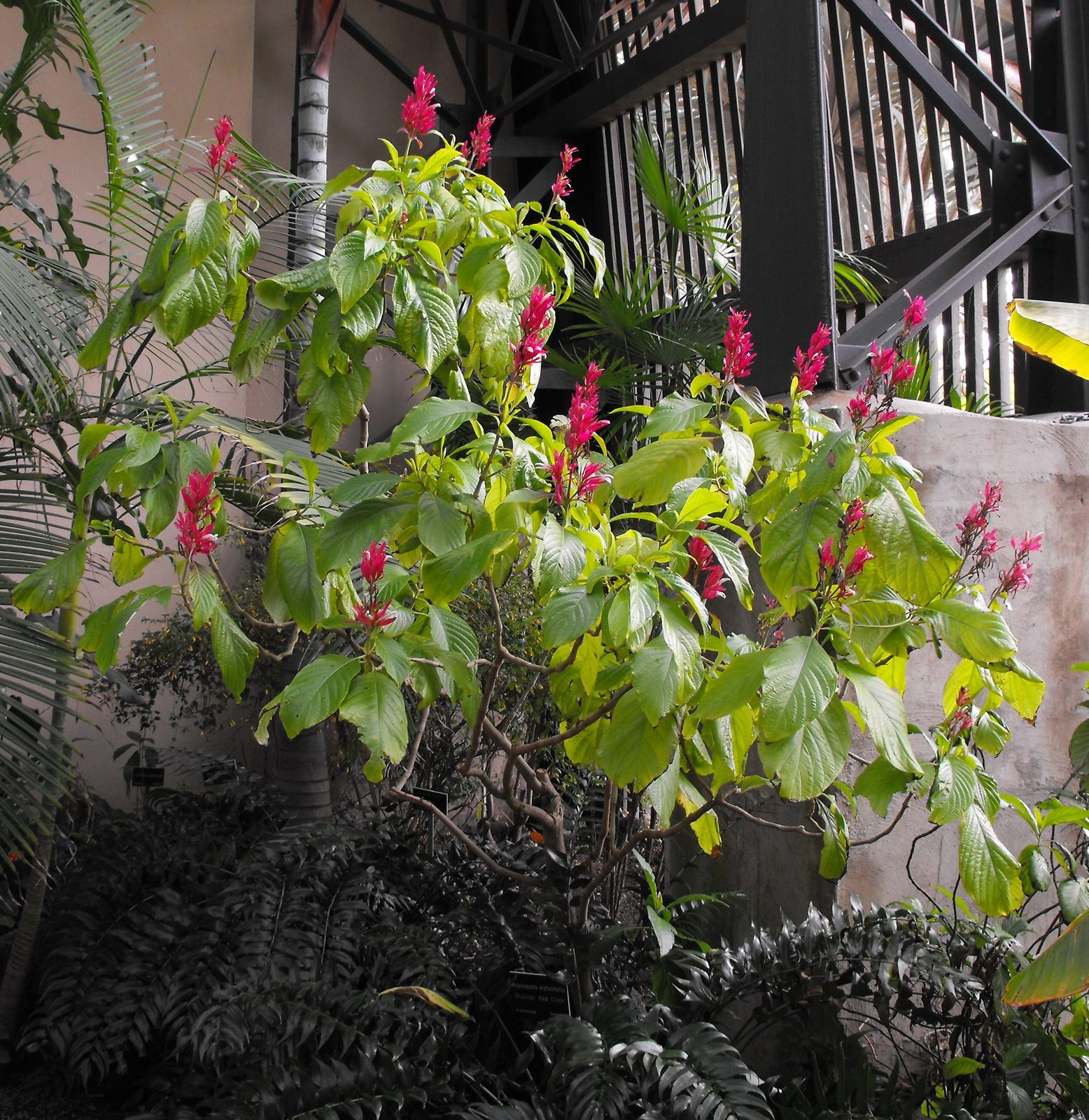
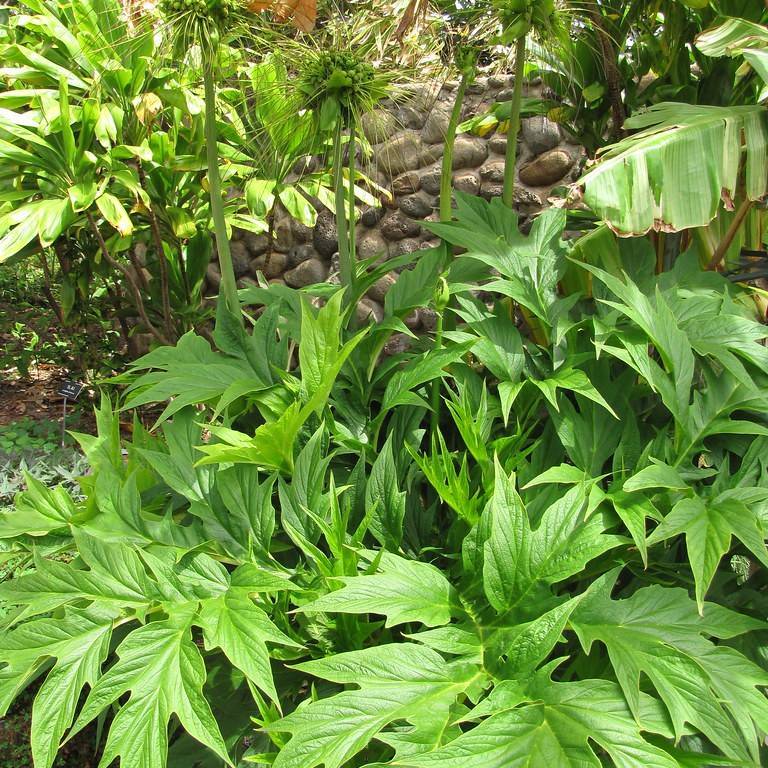
Coralbush, also called Guatemala rhubarb or physic nut, is a fast-growing tropical shrub recognizable by its deeply lobed, dark green leaves that can reach up to 12 inches across, and its upright clusters of tiny, vivid red blooms that appear year-round in warm climates. It is widely cultivated as an ornamental landscape plant in frost-free regions and as a large container houseplant in temperate areas. While visually dramatic, its milky sap and seeds contain toxic compounds that require careful handling to avoid adverse reactions.
Care Guide
Watering
Allow the top 2 to 3 inches of soil to dry out completely between waterings, as overwatering can quickly lead to root rot, especially in container-grown specimens. Reduce watering frequency significantly during the winter months when the plant enters a period of slower growth, only providing enough moisture to prevent the soil from drying out entirely. Avoid getting water on the foliage to minimize the risk of fungal leaf spot diseases.
Light
Coralbush thrives in full sun to partial shade, requiring at least 6 hours of direct sunlight daily to produce abundant blooms and maintain dense, healthy foliage. Indoor plants should be placed in a south or west-facing window to receive sufficient light, or supplemented with grow lights during low-light winter months to prevent leggy, sparse growth. Too much deep shade will result in reduced flowering and weak, elongated stems that are prone to breakage.
Soil
Plant coralbush in well-draining, sandy or loamy soil with a slightly acidic to neutral pH range of 6.0 to 7.0, as heavy, water-retentive soils will cause root rot. For container plants, use a high-quality potting mix amended with perlite, pumice, or coarse sand to improve drainage and aeration around the root system. Ensure all containers have large, unobstructed drainage holes to allow excess water to escape freely after watering.
Fertilizer
Feed coralbush with a balanced, slow-release granular fertilizer with an NPK ratio of 10-10-10 once every 2 to 3 months during the active growing season from spring through early fall. Avoid fertilizing in late fall and winter, as new growth produced during this time is tender and susceptible to damage from cooler temperatures. Over-fertilization can lead to excessive foliage growth at the expense of flowering, and may also cause salt buildup in container soil.
Temperature
Coralbush prefers warm tropical temperatures between 65°F and 85°F (18°C to 29°C), and will suffer damage if exposed to temperatures below 50°F (10°C) for extended periods. It is only hardy outdoors in USDA zones 10 through 12, and must be brought indoors or protected with frost cloth if unexpected cold snaps occur in these regions. Indoor specimens should be kept away from cold drafts from windows, doors, or air conditioning units to prevent leaf drop and stress.
Pruning
Prune coralbush in late winter or early spring before new growth emerges to shape the plant, remove dead or damaged branches, and encourage bushier, more compact growth. Wear thick gloves and protective eyewear when pruning to avoid contact with the toxic milky sap that oozes from cut stems, and wash your hands thoroughly immediately after handling clippings. Regularly remove spent flower clusters to promote continuous blooming throughout the growing season and prevent the plant from self-seeding excessively in landscape settings.
Propagation
Coralbush is most commonly propagated from stem cuttings taken in spring or early summer, using 4 to 6 inch long, healthy semi-hardwood cuttings with at least 2 to 3 leaf nodes. Allow cut ends to dry and callous over for 1 to 2 days before planting in moist, well-draining propagation mix, and keep cuttings in a warm, bright location out of direct sun until roots develop in 3 to 4 weeks. It can also be grown from seed, but seeds have a short viability window and require soaking in warm water for 24 hours before sowing to improve germination rates, and handling with care due to their high toxicity.
Humidity
Coralbush adapts well to average household humidity levels between 40% and 60%, but will appreciate occasional misting with room-temperature water if grown in very dry indoor environments. Avoid overly high humidity levels above 70%, as this can increase the risk of fungal diseases affecting the foliage and stems. For indoor plants in arid climates, placing the pot on a pebble tray filled with water can help raise local humidity without exposing the plant to overly moist conditions.
Repotting
Repot container-grown coralbush every 2 to 3 years in spring, moving it to a pot that is only 1 to 2 inches larger in diameter than the current one to prevent excess soil from holding too much moisture around the roots. Wear protective gloves during repotting to avoid contact with the toxic sap that may be released if roots or stems are damaged during the process. After repotting, water lightly and avoid fertilizing for 4 to 6 weeks to allow the plant to acclimate to its new container and recover from any root disturbance.
Uses & Symbolism
Coralbush is primarily grown as an ornamental landscape plant in tropical and subtropical gardens, where its bold foliage and bright red flowers add dramatic color to borders, specimen plantings, and xeriscapes, and it is also popular as a large decorative houseplant for bright indoor spaces. In traditional medicine in its native range, small, carefully prepared doses of its compounds have been used topically to treat skin conditions, though internal use is never recommended due to its high toxicity. Its drought tolerance once established makes it a popular choice for low-water gardens in warm, arid regions where other flowering shrubs struggle to thrive.
Diseases & Pests
Coralbush is relatively pest-resistant, but may be susceptible to infestations of spider mites, mealybugs, and scale insects, especially when grown indoors in low-humidity conditions or stressed by insufficient light. Overwatering and poor drainage are the most common causes of health issues, leading to root rot, fungal leaf spot, and stem rot that can kill the plant quickly if not addressed. It may also develop yellowing leaves and leaf drop if exposed to cold drafts, insufficient light, or prolonged periods of overly dry soil.
Related plants
Other plants you might like if you grow Coralbush.