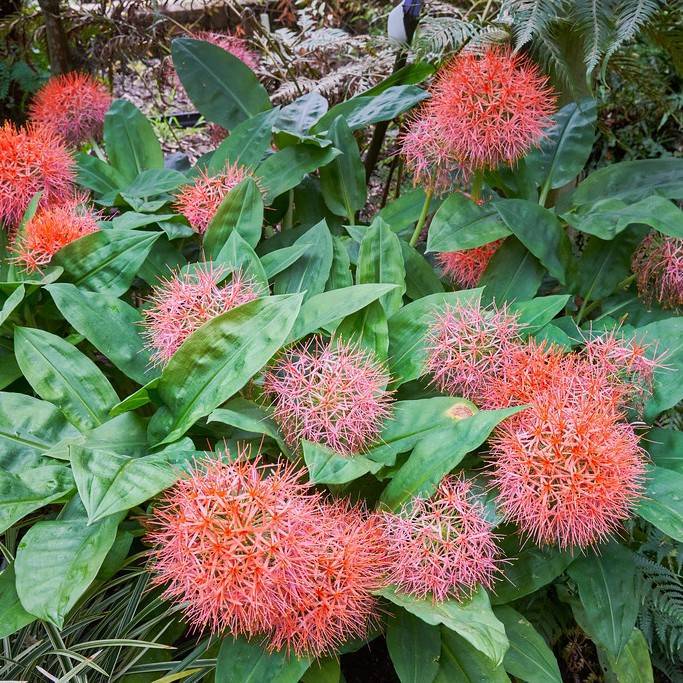
African Blood Lily
Scadoxus multiflorus
Overview
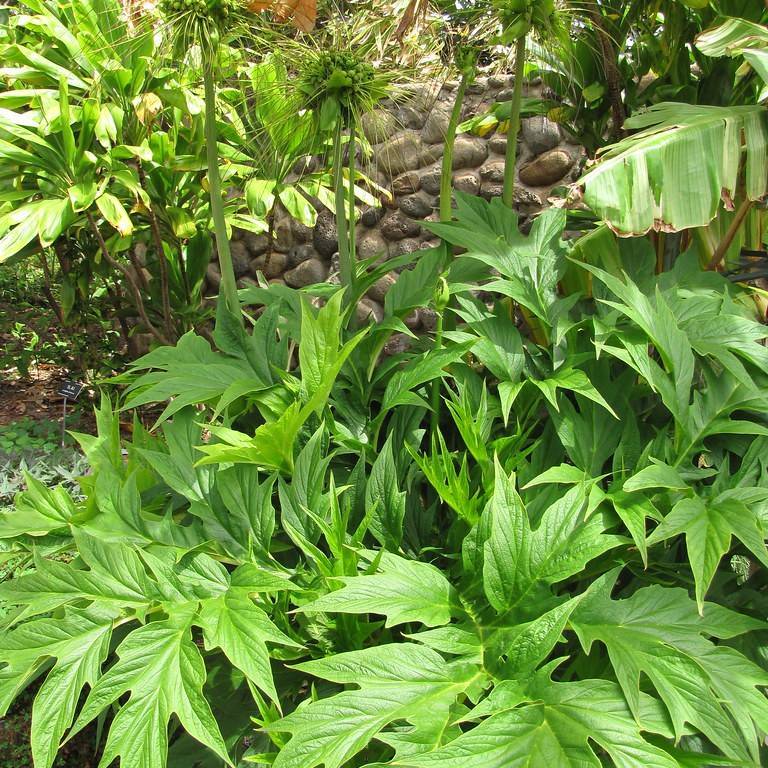
African blood lily, also called powderpuff lily or fireball lily, grows from a large, fleshy underground bulb. Its signature inflorescence holds up to 200 tiny red florets clustered into a 6-10 inch wide spherical bloom, often dotted with bright yellow anthers that attract pollinators. After flowering, broad, lance-shaped, deep green leaves emerge and persist through the growing season, before dying back as the plant enters winter dormancy. It is widely cultivated as an ornamental for tropical gardens and indoor container displays.
Care Guide
Watering
Water thoroughly when the top 2 inches of soil feel dry during the active growing and flowering season, taking care not to saturate the bulb to prevent rot. Reduce watering gradually once leaves begin to yellow in late fall, and withhold water entirely during the winter dormant period to let the bulb rest. Resume light watering when new growth emerges in early spring.
Light
African blood lily thrives in bright, indirect light, and can tolerate a few hours of gentle morning sun daily. Avoid prolonged direct midday or afternoon sun, which can scorch its leaves and fade flower color. For indoor plants, place near an east-facing window, or a shaded south or west-facing window to provide sufficient light for blooming.
Soil
Plant in a loose, well-draining, fertile potting mix with high organic matter content, such as a mix of peat moss, perlite, and compost, with a slightly acidic to neutral pH between 6.0 and 7.0. Heavy, water-retentive soils will cause bulb rot, so ensure the growing medium allows excess water to drain freely. For outdoor planting, amend heavy clay soil with compost and grit to improve drainage before setting bulbs.
Fertilizer
Feed with a balanced, water-soluble fertilizer diluted to half strength every 2-3 weeks during active growth, from when flower buds first emerge until leaves begin to yellow in late summer. Avoid over-fertilizing, as this can lead to excessive leaf growth at the expense of flowering, and may damage the bulb. Do not apply fertilizer during the winter dormant period, when the plant is not actively growing.
Temperature
This tropical plant prefers warm temperatures between 65-85°F (18-29°C) during the active growing season. It cannot tolerate frost, and temperatures below 50°F (10°C) will trigger dormancy; prolonged exposure to temperatures below 32°F (0°C) will kill the bulb. During dormancy, store bulbs in a cool, dry location between 50-60°F (10-15°C) until new growth begins.
Pruning
Remove spent flower stalks after blooms fade by cutting them off at the base, to prevent the plant from expending energy on seed production and encourage bulb health for the next growing season. Trim away yellowed or damaged leaves as needed during the growing season, and leave all green foliage intact until it dies back naturally in fall, as the leaves photosynthesize to store energy in the bulb. Do not cut back green leaves prematurely, as this will reduce flowering the following year.
Propagation
African blood lily is most commonly propagated by dividing offsets, or small bulblets, that form around the base of the mature mother bulb during dormancy. Gently separate offsets from the parent bulb, taking care not to damage roots, and plant them in individual pots with well-draining soil; they may take 2-3 years to reach blooming size. It can also be grown from seed, collected from ripe berries that form after flowering, though seed-grown plants can take 4-5 years to produce their first blooms.
Humidity
This species prefers moderate to high humidity levels between 50-70% for optimal growth and flowering. Indoor-grown plants may benefit from being placed on a pebble tray filled with water, or grouped with other humidity-loving plants, to raise ambient moisture levels, especially in dry, heated indoor environments during winter. Avoid misting the flower heads directly, as excess moisture can cause the florets to rot prematurely.
Repotting
Repot mature bulbs every 2-3 years during the winter dormant period, when the plant is not actively growing, to refresh the soil and prevent overcrowding. When repotting, plant the bulb so that the top third is exposed above the soil surface, as planting the bulb too deep will inhibit flowering. Use a pot that is 1-2 inches wider than the bulb, as African blood lilies bloom best when slightly root-bound, and overly large pots can hold excess moisture that leads to rot.
Uses & Symbolism
African blood lily is primarily grown as an ornamental plant, valued for its dramatic, eye-catching flower heads that make a bold statement in tropical garden borders, container displays, and indoor houseplant collections. In its native range, small, carefully measured quantities of bulb extracts have been used in traditional African medicine to treat a range of ailments, though improper use is dangerous due to the plant's toxicity. Its long-lasting cut flowers are also sometimes used in high-end floral arrangements.
Diseases & Pests
Overwatering and poorly draining soil are the most common causes of bulb rot, a fungal condition that causes the bulb to turn soft, mushy, and foul-smelling, and can quickly kill the plant if not addressed. Common pests include aphids, spider mites, and mealybugs, which feed on sap from leaves and flower stalks, and can be controlled with insecticidal soap or neem oil applications. Fungal leaf spot diseases may also occur in overly humid conditions with poor air circulation, causing brown or black spots on foliage; remove affected leaves and reduce moisture around the plant to prevent spread.
Related plants
Other plants you might like if you grow African Blood Lily.