Ixia
Ixia spp.
Overview
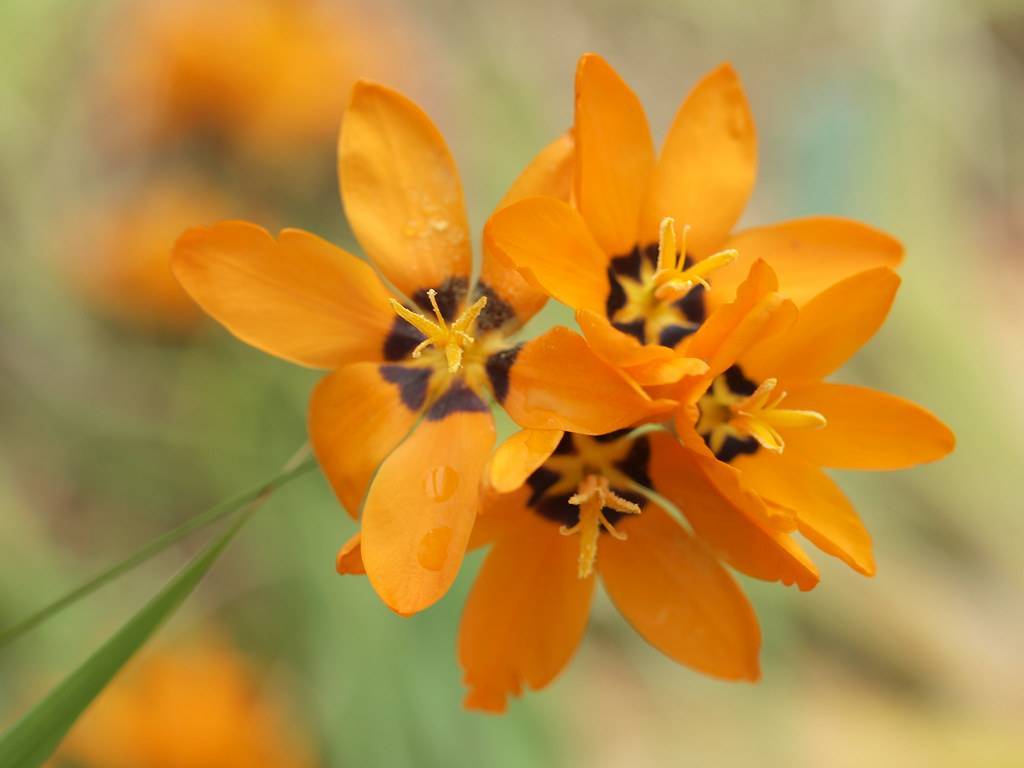
Ixia, commonly called corn lilies, are tender bulbous perennials celebrated for their dense spikes of star-shaped, often bicolored flowers that attract bees, butterflies, and sunbirds in their native habitat. Most cultivated varieties belong to Ixia maculata, Ixia viridiflora, and hybrid crosses, with blooms in shades of pink, red, yellow, white, and rare turquoise. Though adapted to Mediterranean climates, they are widely grown as annual cut flowers or container plants in cooler regions.
Care Guide
Watering
Water regularly once shoots emerge in spring, keeping the soil evenly moist but not waterlogged to prevent bulb rot. Reduce watering gradually after flowering ends as foliage begins to yellow, and stop watering entirely during the dormant summer and winter periods.
Light
Plant ixia in full sun, a minimum of 6 hours of direct sunlight daily, to encourage strong stem growth and abundant flowering. Partial shade is tolerated in very hot climates, but may result in leggy stems and fewer blooms.
Soil
Ixia thrives in light, well-drained sandy or loamy soil with a slightly acidic to neutral pH between 6.0 and 7.0. Heavy clay soils should be amended with compost, perlite, or coarse sand to improve drainage, as soggy soil will kill the bulbs.
Fertilizer
Apply a balanced, slow-release bulb fertilizer at half strength when new shoots emerge in early spring to support flowering. Avoid high-nitrogen fertilizers, which will promote lush foliage growth at the expense of blooms. No additional fertilization is needed during the dormant period.
Temperature
Ixia grows best in temperatures between 60–75°F (15–24°C) during its active growing season, and is hardy in USDA zones 8–10. In zones colder than 8, bulbs must be lifted in fall before the first frost and stored in a cool, dry location at 45–55°F (7–13°C) over winter, or grown as annuals.
Pruning
Deadhead spent flower spikes after blooming to prevent seed formation and redirect energy back to the bulb for the next growing season. Allow foliage to yellow and die back completely before trimming it away, as the leaves photosynthesize to store nutrients in the bulb for the following year.
Propagation
Ixia is most commonly propagated by dividing small offset bulbs from the parent bulb during the dormant period. Separate offsets in late summer or early fall, replant them immediately at the same depth as the parent bulb, and they will typically flower in 1–2 years. Plants can also be grown from seed, but may take 2–3 years to produce blooms.
Humidity
Ixia prefers low to moderate humidity levels between 30–50%, matching its native South African Mediterranean climate. High humidity and damp conditions during dormancy increase the risk of bulb rot, so ensure good air circulation around plants, especially in rainy regions.
Repotting
Container-grown ixia should be repotted every 2–3 years during the dormant period, or when bulbs become overcrowded and flowering declines. Gently remove the bulbs from the pot, separate offsets, and replant fresh bulbs in new, well-drained potting mix, spacing them 2–3 inches apart at a depth of 2–3 times the bulb’s diameter.
Uses & Symbolism
Ixia is a popular cut flower, with long, sturdy stems and long-lasting blooms that make them ideal for fresh floral arrangements and bouquets. In warm climate gardens, they are planted in sunny borders, rock gardens, or mass planted for a vibrant spring and summer display. They are also well-suited for container growing on patios or balconies in cooler regions.
Diseases & Pests
Ixia is relatively pest-resistant, but may be affected by aphids and thrips that feed on young foliage and flower buds, which can be controlled with insecticidal soap or neem oil. Bulb rot is the most common disease, caused by overwatering or poorly drained soil, and can be prevented by ensuring proper drainage and avoiding soggy conditions. In high humidity, fungal leaf spot may appear, which can be managed by removing affected foliage and improving air circulation around plants.
Related plants
Other plants you might like if you grow Ixia.