Drumstick Primula
Primula denticulata
Overview
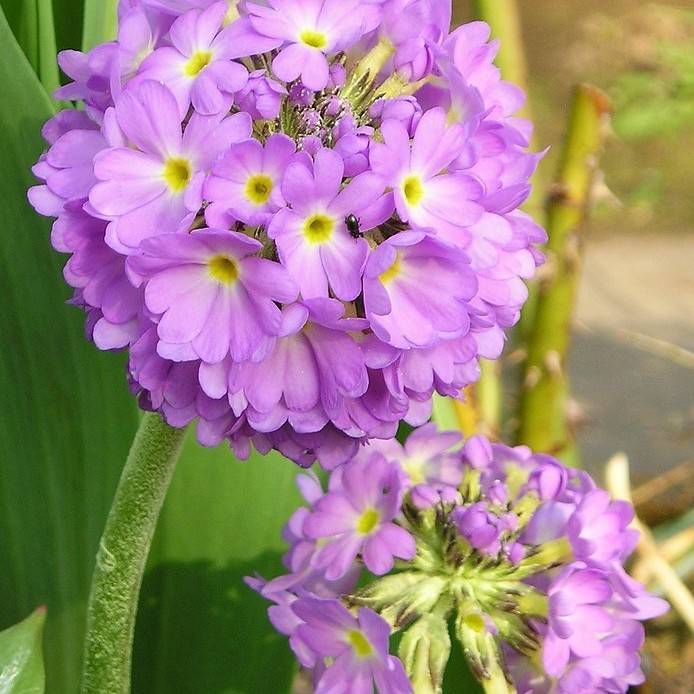
Drumstick Primula is a hardy herbaceous perennial prized for its distinctive rounded flower clusters that sit atop sturdy, upright stems above rosettes of crinkled, toothed green foliage. Native to high-altitude Himalayan meadows, it thrives in cool, moist conditions, making it a popular choice for temperate shade gardens, bog edges, and pond borders. Its early spring blooms provide vital nectar for emerging pollinators such as bumblebees and butterflies, while its compact clumping habit lends texture and color to mixed perennial beds.
Care Guide
Watering
Keep soil consistently moist but not waterlogged throughout the growing season, as drumstick primula is sensitive to drought. Reduce watering slightly in fall and winter, but never allow the root ball to dry out completely, especially in cold, windy conditions. Water at the base of the plant to avoid wetting the foliage, which can encourage fungal disease.
Light
Grow best in partial shade, receiving dappled sunlight or morning sun with afternoon shade to prevent leaf scorch in warm climates. In cooler, northern regions, it can tolerate full sun if soil moisture is consistently adequate. Avoid prolonged exposure to intense midday sun, which will cause foliage to wilt and blooms to fade prematurely.
Soil
Requires fertile, humus-rich, well-draining soil with a neutral to slightly acidic pH between 6.0 and 7.0. Amend heavy clay or sandy soils with plenty of organic matter such as compost, leaf mold, or well-rotted manure to improve moisture retention and nutrient content. It tolerates wetter soils than many other primula species, making it suitable for areas with poor drainage that stay damp year-round.
Fertilizer
Feed in early spring as new growth emerges with a balanced, slow-release granular fertilizer or a diluted liquid all-purpose fertilizer to support healthy bloom development. Apply a light topdressing of compost or leaf mold in fall to replenish soil nutrients and protect roots over winter. Avoid over-fertilizing, which can lead to excessive foliage growth at the expense of flowers and reduce the plant’s cold hardiness.
Temperature
Thrives in cool temperate climates, with ideal growing temperatures between 50-65°F (10-18°C) during the growing season. It is cold hardy in USDA zones 2-8, tolerating winter temperatures as low as -40°F (-40°C) if provided with a thick layer of mulch for insulation. It does not tolerate prolonged high heat above 80°F (27°C), and may go dormant or die back in regions with hot, humid summers.
Pruning
Remove spent flower stems after blooming to encourage tidy growth and prevent self-seeding if desired, though light self-seeding can produce attractive naturalized drifts in suitable conditions. Trim away yellowed or damaged foliage in late fall or early spring to make way for new growth and reduce the risk of fungal pathogens overwintering on dead plant material. No regular heavy pruning is required, as the plant maintains a compact, clumping habit naturally.
Propagation
Easily propagated by division of mature clumps in early fall or immediately after flowering, taking care to separate individual crowns with intact roots and replant at the same depth they were growing previously. It can also be grown from seed sown in fall or early spring, as seeds require a period of cold stratification to germinate successfully. Self-sown seedlings can be transplanted to new locations in early spring once they have developed 2-3 true leaves.
Humidity
Prefers moderate to high humidity levels between 50-70%, typical of its native high-altitude mountain habitat. In dry indoor or garden conditions, mist the surrounding area regularly or place the plant near a water feature to raise ambient humidity. Low humidity can cause leaf edges to brown and blooms to wilt faster, so ensure consistent soil moisture to help offset dry air.
Repotting
For container-grown specimens, repot every 2-3 years in early spring before new growth begins, using a fresh, humus-rich potting mix with added perlite for drainage. Select a pot that is 1-2 inches larger in diameter than the current one, as drumstick primula has a shallow root system and does not require excess root space. Ensure the pot has adequate drainage holes to prevent waterlogging, which can lead to root rot.
Uses & Symbolism
Widely used in ornamental landscaping as a border plant, in rock gardens, bog gardens, or alongside ponds and streams where its moist soil preferences are met, and it pairs well with other shade-loving perennials such as hostas, ferns, and astilbes. Its long-lasting cut flowers are popular for spring floral arrangements, adding unique spherical texture to bouquets. In traditional Himalayan medicine, extracts of the plant have been used to treat minor respiratory ailments, though its toxic compounds make unregulated internal use unsafe.
Diseases & Pests
Susceptible to fungal diseases including powdery mildew, gray mold (botrytis), and root rot, which occur most often in conditions of poor air circulation, overwatering, or wet foliage. Common pests include aphids, slugs, snails, and spider mites, which feed on young foliage and flower buds, especially in damp, shaded conditions. Leaf spot diseases may also appear in warm, humid weather, and can be managed by removing affected foliage and avoiding overhead watering.
Related plants
Other plants you might like if you grow Drumstick Primula.